
Project In-Depth Governance
Here you will find all content created in cooperation with our partner Goldschmeding Foundation.
Interviews
.jpg)
As chairman of the Goldschmeding Foundation, Bert Beun has big shoes to fill. His task is to ‘live’ the legacy of founder Frits Goldschmeding. He wants to do this by offering programs throughout the Netherlands and facilitating projects focused around three major themes: future-proof work, an inclusive labor market, and a humane economy. ‘We work from a theory of change: what steps are still needed for a humane economy and what role do directors and supervisory boards have to play?’
Read moreAuping CEO Jan-Joost Bosman and Johan Cruijff Arena CEO Tanja Dik are on the same wavelength when it comes to the sustainable transition. One (Bosman) participated in Discomfort in the Boardroom, the other (Dik) in the follow-up program In-Depth Governance, projects presented by MVO Nederland (CSR Netherlands) with support from the Goldschmeding Foundation to help executives and supervisory board members balance ethical issues and the interests of the company. ‘Together, we can spread the ink spill - ‘oil slick’ is the wrong word in this context.’
Read moreIn the second year of the ‘Verdiepte Governance’ (Deepened Governance) project, more and more directors have become convinced that ethical reflection belongs in the boardroom. Those who are true to their principles can link professional tasks to long-term value creation goals. Governance trainers Esther de Jong (NCD) and Menno Maas (TIAS School for Business and Society) see that directors have a need for this, but that they are unsure how to combine personal values and standards with the interests of the company. ‘We teach them to make that connection.’
Read moreSupervisory directors are notoriously risk-averse and compliance-oriented. However, to transition to a more sustainable and humane economy, necessitates them to also see themselves as guardians of the future, argue participants in this roundtable discussion. ‘It is incredibly important for supervisory directors to engage with what the organization stands for and where it wants to go to. Our primary role is to choose leaders who can shape that path.’
Read more
‘The humane economy is a matter of cooperation’
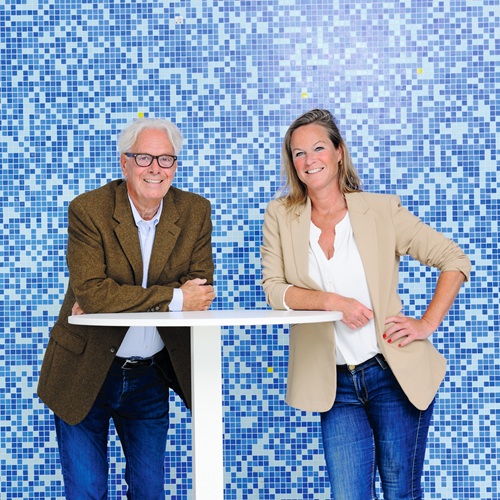
As chairman of the Goldschmeding Foundation, Bert Beun has big shoes to fill. His task is to ‘live’ the legacy of founder Frits Goldschmeding. He wants to do this by offering programs throughout the Netherlands and facilitating projects focused around three major themes: future-proof work, an inclusive labor market, and a humane economy. ‘We work from a theory of change: what steps are still needed for a humane economy and what role do directors and supervisory boards have to play?’
Read more
‘Sensitive issues remain undiscussed too often’
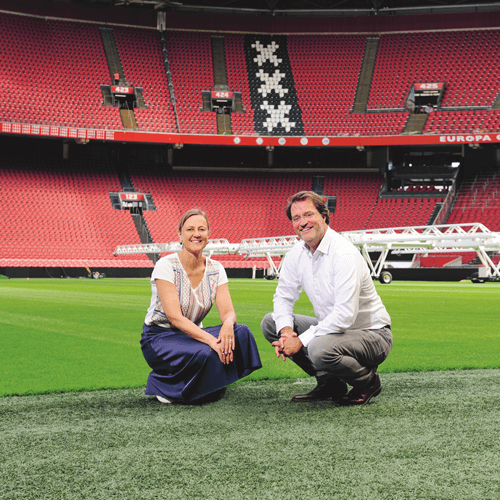
Auping CEO Jan-Joost Bosman and Johan Cruijff Arena CEO Tanja Dik are on the same wavelength when it comes to the sustainable transition. One (Bosman) participated in Discomfort in the Boardroom, the other (Dik) in the follow-up program In-Depth Governance, projects presented by MVO Nederland (CSR Netherlands) with support from the Goldschmeding Foundation to help executives and supervisory board members balance ethical issues and the interests of the company. ‘Together, we can spread the ink spill - ‘oil slick’ is the wrong word in this context.’
Read more
‘Demonstrating and implementing moral leadership’
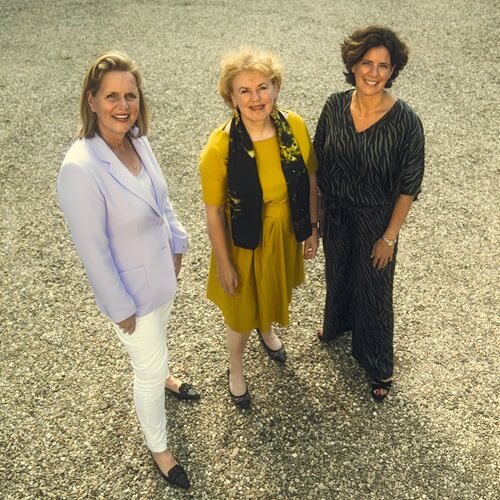
In the second year of the ‘Verdiepte Governance’ (Deepened Governance) project, more and more directors have become convinced that ethical reflection belongs in the boardroom. Those who are true to their principles can link professional tasks to long-term value creation goals. Governance trainers Esther de Jong (NCD) and Menno Maas (TIAS School for Business and Society) see that directors have a need for this, but that they are unsure how to combine personal values and standards with the interests of the company. ‘We teach them to make that connection.’
Read more
The Supervisory Director as Guardian of the Future
Supervisory directors are notoriously risk-averse and compliance-oriented. However, to transition to a more sustainable and humane economy, necessitates them to also see themselves as guardians of the future, argue participants in this roundtable discussion. ‘It is incredibly important for supervisory directors to engage with what the organization stands for and where it wants to go to. Our primary role is to choose leaders who can shape that path.’
Read more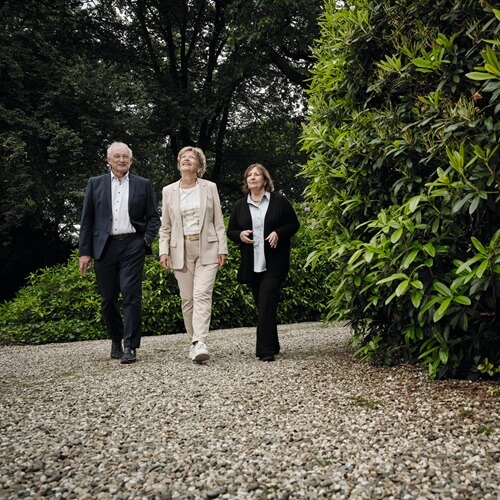

As the fourth stakeholder - after employees, customers and shareholders - society is claiming an increasingly prominent place within the corporate world. To develop a more humane governance practice, according to the participants in this roundtable, we need a far more in-depth conversation about how to deal with this as a director or supervisor and as a company. 'It is crucial that ethics is on the boardroom’s agenda more often.'
Read moreSocial issues permeate the boardroom. This leads to a clash between business considerations and personal conviction. The project In-Depth Governance (Verdiepte Governance) helps executives and supervisory directors find the personal balance between ethical issues and business interests. Professors Rob Blomme and Patrick Nullens: ‘From a shared social responsibility, we must come to an honest conversation, where there is room for vulnerability of one's position and disruptive ideas - in short, discomfort that can lead to exploration and cocreation.’
Read more
‘Crucial That Ethics Is on the Boardroom’s Agenda More Often’
As the fourth stakeholder - after employees, customers and shareholders - society is claiming an increasingly prominent place within the corporate world. To develop a more humane governance practice, according to the participants in this roundtable, we need a far more in-depth conversation about how to deal with this as a director or supervisor and as a company. 'It is crucial that ethics is on the boardroom’s agenda more often.'
Read more
Project In-Depth Governance: ‘Ethical dilemmas lead to tension’
Social issues permeate the boardroom. This leads to a clash between business considerations and personal conviction. The project In-Depth Governance (Verdiepte Governance) helps executives and supervisory directors find the personal balance between ethical issues and business interests. Professors Rob Blomme and Patrick Nullens: ‘From a shared social responsibility, we must come to an honest conversation, where there is room for vulnerability of one's position and disruptive ideas - in short, discomfort that can lead to exploration and cocreation.’
Read moreEssays

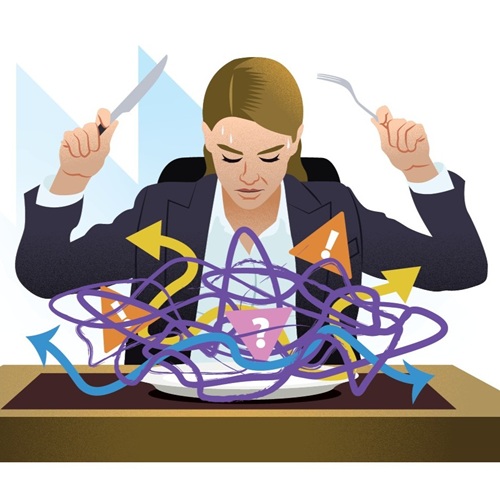

Business has an enormous impact on the transition to a new, sustainable, and more humane economy. For two years, the Deepened Governance project helped executives find a balance between their ideals and their business interests. Now that the project has come to an end, author and journalist Jeroen Smit, who has been involved with Deepened Governance from the start, shares his thoughts on how leaders can arrive at a hopeful perspective, despite all the ‘yes, buts.’
Read moreThe boardroom of the future does not shy away from seemingly unsolvable problems, but rather harness these as opportunities, according to Robert J. Blomme and Josephine de Zwaan of the In-Depth Governance project. Eighty Dutch executives worked together in this project to develop new guidelines for sustainable leadership, with the core message: give discomfort in the boardroom room to breathe. The tension that this creates is the starting point for change.
Read moreThe need for a systemic transformation towards a sustainable, circular and inclusive economy is forcing leaders to change course. This realization is, however, not yet actuating the intended results. Because the way we need to change is a complex issue - and breaking existing routines triggers feelings of uncertainty and loneliness. Do we dare to make the necessary bold decisions?
Read moreWhile national politics is not stepping up to the plate, executives will have to lead the way in the great systemic transformation needed to make the economy sustainable, circular and inclusive.
Read more
From hopeful questions to a hopeful future?
Business has an enormous impact on the transition to a new, sustainable, and more humane economy. For two years, the Deepened Governance project helped executives find a balance between their ideals and their business interests. Now that the project has come to an end, author and journalist Jeroen Smit, who has been involved with Deepened Governance from the start, shares his thoughts on how leaders can arrive at a hopeful perspective, despite all the ‘yes, buts.’
Read more
Embrace discomfort in the boardroom with these seven good practices
The boardroom of the future does not shy away from seemingly unsolvable problems, but rather harness these as opportunities, according to Robert J. Blomme and Josephine de Zwaan of the In-Depth Governance project. Eighty Dutch executives worked together in this project to develop new guidelines for sustainable leadership, with the core message: give discomfort in the boardroom room to breathe. The tension that this creates is the starting point for change.
Read more
Confronting the uncomfortable is a sensitive process
The need for a systemic transformation towards a sustainable, circular and inclusive economy is forcing leaders to change course. This realization is, however, not yet actuating the intended results. Because the way we need to change is a complex issue - and breaking existing routines triggers feelings of uncertainty and loneliness. Do we dare to make the necessary bold decisions?
Read more
Jeroen Smit on Fear and Courage
While national politics is not stepping up to the plate, executives will have to lead the way in the great systemic transformation needed to make the economy sustainable, circular and inclusive.
Read more



Leaders who are unwilling to invite the other or other voices to participate might, only too late, realize that circumstances are changing and that, to effectively serve the environment and society, a new and different approach is needed.
Read moreThe inevitability of the sustainable transition becomes clearer every day, yet even the most forward-thinking leaders and supervisors struggle to accelerate the process. This in part is due to the slow-down in our thinking before we can move on to renewed solutions. For entrepreneurial doers and go-getters, this delay feels like flogging a dead horse. Nonetheless, this discomfort is essential.
Read moreManagers often tend to hang on to the familiar by referencing past successes. They cease to listen effectively, which is unwise, as precisely at this time of inescapable transitions, the old calculations no longer make sense. To ensure their organizations’ right of existence by 2035, they will need to slow down their thinking.
Read moreAn increasing number of board members experience a disconnect between their ‘personal’ and ‘professional’ integrity. Let us put the discomfort in words and initiate a systemic change. Because we have to get rid of ‘herd capitalism.’
Read more
'Collaborate with ‘the enemy'
Leaders who are unwilling to invite the other or other voices to participate might, only too late, realize that circumstances are changing and that, to effectively serve the environment and society, a new and different approach is needed.
Read more
Breaking Through Our Sluggish, Entrenched Thinking
The inevitability of the sustainable transition becomes clearer every day, yet even the most forward-thinking leaders and supervisors struggle to accelerate the process. This in part is due to the slow-down in our thinking before we can move on to renewed solutions. For entrepreneurial doers and go-getters, this delay feels like flogging a dead horse. Nonetheless, this discomfort is essential.
Read more
Jeroen Smit on Really Listening and Thinking Slow
Managers often tend to hang on to the familiar by referencing past successes. They cease to listen effectively, which is unwise, as precisely at this time of inescapable transitions, the old calculations no longer make sense. To ensure their organizations’ right of existence by 2035, they will need to slow down their thinking.
Read more
Jeroen Smit about Discomfort and 'Herd Capitalism'
An increasing number of board members experience a disconnect between their ‘personal’ and ‘professional’ integrity. Let us put the discomfort in words and initiate a systemic change. Because we have to get rid of ‘herd capitalism.’
Read moreRelated themes
Corporate governance

Strategy