
Boer & Croon
Here you will find all content created in cooperation with our partner Boer & Croon.
Interviews
.jpg)
.jpg)
.jpg)
.jpg)
How to lead organizations responsible for the future-proofing of critical infrastructure, while simultaneously scaling up, digitizing, and preparing for crises? The experts at our roundtable agree that leadership in these times requires a fundamentally different mindset. ‘We must act much more as an ecosystem and collaborate with partners in an open and constructive manner.’
Read moreBuilding a diverse portfolio of supervisory board positions is, according to Peter Bommel, who holds four board positions across completely different sectors, ‘a combination of what comes your way and what you seek out yourself.’ NOC*NSF had always been a dream, so I pursued it myself.’ What are the ambitions and concerns for this multi-board member who took the first position on the Management Scope Next50 Supervisory Board Members in March? And what is he hopeful about in these turbulent times?
Read moreBuilding as many homes as possible with limited resources and making the portfolio CO2 neutral is the biggest challenge for housing association De Alliantie in the coming years. Chair of the executive board Roelien Ritsema van Eck, no. 4 in the Next50: ‘To continue building at a steady pace, you have to persistently stretch both your organization and your financial limits. We must constantly remind ourselves and our stakeholders of the urgency: there is a housing shortage, we have to build more.’
Read moreThe further development of (critical) infrastructure will determine the Netherlands’ position as a hub in the European economy. A question on what strategic choices the country therefore urgently needs to make for the near and distant future is discussed during a round table. Plus, what the mainports themselves can do to remain strategically relevant. ‘We are simply going to invest ten billion. Period. Legal certainty or no legal certainty.’
Read more
Leadership in turbulent times requires collaboration
How to lead organizations responsible for the future-proofing of critical infrastructure, while simultaneously scaling up, digitizing, and preparing for crises? The experts at our roundtable agree that leadership in these times requires a fundamentally different mindset. ‘We must act much more as an ecosystem and collaborate with partners in an open and constructive manner.’
Read more
Peter Bommel: ‘Strategy is all well and good, but then it needs to be executed’
Building a diverse portfolio of supervisory board positions is, according to Peter Bommel, who holds four board positions across completely different sectors, ‘a combination of what comes your way and what you seek out yourself.’ NOC*NSF had always been a dream, so I pursued it myself.’ What are the ambitions and concerns for this multi-board member who took the first position on the Management Scope Next50 Supervisory Board Members in March? And what is he hopeful about in these turbulent times?
Read more
Roelien Ritsema van Eck: ‘Public task, private context’
Building as many homes as possible with limited resources and making the portfolio CO2 neutral is the biggest challenge for housing association De Alliantie in the coming years. Chair of the executive board Roelien Ritsema van Eck, no. 4 in the Next50: ‘To continue building at a steady pace, you have to persistently stretch both your organization and your financial limits. We must constantly remind ourselves and our stakeholders of the urgency: there is a housing shortage, we have to build more.’
Read more
Critical infrastructure: ‘A little more of that can-do mentality, and it will be possible’
The further development of (critical) infrastructure will determine the Netherlands’ position as a hub in the European economy. A question on what strategic choices the country therefore urgently needs to make for the near and distant future is discussed during a round table. Plus, what the mainports themselves can do to remain strategically relevant. ‘We are simply going to invest ten billion. Period. Legal certainty or no legal certainty.’
Read more.jpg)
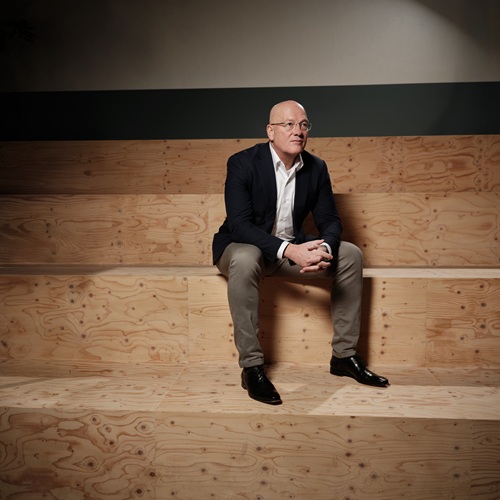
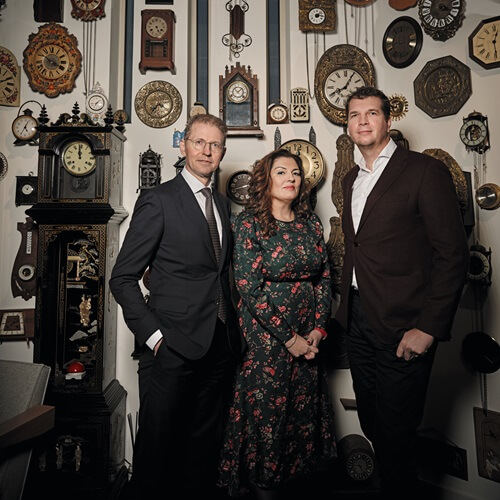
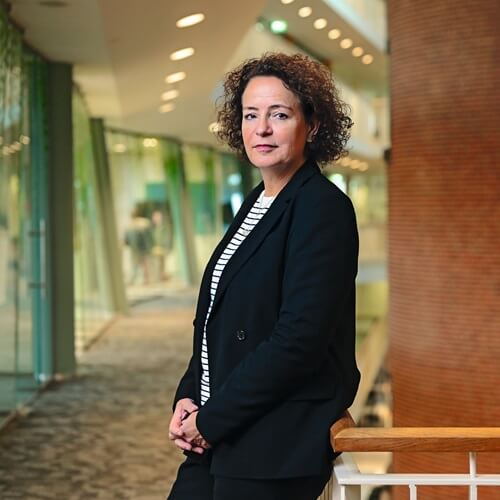
Last summer, Annette Ottolini officially retired. She stepped down as CEO of water company Evides. Now it is time for a new phase in her working life: as a supervisory board member. Ottolini is a ‘newcomer’ this year in the Top 100 Supervisory Board Members (number 63). As a former member of the management board, she knows the ropes. ‘As CEO, I was called in by the chairman of the supervisory board after a crisis. He said I had handled the crisis excellently, but that I had failed to keep the supervisory board properly informed. I learned a lesson then.’
Read moreInternational growth is a spearhead for Achmea. The cooperative insurer wants to enter new markets with online insurance, among other things. ‘We are at the forefront of digitalization in the Netherlands and see opportunities in other countries,’ says director Robert Otto.
Read moreThe careers of Sander Dekker (Maasstad Hospital) and Maarten Otto (Alliander) are in the public sector and thereby at the heart of society. Decisions in 'The Hague' impact them as well, and in these turbulent times, both leaders are facing a significant societal undertaking. How do Dekker and Otto deal with these challenges? ‘Leadership is about endurance, offering a clear perspective, and optimism.’
Read moreResi Becker has been CEO of energy supplier Essent for almost three years. Previously, she held various executive roles at PostNL for an extended time. Now, she wants to use her insights as a supervisory board member. This has earned her a spot in our Top-100 Supervisory Board Members for the first time. Not that she wants to shift to a full-time supervisory role: 'Certainly not – the CEO role suits me well. But my supervisory roles help me stay sharp.'
Read more
Annette Ottolini: ‘A supervisory board can sometimes be a pain in the ass’
Last summer, Annette Ottolini officially retired. She stepped down as CEO of water company Evides. Now it is time for a new phase in her working life: as a supervisory board member. Ottolini is a ‘newcomer’ this year in the Top 100 Supervisory Board Members (number 63). As a former member of the management board, she knows the ropes. ‘As CEO, I was called in by the chairman of the supervisory board after a crisis. He said I had handled the crisis excellently, but that I had failed to keep the supervisory board properly informed. I learned a lesson then.’
Read more
Robert Otto (Achmea): 'I want to accelerate the growth of our international activities'
International growth is a spearhead for Achmea. The cooperative insurer wants to enter new markets with online insurance, among other things. ‘We are at the forefront of digitalization in the Netherlands and see opportunities in other countries,’ says director Robert Otto.
Read more
Sander Dekker and Maarten Otto: ‘We should not allow ourselves to be overly distracted by The Hague'
The careers of Sander Dekker (Maasstad Hospital) and Maarten Otto (Alliander) are in the public sector and thereby at the heart of society. Decisions in 'The Hague' impact them as well, and in these turbulent times, both leaders are facing a significant societal undertaking. How do Dekker and Otto deal with these challenges? ‘Leadership is about endurance, offering a clear perspective, and optimism.’
Read more
Resi Becker (Essent): 'I Find the Combination Between Executive and Supervisory Board Stimulating'
Resi Becker has been CEO of energy supplier Essent for almost three years. Previously, she held various executive roles at PostNL for an extended time. Now, she wants to use her insights as a supervisory board member. This has earned her a spot in our Top-100 Supervisory Board Members for the first time. Not that she wants to shift to a full-time supervisory role: 'Certainly not – the CEO role suits me well. But my supervisory roles help me stay sharp.'
Read more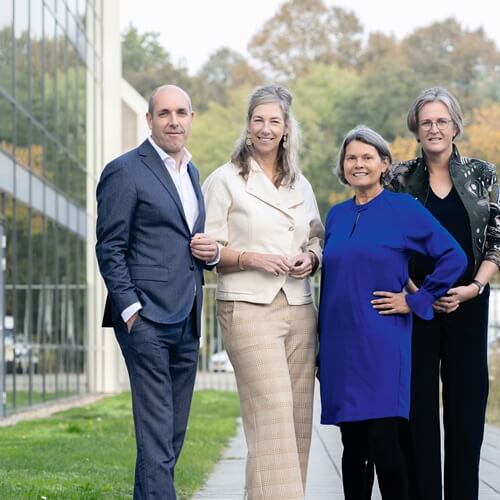
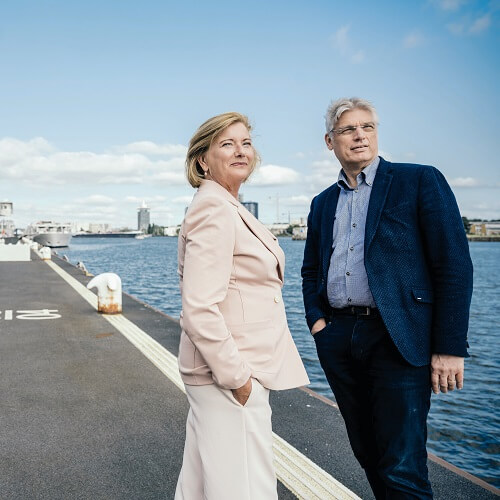
Grid operators and network companies in the Netherlands are pulling out all the stops to connect a more sustainable Netherlands to the electricity grid. Meanwhile, the industry itself is grappling with massive personnel shortages. The three executives at our roundtable are positive about the energy transition, even though their job roles have changed beyond recognition. To achieve what seems like an impossible task, innovation, speed, and bold choices are essential. ‘We simply have to achieve it. We need to push forward.’
Read moreMaking a quick analysis, creating a sense of urgency, consistently staying on the established course, and combining kindness with clarity—this is how experienced interim executive directors Jeltje Schraverus and Ben van Miltenburg get organizations back on course in a short time. ‘To truly shift to a different culture or way of working, the supervisory directors need to recalibrate too.’
Read moreThe boardroom increasingly demands agility, strategic thinking, and decisiveness to tackle complex issues and strategic transitions. Interim management can play a meaningful role, says Hans Bongartz of Boer & Croon. Fifty years after its founding, the executive interim-management specialist is increasingly presenting itself in the C-Suite. This makes sense, as the boardroom is where Boer & Croon has always acted and been seen as a logical partner.'
Read more
Heleen Cocu-Wassink, Trudy Onland and Mariëlle Vogt: 'We need to learn to experiment'
Grid operators and network companies in the Netherlands are pulling out all the stops to connect a more sustainable Netherlands to the electricity grid. Meanwhile, the industry itself is grappling with massive personnel shortages. The three executives at our roundtable are positive about the energy transition, even though their job roles have changed beyond recognition. To achieve what seems like an impossible task, innovation, speed, and bold choices are essential. ‘We simply have to achieve it. We need to push forward.’
Read more
Staying the Course is the Lifeline of the Interim Executive Director
Making a quick analysis, creating a sense of urgency, consistently staying on the established course, and combining kindness with clarity—this is how experienced interim executive directors Jeltje Schraverus and Ben van Miltenburg get organizations back on course in a short time. ‘To truly shift to a different culture or way of working, the supervisory directors need to recalibrate too.’
Read more
Hans Bongartz (Boer & Croon): ‘We Are Ready to Claim Our Seat at C-Level’
The boardroom increasingly demands agility, strategic thinking, and decisiveness to tackle complex issues and strategic transitions. Interim management can play a meaningful role, says Hans Bongartz of Boer & Croon. Fifty years after its founding, the executive interim-management specialist is increasingly presenting itself in the C-Suite. This makes sense, as the boardroom is where Boer & Croon has always acted and been seen as a logical partner.'
Read moreEssays
.jpg)

‘Run at least twice as fast!’ This warning from the Red Queen in Alice in Wonderland is more than a literary metaphor, it is the harsh reality for modern organizations. In the land of the Red Queen, you have to run fast to stay in the same place, and even faster to get anywhere. Companies that stand still fall behind. If they continue to follow the old formula, they lose market share to agile newcomers without baggage. Modern leaders know this and succeed in keeping their organizations agile, writes Ralf Knegtmans of De Vroedt & Thierry, part of Boer & Croon. He notes that the focus in leadership selection is gradually shifting from knowledge and experience to character.
Read moreChange rarely fails at the drawing board, but often falls apart in practice, because leaders place themselves outside of the change process. They think that change is something the organization has to do, not them. However, without the involvement and ownership of leaders, even the best-developed strategy will not come to life, observes Eva den Hartog of Boer & Croon.
Read more
Leadership in the digital age
‘Run at least twice as fast!’ This warning from the Red Queen in Alice in Wonderland is more than a literary metaphor, it is the harsh reality for modern organizations. In the land of the Red Queen, you have to run fast to stay in the same place, and even faster to get anywhere. Companies that stand still fall behind. If they continue to follow the old formula, they lose market share to agile newcomers without baggage. Modern leaders know this and succeed in keeping their organizations agile, writes Ralf Knegtmans of De Vroedt & Thierry, part of Boer & Croon. He notes that the focus in leadership selection is gradually shifting from knowledge and experience to character.
Read more
Effective change needs leaders on center stage
Change rarely fails at the drawing board, but often falls apart in practice, because leaders place themselves outside of the change process. They think that change is something the organization has to do, not them. However, without the involvement and ownership of leaders, even the best-developed strategy will not come to life, observes Eva den Hartog of Boer & Croon.
Read moreRelated themes
Strategy