
evofenedex
Here you will find all content created in cooperation with our partner evofenedex.

Interviews


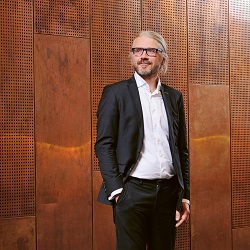

What benefit does the private sector really have from the government? And what does it need? Johan Kerver (evofenedex) discusses these questions with Ingrid Faber, CEO at Faber Group, and Jan Nooitgedagt, member of several supervisory boards. Both see the value of government leadership and direction, but they feel the government is not fully embracing its role. Collaboration, too, is lacking. ‘The gap between the private sector and government is truly astonishing.’
Read moreThe logistics sector experiences many challenges and an overarching problem: the public-private cooperation that should move the sector and the Netherlands forward is under strain due to a lack of decisiveness. According to Tjark Tjin-A-Tsoi, CEO at TNO, and Ronald Paul, figurehead of Top Sector Logistics, lack of innovation is a threat to Dutch prosperity. They call on government and industry to act more decisively. ‘We in the Netherlands seem unable to take decisive action. We need to substantially increase our execution power.’
Read moreCollaboration is a hot topic. But it is not easy. In a new series for Management Scope, Machiel van der Kuijl, Chairman of the entrepreneurs’ association evofenedex, delves into the world of public-private collaboration. What does it involve? What are the pitfalls? How do you ensure that collaboration yields results? This time, he talks to Brian Tjemkes, Professor of Strategy at Vrije Universiteit Amsterdam. Tjemkes conducted extensive research on public-private collaboration and wrote a book about it. ‘Collaboration might be the most underestimated skill in the world.’
Read moreThe supply chain is under more pressure than ever. Companies are struggling to organize the chain in a better and more future-oriented way. The Supervisory Board has their task cut out to assist with this. At our roundtable, we ask Supervisory Boards the question: is it succeeding at all? ‘The supply chain as a competitive field is too limited a picture: suppliers, partners and competitors should instead work together.’
Read more
Ingrid Faber and Jan Nooitgedagt on public-private partnerships: ‘Improvement is often simple’
What benefit does the private sector really have from the government? And what does it need? Johan Kerver (evofenedex) discusses these questions with Ingrid Faber, CEO at Faber Group, and Jan Nooitgedagt, member of several supervisory boards. Both see the value of government leadership and direction, but they feel the government is not fully embracing its role. Collaboration, too, is lacking. ‘The gap between the private sector and government is truly astonishing.’
Read more
Ronald Paul and Tjark Tjin-A-Tsoi: ‘Do Not Nip Innovation in the Bud’
The logistics sector experiences many challenges and an overarching problem: the public-private cooperation that should move the sector and the Netherlands forward is under strain due to a lack of decisiveness. According to Tjark Tjin-A-Tsoi, CEO at TNO, and Ronald Paul, figurehead of Top Sector Logistics, lack of innovation is a threat to Dutch prosperity. They call on government and industry to act more decisively. ‘We in the Netherlands seem unable to take decisive action. We need to substantially increase our execution power.’
Read more
Brian Tjemkes on Public-Private Collaboration: ‘Everyone Is Focused on Their Own Piece of the Puzzle’
Collaboration is a hot topic. But it is not easy. In a new series for Management Scope, Machiel van der Kuijl, Chairman of the entrepreneurs’ association evofenedex, delves into the world of public-private collaboration. What does it involve? What are the pitfalls? How do you ensure that collaboration yields results? This time, he talks to Brian Tjemkes, Professor of Strategy at Vrije Universiteit Amsterdam. Tjemkes conducted extensive research on public-private collaboration and wrote a book about it. ‘Collaboration might be the most underestimated skill in the world.’
Read more
These Three Non-Executive Directors Want To Accelerate The Supply Chain Transition
The supply chain is under more pressure than ever. Companies are struggling to organize the chain in a better and more future-oriented way. The Supervisory Board has their task cut out to assist with this. At our roundtable, we ask Supervisory Boards the question: is it succeeding at all? ‘The supply chain as a competitive field is too limited a picture: suppliers, partners and competitors should instead work together.’
Read more
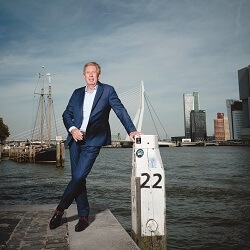
In De Raad (‘The Council’), a carefully composed team of experts take a look at an important boardroom concern. What insights, suggestions and warnings does De Raad have to offer boards? This time, we are discussing the future of the supply chain. Led by Machiel van der Kuijl of entrepreneurs’ organization evofenedex, three supply chain experts discuss best practices. “A supply chain should be directed from a purpose, a vision and a clear strategy.”
Read moreCOVID-19, shortages of raw materials, the war in Ukraine, rising energy prices… these have all shaken the world of trade and logistics. ‘And that is just the tip of the iceberg,’ warns professor of transition studies Jan Rotmans. ‘These are not temporary disruptions, but fundamental changes.’ It is an aggravating factor that supervisory and executive board members prefer to hold a steady course, while for the true change required they will actually need to brave the storm. This can have enormous consequences. ‘Companies who fail to adapt their supply chain now, will in ten years have ceased to exist.’
Read more
Four Best Practices for a Future-Proof Supply Chain
In De Raad (‘The Council’), a carefully composed team of experts take a look at an important boardroom concern. What insights, suggestions and warnings does De Raad have to offer boards? This time, we are discussing the future of the supply chain. Led by Machiel van der Kuijl of entrepreneurs’ organization evofenedex, three supply chain experts discuss best practices. “A supply chain should be directed from a purpose, a vision and a clear strategy.”
Read more
Jan Rotmans Sees a Lack of Transformational Leadership in Boardrooms
COVID-19, shortages of raw materials, the war in Ukraine, rising energy prices… these have all shaken the world of trade and logistics. ‘And that is just the tip of the iceberg,’ warns professor of transition studies Jan Rotmans. ‘These are not temporary disruptions, but fundamental changes.’ It is an aggravating factor that supervisory and executive board members prefer to hold a steady course, while for the true change required they will actually need to brave the storm. This can have enormous consequences. ‘Companies who fail to adapt their supply chain now, will in ten years have ceased to exist.’
Read moreEssays


Since the COVID-19 crisis, the notion that the world is controllable has steadily faded into the background. We have entered an era of scarcity, prompting a reevaluation of how businesses, governments, and knowledge institutions can best collaborate. Johan Kerver of evofenedex discusses the three principles underpinning a new model for successful public-private partnerships.
Read moreChains that are transparent, resilient and actually manageable due to extensive digitalization, chains with chain partners that create concrete added value separately and jointly: at the moment this is a distant prospect, but companies are taking resolute action to get there. The need for supply chain transition is widely supported, write evofenedex directors Machiel van der Kuijl and Johan Kerver, who also have advice for setting up a sustainable supply chain.
Read more
The world is not fully controllable, but public-private collaboration is
Since the COVID-19 crisis, the notion that the world is controllable has steadily faded into the background. We have entered an era of scarcity, prompting a reevaluation of how businesses, governments, and knowledge institutions can best collaborate. Johan Kerver of evofenedex discusses the three principles underpinning a new model for successful public-private partnerships.
Read more
Towards a Transparent, Resilient and Sustainable Supply Chain
Chains that are transparent, resilient and actually manageable due to extensive digitalization, chains with chain partners that create concrete added value separately and jointly: at the moment this is a distant prospect, but companies are taking resolute action to get there. The need for supply chain transition is widely supported, write evofenedex directors Machiel van der Kuijl and Johan Kerver, who also have advice for setting up a sustainable supply chain.
Read moreRelated themes
Digitalization and Disruption