
Kearney
Here you will find all content created in cooperation with our partner Kearney.
Interviews
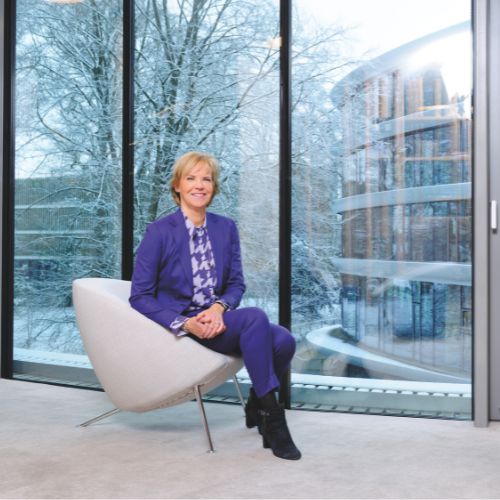
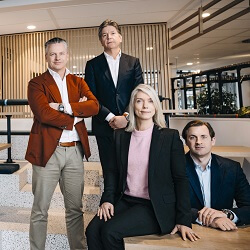
Simone Huis in 't Veld, former top executive at Euronext Amsterdam, felt she has fulfilled her role as an executive. After a sabbatical, she decided to become a professional supervisory board member. This earned her ninth place in the Next50 Supervisory Board Members, but her ambitions extend further. ‘A ninth place in the Next50 is a great honor. Now I want a place in the Top 100 Supervisory Board Members.’
Read moreDespite rising commodity prices, food company Nestlé continues to focus on sustainability. CEO Michel Mersch, responsible for the Benelux region, explains why. ‘If everyone in the supply chain can earn their money fairly, it leads to less volatility in the long run.’
Read moreSustainable transition is inevitable, says Sandra Phlippen, chief economist of ABN AMRO, as all countries will reach a point where the cost of inaction exceeds the cost of the transition. The pace of sustainability is primarily determined by politics and policy. ‘We must, after all, recognize that the public and private sectors have different responsibilities. You cannot ask individual companies to compromise their competitive position to do something good for the world.’
Read moreBetter cooperation in the chain, innovation and consistent European policy are needed to accelerate the sustainable food transition, according to the experts from Corbion, Unilever and Ahold Delhaize at our roundtable. They know better than anyone that interventions are needed to create a resilient, agile European food chain. Their own role when facing huge challenges such as reducing emissions at partners in the chain, often comes down to advancing one small step at a time. ‘Sometimes you have to start small and simply keep moving forward.’
Read more
Simone Huis in 't Veld on becoming a professional non-executive
Simone Huis in 't Veld, former top executive at Euronext Amsterdam, felt she has fulfilled her role as an executive. After a sabbatical, she decided to become a professional supervisory board member. This earned her ninth place in the Next50 Supervisory Board Members, but her ambitions extend further. ‘A ninth place in the Next50 is a great honor. Now I want a place in the Top 100 Supervisory Board Members.’
Read more
Michel Mersch (Nestlé): ‘Sustainable investments more than pay for themselves’
Despite rising commodity prices, food company Nestlé continues to focus on sustainability. CEO Michel Mersch, responsible for the Benelux region, explains why. ‘If everyone in the supply chain can earn their money fairly, it leads to less volatility in the long run.’
Read more
Sandra Phlippen: ‘A CO2 tax is not a punishment’
Sustainable transition is inevitable, says Sandra Phlippen, chief economist of ABN AMRO, as all countries will reach a point where the cost of inaction exceeds the cost of the transition. The pace of sustainability is primarily determined by politics and policy. ‘We must, after all, recognize that the public and private sectors have different responsibilities. You cannot ask individual companies to compromise their competitive position to do something good for the world.’
Read more
Interventions are needed for a resilient food chain
Better cooperation in the chain, innovation and consistent European policy are needed to accelerate the sustainable food transition, according to the experts from Corbion, Unilever and Ahold Delhaize at our roundtable. They know better than anyone that interventions are needed to create a resilient, agile European food chain. Their own role when facing huge challenges such as reducing emissions at partners in the chain, often comes down to advancing one small step at a time. ‘Sometimes you have to start small and simply keep moving forward.’
Read more
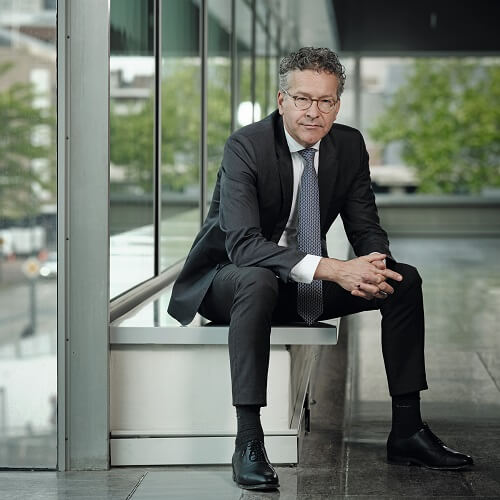
The Swiss Firmenich was Dimitri de Vreeze’s very first client at the former DSM. The merger of the two companies completes the circle for the CEO of what is now dsm-firmenich. We are in conversation about the merger, De Vreezes own transformation as a leader, clear choices as the basis for strategic success and the belief that one should always question assumptions. ‘Firmenich was right at the top of my list. But to be honest: I had crossed it out. A family business? No chance.’
Read moreThe significant development in the Brainport Eindhoven region means that, in the short term, everything is under pressure. ‘We need to develop a huge amount of infrastructure, and it should have been ready yesterday,’ says Mayor Jeroen Dijsselbloem, who actively seeks collaboration with businesses to address social issues. ‘Shared interests are at the crux of successful public-private partnerships.’
Read moreCompanies and governments are inter-dependent for enabling and accelerating the sustainability transition, is the view shared by the three executives participating in our roundtable discussion on how public-private collaboration can advance the transition. ‘Executives now have a far wider responsibility than only towards their own organizations.’
Read moreHow do you include sustainability in the financial management of an organization? How do you deal with the tensions between short-term results and long-term goals, and how quickly can you become more sustainable? These are questions that every CFO needs to deal with. The experts at our roundtable shed light on financial management for a sustainable future. Determining the pace at which to proceed is where the CFO should lead the way.
Read more
Dimitri de Vreeze (dsm-firmenich): ‘Blindly accepting assumptions is the biggest mistake you can make’
The Swiss Firmenich was Dimitri de Vreeze’s very first client at the former DSM. The merger of the two companies completes the circle for the CEO of what is now dsm-firmenich. We are in conversation about the merger, De Vreezes own transformation as a leader, clear choices as the basis for strategic success and the belief that one should always question assumptions. ‘Firmenich was right at the top of my list. But to be honest: I had crossed it out. A family business? No chance.’
Read more
Jeroen Dijsselbloem (Mayor of Eindhoven): 'Pursuing Collaboration Opens Up Huge Opportunities'
The significant development in the Brainport Eindhoven region means that, in the short term, everything is under pressure. ‘We need to develop a huge amount of infrastructure, and it should have been ready yesterday,’ says Mayor Jeroen Dijsselbloem, who actively seeks collaboration with businesses to address social issues. ‘Shared interests are at the crux of successful public-private partnerships.’
Read more
‘The Public-Private Partnership Has Evolved Into an Ecosystem’
Companies and governments are inter-dependent for enabling and accelerating the sustainability transition, is the view shared by the three executives participating in our roundtable discussion on how public-private collaboration can advance the transition. ‘Executives now have a far wider responsibility than only towards their own organizations.’
Read more
The CFO as Challenger and Driving Force
How do you include sustainability in the financial management of an organization? How do you deal with the tensions between short-term results and long-term goals, and how quickly can you become more sustainable? These are questions that every CFO needs to deal with. The experts at our roundtable shed light on financial management for a sustainable future. Determining the pace at which to proceed is where the CFO should lead the way.
Read more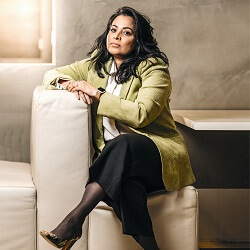
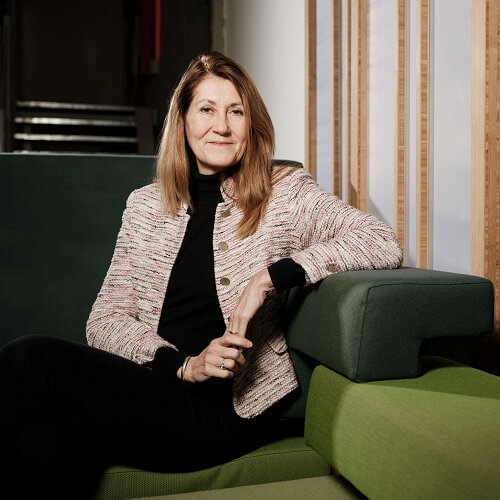

Almost 30 years ago, Artie Debidien embarked on her career journey. Currently, she holds the position of CIO at KPN and serves as a supervisor at three organizations, including De Nederlandsche Bank. She advocates for renewal wherever she goes. ‘I pay attention to whether an organization is focused not only on current KPIs and the status quo, but also whether I recognize an underlying willingness to progress.’
Read moreWhat are the challenges for the manufacturing industry in designing sustainable products? The directors of chipmaker NXP Semiconductors, denim brand MUD Jeans and aircraft manufacturer Maeve Aerospace - all three forerunners in their industries - in conversation about lofty ideals and the sometimes-unruly practice. 'It turns out to be very difficult to make an industry that is not yet ready for it, sustainable.' Plus: advice for directors.
Read moreCarpet manufacturer Interface has long been well ahead of the beat when it comes to sustainable transformation: the net zero ambition has been traded in for the next ambitious goal. Vice president of supply chain & operations Eline Oudenbroek hopes the industry will ‘walk with them’: ‘Companies can only survive by making all their processes sustainable. The realization that there is no business case in being non-regenerative is starting to sink in.’
Read moreAlthough working with generative artificial intelligence systems (GenAI) can at present be compared to driving a car without brakes, no organization can afford to be passive, according to the three experts at our roundtable. ‘Leaders do not think fundamentally about the implications of GenAI for the mission and strategy often enough. It permeates the entire business operations. All executives will have to stay abreast of this.’
Read more
Artie Debidien: ‘Willingness To Change Has To Be Mobilized’
Almost 30 years ago, Artie Debidien embarked on her career journey. Currently, she holds the position of CIO at KPN and serves as a supervisor at three organizations, including De Nederlandsche Bank. She advocates for renewal wherever she goes. ‘I pay attention to whether an organization is focused not only on current KPIs and the status quo, but also whether I recognize an underlying willingness to progress.’
Read more
Sustainable Transformation Makes Any Business More Robust
What are the challenges for the manufacturing industry in designing sustainable products? The directors of chipmaker NXP Semiconductors, denim brand MUD Jeans and aircraft manufacturer Maeve Aerospace - all three forerunners in their industries - in conversation about lofty ideals and the sometimes-unruly practice. 'It turns out to be very difficult to make an industry that is not yet ready for it, sustainable.' Plus: advice for directors.
Read more
Eline Oudenbroek (Interface): ‘No Relevance Without Sustainability’
Carpet manufacturer Interface has long been well ahead of the beat when it comes to sustainable transformation: the net zero ambition has been traded in for the next ambitious goal. Vice president of supply chain & operations Eline Oudenbroek hopes the industry will ‘walk with them’: ‘Companies can only survive by making all their processes sustainable. The realization that there is no business case in being non-regenerative is starting to sink in.’
Read more
Three Female Executives Discuss Generative Artificial Intelligence: ‘A Significant Call to Action’
Although working with generative artificial intelligence systems (GenAI) can at present be compared to driving a car without brakes, no organization can afford to be passive, according to the three experts at our roundtable. ‘Leaders do not think fundamentally about the implications of GenAI for the mission and strategy often enough. It permeates the entire business operations. All executives will have to stay abreast of this.’
Read more- Carolina Wielinga (BDR Thermea): ‘Do not compete on sustainability’
- Willem Uijen (Unilever): ‘We Pursue Procurement With Purpose’
- Harold Van Den Broek (Heineken): 'No Blank Cheques On ESG Designation'
- Mieke De Schepper: ‘At Every Step I Ask Myself: What Am I Going To Learn?’
- COO Jacqueline van Lemmen Knows That Operations Is Where It Happens
- These Are the Real Obstacles to Sustainability
- Miriam van Dongen: ‘Anticipating Seismic Changes’
- Ahmed El-Hoshy (OCI): 'Sustainability is Not a Zero-Sum Game'
- Sustainability, Responsibility and Political Control within the Chain
- Paul Polman: ‘Less Bad is Not Good Enough’
- Kees Klomp: 'Only Intrinsic Motivation Results in Transition'
- Jeroen Drost (SHV): 'There is Leeway for Strong Wills'
- Simone Huis in ’t Veld (Euronext) on SPACs and Other Business Models on the Stock Market
Essays

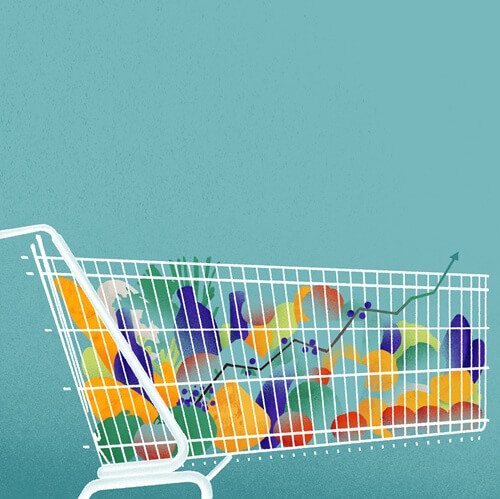

Geopolitical tensions, disrupted supply chains, energy prices doubling overnight: strategic shocks are no longer the exception. They are the norm. But they are foreseeable — and those who recognize such shocks in good time can turn it into a competitive advantage, writes Kearney partner Rudolph Lohmeyer.
Read moreThe world of food is changing. This means that companies and organizations in (and around) the food industry will also need to adapt. Fortunately, the future of food offers many opportunities, certainly also for the Netherlands. It will, however, require courage, long-term thinking and, above all, the ability to change. Pim Rossen and Roger van Engelen of strategic consultancy Kearney outline the challenges and opportunities.
Read moreConverging geopolitical, ecological and social challenges are inevitably drawing companies into the political arena. To avoid becoming a passive player in an unstable world, executives themselves must take a leading, visionary role, argue Marc-Jan Reumers and Pim Rossen of the strategic consulting firm Kearney. Sustainable ambitions and investments can not only serve as a compass but also offer the best opportunity for a fruitful public-private partnership.
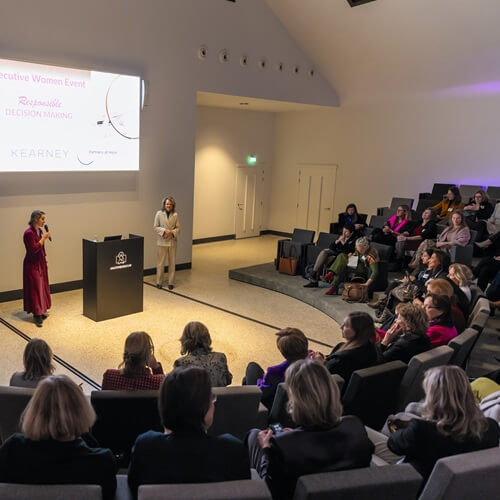
Read moreHow can leaders – and women in particular – contribute to a more fair, more sustainable, and more resilient future? This can only be achieved by seeking the connection between corporate values and personal values in all strategic decisions, according to the speakers at the Executive Women Event 2024. Companies can no longer get away with not following the rules. ‘We must bring the moral compass of the individual to the company.’
Read more
Strategic shock resilience: Anticipate earlier, perform better
Geopolitical tensions, disrupted supply chains, energy prices doubling overnight: strategic shocks are no longer the exception. They are the norm. But they are foreseeable — and those who recognize such shocks in good time can turn it into a competitive advantage, writes Kearney partner Rudolph Lohmeyer.
Read more
The future of food: Winning in a tough market
The world of food is changing. This means that companies and organizations in (and around) the food industry will also need to adapt. Fortunately, the future of food offers many opportunities, certainly also for the Netherlands. It will, however, require courage, long-term thinking and, above all, the ability to change. Pim Rossen and Roger van Engelen of strategic consultancy Kearney outline the challenges and opportunities.
Read more
Sustainability as a Compass in an Unstable World
Converging geopolitical, ecological and social challenges are inevitably drawing companies into the political arena. To avoid becoming a passive player in an unstable world, executives themselves must take a leading, visionary role, argue Marc-Jan Reumers and Pim Rossen of the strategic consulting firm Kearney. Sustainable ambitions and investments can not only serve as a compass but also offer the best opportunity for a fruitful public-private partnership.
Read more
Executive Women Event 2024: ‘Are You a Responsible Decision Maker?’
How can leaders – and women in particular – contribute to a more fair, more sustainable, and more resilient future? This can only be achieved by seeking the connection between corporate values and personal values in all strategic decisions, according to the speakers at the Executive Women Event 2024. Companies can no longer get away with not following the rules. ‘We must bring the moral compass of the individual to the company.’
Read more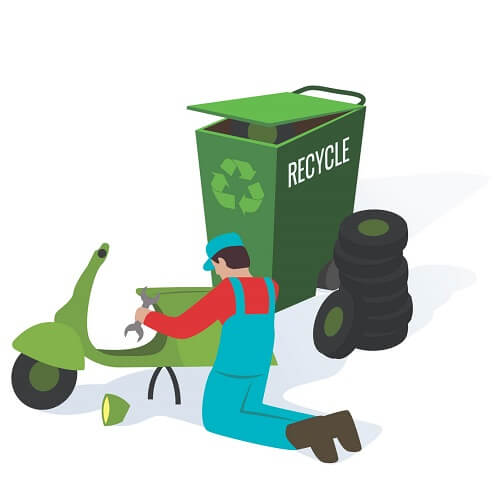
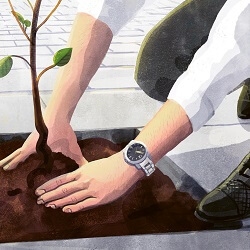
For a product to be sustainable from cradle to grave, eight phases of the life cycle must be considered during design. However, a strategic plan to integrate design for sustainability into the entire business operation is often lacking. Designing with prolonging of use and end of life in mind is therefore a complex operation that requires strong leadership, argue Remko de Bruijn and Pim Rossen.
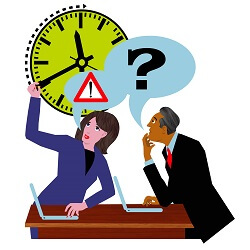
Read moreA key role is reserved for the CFO in the sustainability transition of companies, who in practice occasionally appears to struggle with its interpretation. According to Pim Rossen and Alexander Tamminga of strategic consulting firm Kearney, now is the time to introduce a new paradigm with a better balance between short- and long-term value creation. ‘Adapt existing KPIs to the transformation phase of the company.’
Read moreMost companies have set sustainability goals. What they want to achieve and when those goals must be achieved is clear. But how they are going to do that in concrete terms is often still the question. Remko de Bruijn and Pim Rossen of strategic consultancy firm Kearney give a first impetus. They advocate leadership, an integrated approach and extra attention to scope 3 emissions.
Read moreDirectors and supervisors know that sustainability is part of the license to operate and most of them want to contribute to a solution. They formulate the right strategy and actively drive appropriate innovations. Yet at the level of climate, biodiversity and general well-being, progress is limited and the pace far too slow. Why is that? Kearney partner Marc-Jan Reumers and - principal Pim Rossen pinpoint the problems.
Read more
Sustainable Design: Eight Phases and a Different Mindset
For a product to be sustainable from cradle to grave, eight phases of the life cycle must be considered during design. However, a strategic plan to integrate design for sustainability into the entire business operation is often lacking. Designing with prolonging of use and end of life in mind is therefore a complex operation that requires strong leadership, argue Remko de Bruijn and Pim Rossen.
Read more
Sustainability As Key Role For The CFO
A key role is reserved for the CFO in the sustainability transition of companies, who in practice occasionally appears to struggle with its interpretation. According to Pim Rossen and Alexander Tamminga of strategic consulting firm Kearney, now is the time to introduce a new paradigm with a better balance between short- and long-term value creation. ‘Adapt existing KPIs to the transformation phase of the company.’
Read more
This Is How To Make An Impact Toward 2030
Most companies have set sustainability goals. What they want to achieve and when those goals must be achieved is clear. But how they are going to do that in concrete terms is often still the question. Remko de Bruijn and Pim Rossen of strategic consultancy firm Kearney give a first impetus. They advocate leadership, an integrated approach and extra attention to scope 3 emissions.
Read more
From Incremental Steps To Impactful Change
Directors and supervisors know that sustainability is part of the license to operate and most of them want to contribute to a solution. They formulate the right strategy and actively drive appropriate innovations. Yet at the level of climate, biodiversity and general well-being, progress is limited and the pace far too slow. Why is that? Kearney partner Marc-Jan Reumers and - principal Pim Rossen pinpoint the problems.
Read more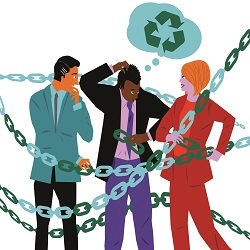
Over the past few years, many companies have wholeheartedly embraced sustainability ambitions. The next step is to make sustainability a well-integrated part of daily business operations. Angela Hultberg and Céline Gaffel from Kearney argue that this requires lasting change in the way organizations think and work.
Read more
Turnaround Needed for Real Change
Over the past few years, many companies have wholeheartedly embraced sustainability ambitions. The next step is to make sustainability a well-integrated part of daily business operations. Angela Hultberg and Céline Gaffel from Kearney argue that this requires lasting change in the way organizations think and work.
Read more