
Board agenda 2035: ‘Contributing ideas instead of monitoring’
Nearly two hundred supervisory board members gathered at Nyenrode Business University in early October 2025 to celebrate the seventy-fifth edition of the Nyenrode Board of Commissioners Program. For thirty years, this has been the meeting place for supervisory board members and regulators who want to delve into current topics such as governance, integrity, strategy, risk management, and moral leadership. To mark this milestone, Nyenrode held a symposium on the theme Board Agenda 2035: The Future of Supervision. The outcome of the symposium consisted of a number of recommendations for the Corporate Governance Monitoring Committee, which was appointed earlier in 2025.
The world was a completely different place when the supervisory board training program was launched back in 1995. Optimism prevailed with President Bill Clinton in the White House, and the then leader of Russia was forging plans for a democratic constitution in Russia. In his book The End of History political scientist Francis Fukuyama predicted that liberal democracy had triumphed. At this time, when the future seemed stable and predictable, the first Dutch corporate governance code was drafted.
The contrast with 2025 is stark. With world leaders such as Donald Trump and Vladimir Putin, nothing can be taken for granted anymore. Globalization is faltering, power blocs are shifting, and both climate and human rights are under pressure.
The celebratory discussions contained a cautionary message. ‘We live in a time when institutions are being questioned and even dismantled. This poses major questions for executive - and supervisory board members: how do you remain resilient in an uncertain, fragmented world with increasing social pressure?’ asked Micky Adriaansens, President of the Executive Board of Nyenrode Business University. ‘Whereas in recent decades the emphasis was on cooperation and the search for shared values, these times, in which checks and balances are being dismantled, call for resilience, judgment, and moral leadership from executives and supervisory board members. They must develop a new moral compass.’
Three academics shared their insights into how the role of executives and supervisory board members is changing and what the future of corporate governance looks like.
Geopolitical Thinking
Jeroen Veldman, professor of corporate governance at Nyenrode Business University and chair of the Nyenrode Corporate Governance Institute, argued for a broader supervisory perspective. ‘Supervisory board members should not consider only internal risks, but also anticipate geopolitical developments: what are the implications for the organization?’
The international playing field looks worrisome. ‘While in the 1990s we believed that globalization would bring stability and growth, national interests now often seem to prevail. The US uses trade tariffs as a means of power.’
In Europe, this is leading to a focus on strategic autonomy, especially in the areas of defense, ICT, and AI. ‘National interests, and thus regionalization and politicization, will play a more significant role in the management of companies,’ says Veldman.
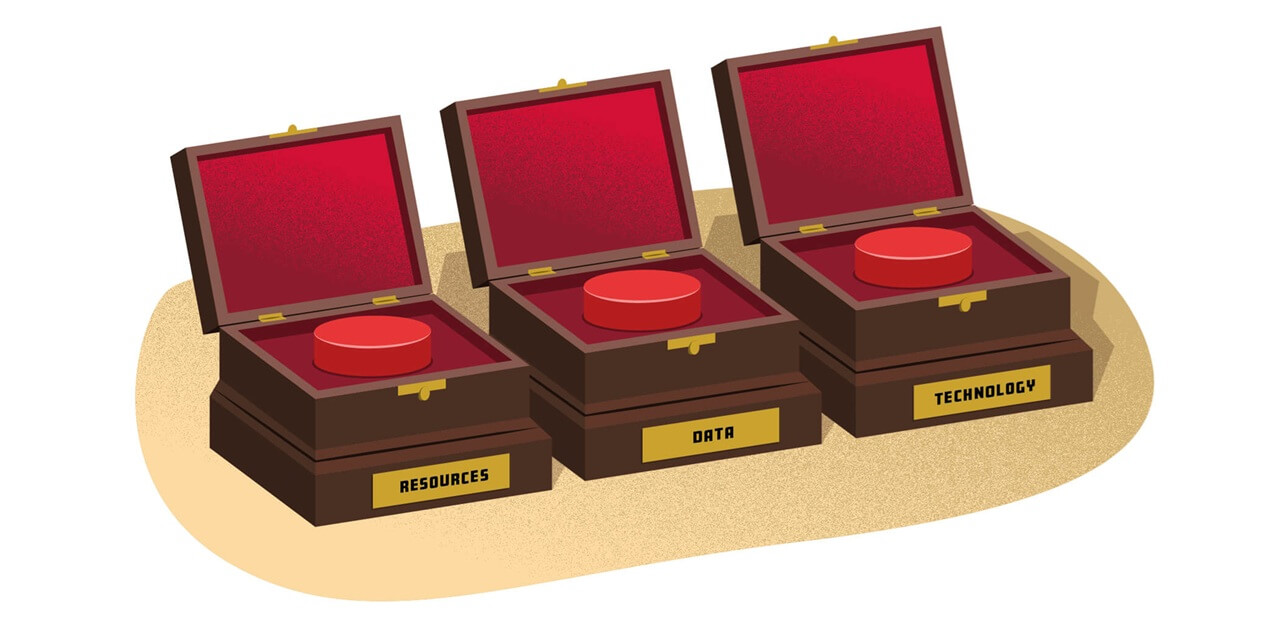
That is why, in his view, supervisory board members must learn to think in terms of dependencies and power balances. ‘Raw materials, data, and technology have become strategic weapons. We were already used to the Chinese government interfering in companies, but now this is also happening in the US. It would be naive to continue to rely on free trade and an open takeover market while others are protecting their economies.’
Veldman also expressed his concerns about the retreat from ESG criteria. ‘As a result of political pressure, companies are increasingly distancing themselves from ESG objectives.’ Europe must not follow this trend. Veldman warned against abolishing ESG frameworks: ‘Throwing out the baby with the bathwater undermines their own license to operate.’
Veldman made three concrete recommendations to the Corporate Governance Code Monitoring Committee:
1. Focus on a European perspective: pay explicit attention to strategic dependencies on raw materials, AI, and data.
2. Invest in professionalization: the era of supervision at arm’s length is over. We need a community of learning supervisory board members.
3. Strengthen the Dutch governance identity: our Dutch commitment to stakeholder thinking is not a weakness, but a strength. Especially now that the world is becoming more polarized, we must defend it.
Supervision at arm’s length is no longer useful
Jaap Winter, professor of corporate law and corporate governance at the University of Amsterdam and Vrije Universiteit Amsterdam, during the seventy-fifth edition of the Nyenrode Board of Commissioners Program, reflected on the changing relationship between executive – and supervisory board members over the past twenty years. In 2003, Winter was a member of the Tabaksblat Committee, which drew up the first Dutch corporate governance code. ‘That code was created at a time when supervisory board members were far removed from the management board. They only saw what was going on when things went wrong. We, as a committee, felt that this had to change: supervisory board members had to be closer to the board – not to take over the management themselves, but to be able to monitor better and make adjustments sooner.’
This shift brought with it the necessary tension, according to Winter. ‘In the first few years after the code was introduced, there was sometimes friction. How close can you get? What is acceptable? That struggle is not over yet.’ According to Winter, the focus on retrospective monitoring is no longer sufficient. ‘The world is too complex to monitor only retrospectively. Supervisory board members must be able to think along with the board on what the organization faces: what risks, strategic shifts, and social expectations exist.’
In practice, he finds that this once again leads to an examination of the role of supervisory board members. How can they, together with the management board, go beyond merely superficially agreeing with management’s proposals, or then, ratifying? ‘Good supervision really revolves around an ongoing dialogue with the board, or probing, in which you explore dilemmas together. That requires curiosity, reflection, and courage.’ Winter argued that every supervisory board should develop a supervisory vision: a document that describes how supervision is carried out, which values are central, and how the interaction with the board takes shape.
Nature as a stakeholder
Tineke Lambooy, professor of corporate law at Nyenrode Business University, called on companies to give nature a place in the boardroom. ‘If we take long-term value creation seriously, we cannot ignore nature as a stakeholder.’ Lambooy shared shocking conclusions from the Planetary Boundaries framework, developed by the Stockholm Resilience Center, which shows that six of the nine planetary boundaries - from biodiversity to nitrogen emissions - are already in orange or red. ‘Companies have a major impact on ecosystems. Decisions about land use, water, or chemicals affect not only people, but also life on Earth itself,’ said Lambooy. ‘This is not an environmental problem, but an existential one. Ecology is also the anchor of the economy. Companies can only flourish within a livable planet.’
The professor outlined ways in which companies can embrace this stakeholder thinking. Companies can appoint a board member for nature or work with nature advisory councils or special committees that advise on environmental impact. ‘The point is that nature should play a role in decision-making. When decisions are made with input from such a nature board member or - council, greater insight is gained into the impact of companies on nature and their dependence on it. It also supports the reporting that companies are required to do under current standards. In this way, sustainability becomes more than just policy; it is integrated into the heart of the organization. Some companies have already given nature a voice, such as cosmetics company Faith in Nature and outdoor clothing company Patagonia.’ Lambooy recommends that the corporate governance code explicitly includes nature in the list of stakeholders in the explanation of principle 1.1. In addition, the term ‘dialogue with stakeholders’ should be changed to ‘structured dialogue’ and included into a company’s corporate governance.
One-tier or two-tier
During a panel discussion led by Vincent Moolenaar (director of board & governance programs at Nyenrode Business University), experienced supervisory board members engaged in a discussion. This led to various insights, such as the difference between a one-tier board and a two-tier board. According to Dick Boer, who is currently deputy chair and senior independent board member at Shell, the one-tier model can be very valuable. ‘Its strength lies in the closer collaboration between executives and supervisory board members. In a well-functioning board, you work together to move forward, instead of only looking back,’ said Boer.
How does that work in practice? ‘You build a strategic dialogue together. That starts with a brainstorming session outside the boardroom.’ It could be about the energy transition or the strategy for 2030. That topic then stays on the agenda for a year, so that it becomes an ongoing dialogue rather than a snapshot.’
Liesbeth Mol, chair of the board of Deloitte Northern and Southern Europe, also sees advantages to the one-tier board. ‘Executive and non-executive board members are jointly responsible for the strategy. That promotes cooperation. As a supervisory board member, you are closer to the decision-making process. This makes oversight more effective, as long as you maintain your independence as supervisory board member.’ Both Boer and Mol emphasized that it is not a good idea to opt for a hybrid form of the one-tier and two-tier systems. ‘Choose one or the other,’ said Mol. ‘That way, you prevent noise.’
Making material risks discussable
Multi-commissioner Petri Hofsté reflected on the transformation of supervision in the financial sector since the 2008 crisis. As supervisory board member of Rabobank, among others, she witnessed how the financial crisis led to a wave of regulations from regulators such as the Dutch Central Bank (DNB) and the ECB. ‘There was a lot of criticism at the time, but I can see that it ultimately brought many positive results.’
According to Hofsté, the biggest gain lies in the shift from looking back to looking ahead. ‘Supervision is no longer just about compliance with rules, but about strategy, risks, and behavior. This has made the sector more resilient. We are in a better position as a financial sector than before the crisis,’ she says. ‘That resilience is crucial, especially in a time of geopolitical tensions, climate change, and rapid technological developments such as AI.’
Hofsté emphasized that internal supervision has improved not only in the financial sector, but also in other companies. She is currently a supervisory board member at FrieslandCampina and various family businesses, among others. ‘What I have learned from the financial sector is primarily scenario-based thinking and making material risks discussable. It is not only about identifying risks, but about the question: what do we accept and under what conditions? That discussion about risk appetite and risk tolerance is now also increasingly emerging outside of the financial sector. In a time when resilience is key, this is crucial.’
The symposium was concluded by Rob van Wingerden, who has been chair of the Corporate Governance Code Monitoring Committee since 2024 and who will in the coming period be instrumental in the creation of the new code. He takes these insights to heart, with his primary mission being to ensure that the new code will be future-proof. ‘It should not be a checklist but should be a source of inspiration.’
This article was published in Management Scope 09 2025.