
Corporate governance
Following the collapse of Enron in 2001 in the United States, various initiatives emerged worldwide to prevent corporate mismanagement in the future, or at least to place a greater emphasis on good governance. In the United States, legislation was enacted: the Sarbanes-Oxley Act. This law requires companies to have robust audit committees and internal controls, holds directors liable for the accuracy of reports, and provides for harsher penalties for white-collar crime. The Netherlands chose a different path, but, like the United States, acted quickly. As early as 1997, Jaap Peters had made forty recommendations for good governance as part of the so-called Peters Committee. That early focus on good governance is easily explained. The polder model of consultative bodies has traditionally manifested itself in the business world as a so-called stakeholder model and also the two-tier model: the executive board determines the strategy, the supervisory board oversees, and the Works Council and other bodies advise. Peters essentially advised on how this structure (also known as the Rhineland model) could be optimally utilized.
The Rhineland model
The Rhineland model is characteristic of (among others) the Dutch system. In addition to the company and its shareholders, this model also focuses on other stakeholders, such as employees, customers, suppliers, and society. The executive board and the supervisory board are separate, forming what is known as a two-tier board. In countries such as the United States, the Anglo-Saxon model dominates, with a greater focus on profit and shareholders. Here, executives and supervisors sit together on a board of directors, known as a one-tier board.
The Origins of the Dutch Corporate Governance Code
In the wake of the Enron accounting scandal, the Netherlands experienced its own major accounting scandal. The supermarket group Ahold had been manipulating its financial figures. Unlike Enron, Ahold would survive, but one thing was clear: even the stakeholder model was not immune to large-scale malpractice. Consequently, then-Minister of Finance Hans Hoogervorst established a Dutch corporate governance commission in March 2003, led by Morris Tabakblat. The renowned top executive (and later supervisory board member) succeeded in getting the business community’s leadership to agree on self-regulation through a code of conduct for companies and their directors. The so-called Corporate Governance Code, published in December 2003, contains over 100 recommendations for good governance.
The Corporate Governance Code Monitoring Committee
Companies committed to applying the corporate governance code or explaining why they deviated from it on certain points. In 2004, the corporate governance code—known among directors as the Tabaksblat Code—was enshrined in law. The Corporate Governance Code Monitoring Committee was also established. Since then, it has overseen compliance with the code. Under Tabaksblat’s successors, Jean Frijns and Jaap van Manen, the code was revised. Frijns broadened support for the code by, among other things, involving investors in the code. Under Van Manen, who introduced the revised Corporate Governance Code in 2018, the concept of “corporate culture” became a key focus. In 2018, Pauline van der Meer Mohr was appointed chair of the Corporate Governance Code Monitoring Committee. Under her chairmanship, the Committee further developed topics such as long-term value creation, stakeholder dialogue, the role of shareholders, and diversity. In 2025, a new Committee was established, led by Rob van Wingerden. That Committee’s first major achievement was to incorporate the Statement on Risk Management (VOR) into the Code.
Key themes in the Dutch Corporate Governance Code
From day one, there was much debate about recommendations regarding compensation and compensation policy: might transparency have a driving effect on executive pay? Many companies now have a compensation committee that reviews compensation policy, and compensation is being scrutinized more critically at shareholder meetings. Long-term value creation was also a key theme. This must be the primary objective when formulating long-term strategy. Furthermore, directors are expected to articulate a vision regarding the level of their own compensation and how it aligns with long-term value creation. Corporate culture is also considered increasingly important. For example, the board and supervisory board members are expected to promote openness and accountability. In short: good governance without accounting scandals.

Top 100 Supervisory Board Members 2026: Diversity Is in the Details
As the most influential supervisory board member in the Netherlands for the fourth year in a row, Dick Boer himself thinks it is getting boring. While last year we were still wondering if the list was the prelude to real change, for the first time since 2019, the top three consists entirely of men ‘of a certain age’. We find diversity between the lines, because at second glance, the list is fortunately less homogeneous: the podium is not entirely white, and the percentage of women in our top 100 is once again above forty.
Read more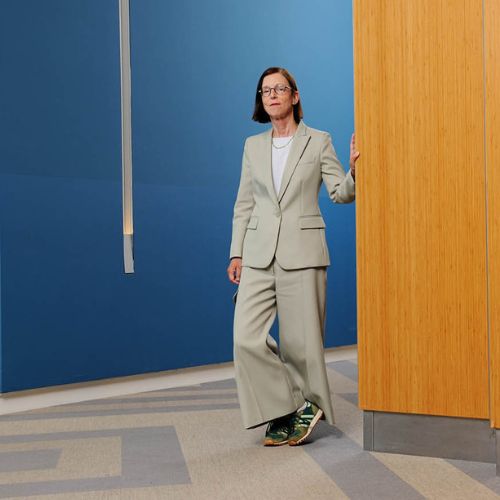

Good governance starts with giving yourself and each other the space to seriously discuss discomfort, doubt, and moral questions – and then being willing to act on these. Also important: taking your intuition seriously and working together to create a culture where you are allowed to ask ‘stupid questions.’ AFM Chair Laura van Geest sees herself as the ‘director’ of a constructive dialogue. ‘By structuring disagreement with clear ground rules, you increase the likelihood of an open conversation. This also gives you a better chance of raising the issue of discomfort.’
How do you handle conflicts of interest in the boardroom responsibly, and what role can company secretaries play in this? That question was central to a breakfast session hosted by Management Scope, A&O Shearman, and The Board Practice. ‘Company secretaries play a key role.’
Laura van Geest (AFM): ‘Taking your intuition seriously’
Good governance starts with giving yourself and each other the space to seriously discuss discomfort, doubt, and moral questions – and then being willing to act on these. Also important: taking your intuition seriously and working together to create a culture where you are allowed to ask ‘stupid questions.’ AFM Chair Laura van Geest sees herself as the ‘director’ of a constructive dialogue. ‘By structuring disagreement with clear ground rules, you increase the likelihood of an open conversation. This also gives you a better chance of raising the issue of discomfort.’
Conflicts of interest in the boardroom: inevitable, not insurmountable
How do you handle conflicts of interest in the boardroom responsibly, and what role can company secretaries play in this? That question was central to a breakfast session hosted by Management Scope, A&O Shearman, and The Board Practice. ‘Company secretaries play a key role.’



.jpg)
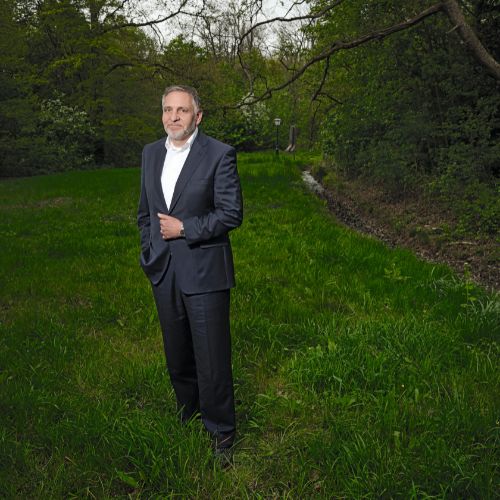
AI is developing so rapidly that waiting is risky, yet at the same time so unpredictably that no one knows exactly what to prepare for. This presents directors and supervisors with a difficult dilemma: how do you make sensible decisions about a technology of which the full consequences are still unknown? The solution lies not in blind automation or waiting for regulations, but in agility, a well-considered balance between humans and machines, and an AI-savvy management and supervisory board.
Building a diverse portfolio of supervisory board positions is, according to Peter Bommel, who holds four board positions across completely different sectors, ‘a combination of what comes your way and what you seek out yourself.’ NOC*NSF had always been a dream, so I pursued it myself.’ What are the ambitions and concerns for this multi-board member who took the first position on the Management Scope Next50 Supervisory Board Members in March? And what is he hopeful about in these turbulent times?
Supervisory board member Joseph Kuling talks about the lessons he learned on the supervisory board – in good times (‘that is when you keep executives on their toes and give them new insights’) and in times of crisis. He cannot avoid the Sanderink case: ‘When we decided to suspend and dismiss Gerard Sanderink, I thought that no owner-manager would ever appoint me as a supervisory board member again.’
Why AI is also a governance issue
AI is developing so rapidly that waiting is risky, yet at the same time so unpredictably that no one knows exactly what to prepare for. This presents directors and supervisors with a difficult dilemma: how do you make sensible decisions about a technology of which the full consequences are still unknown? The solution lies not in blind automation or waiting for regulations, but in agility, a well-considered balance between humans and machines, and an AI-savvy management and supervisory board.
Peter Bommel: ‘Strategy is all well and good, but then it needs to be executed’
Building a diverse portfolio of supervisory board positions is, according to Peter Bommel, who holds four board positions across completely different sectors, ‘a combination of what comes your way and what you seek out yourself.’ NOC*NSF had always been a dream, so I pursued it myself.’ What are the ambitions and concerns for this multi-board member who took the first position on the Management Scope Next50 Supervisory Board Members in March? And what is he hopeful about in these turbulent times?
Joseph Kuling: 'A director and major shareholder actually wants you to be critical'
Supervisory board member Joseph Kuling talks about the lessons he learned on the supervisory board – in good times (‘that is when you keep executives on their toes and give them new insights’) and in times of crisis. He cannot avoid the Sanderink case: ‘When we decided to suspend and dismiss Gerard Sanderink, I thought that no owner-manager would ever appoint me as a supervisory board member again.’

Petri Hofsté: ‘They conceive, we approve – that separation is too rigid’
Petri Hofsté learned to supervise in practice in the mid-1990s, without the extensive regulations, information protocols, codes, and supervisory visions that are now inevitable. As a seasoned member of multiple supervisory boards, she has her own unique perspective. ‘Public visibility has limits, just like diversity on a board of directors or supervisory board, and strategy is a shared responsibility of the executive board and the supervisory board.’
Read moreMost read
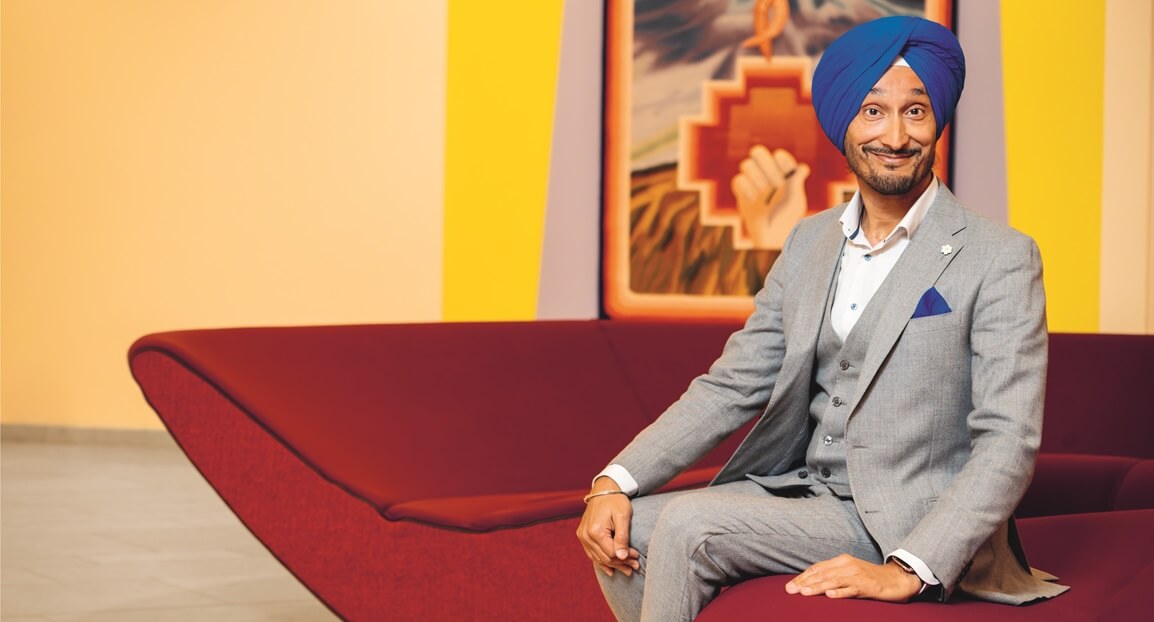
Kuldip Singh: ‘Ask Yourself How It Can Be Done Ten Times Faster and Better’
Kuldip Singh is No. 1 on the Next50-list of non-executive directors. An open conversation about backbone, the importance of diversity and the power of digital transformations with an upcoming non-executive director who does not want to let go of the executive side.
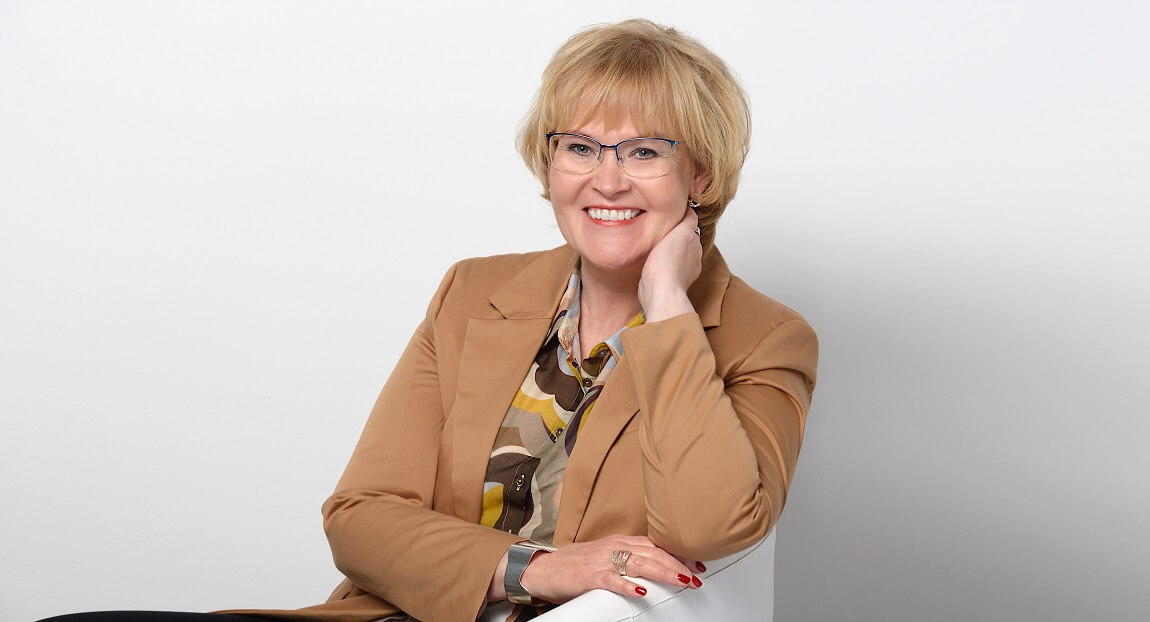
Essimari Kairisto: ‘Productively Sparring Supervisory Director Makes All The Difference’
Essimari Kairisto is the highest-ranking woman and highest-ranking foreigner on the list of emerging top supervisory directors, the Management Scope Next50 2024. She entered the list out of nowhere. It is therefore a good time for a closer acquaintance with this TenneT and Fugro supervisory director.
Nienke Meijer on leveraging collective wisdom

Look in the mirror but then also look beyond it

Next50 Forum 2026: The supervisory director in 2035
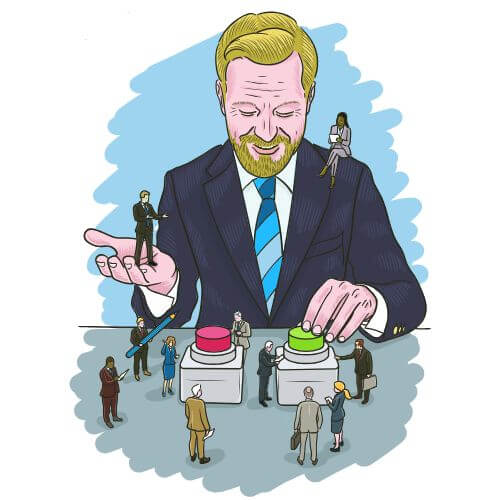
A fundamental reorientation of investor relations
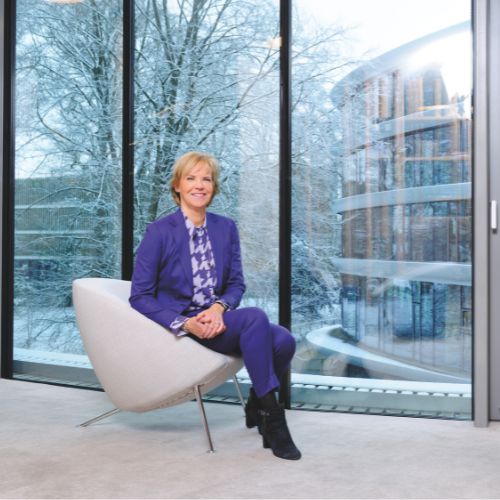
Simone Huis in 't Veld on becoming a professional non-executive
.jpg)
Roelien Ritsema van Eck: ‘Public task, private context’
.jpg)
Maarten Otto: ‘I now have more compassion for non-executives’

.jpg)
.jpg)
.jpg)
.jpg)
Last summer, Annette Ottolini officially retired. She stepped down as CEO of water company Evides. Now it is time for a new phase in her working life: as a supervisory board member. Ottolini is a ‘newcomer’ this year in the Top 100 Supervisory Board Members (number 63). As a former member of the management board, she knows the ropes. ‘As CEO, I was called in by the chairman of the supervisory board after a crisis. He said I had handled the crisis excellently, but that I had failed to keep the supervisory board properly informed. I learned a lesson then.’
The AGM season – the time of year when the general meeting of shareholders is held – no longer exists. The relationship with shareholders requires attention throughout the year, according to investor relations specialists Kirsten van Rooijen and Ivana Cvjetkovic of Computershare and Georgeson. ‘Investor engagement is a year-round activity.’
Annette Ottolini: ‘A supervisory board can sometimes be a pain in the ass’
Last summer, Annette Ottolini officially retired. She stepped down as CEO of water company Evides. Now it is time for a new phase in her working life: as a supervisory board member. Ottolini is a ‘newcomer’ this year in the Top 100 Supervisory Board Members (number 63). As a former member of the management board, she knows the ropes. ‘As CEO, I was called in by the chairman of the supervisory board after a crisis. He said I had handled the crisis excellently, but that I had failed to keep the supervisory board properly informed. I learned a lesson then.’
‘Investor engagement is a year-round activity’
The AGM season – the time of year when the general meeting of shareholders is held – no longer exists. The relationship with shareholders requires attention throughout the year, according to investor relations specialists Kirsten van Rooijen and Ivana Cvjetkovic of Computershare and Georgeson. ‘Investor engagement is a year-round activity.’

Europe must defend its corporate governance values
.jpg)
Karl Guha: ‘Zero risk means zero reward’
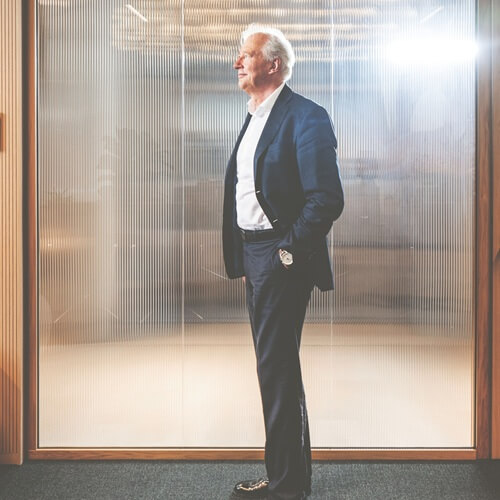
Jack de Kreij: ‘Optimize, evaluate, and re-adjust’
.jpg)
Henk Rottinghuis: ‘Curiosity is more important than knowledge’
Barbara Bier: ‘We need to correct this omission’