
Barbara Bier: ‘We need to correct this omission’
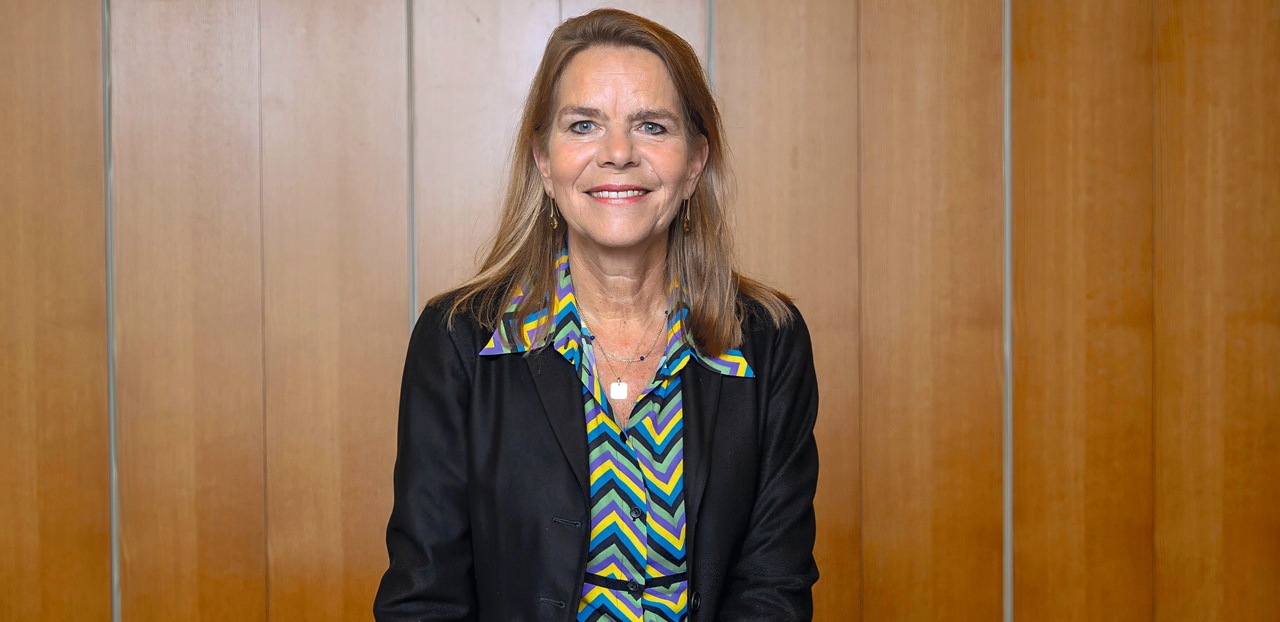
Barbara Bier never tires of discussing the legal aspects of corporate governance. It has been her field of expertise and her passion for more than thirty-five years, including as professor of corporate governance at Nyenrode Business University. How are companies managed and controlled? What is the role of managers and supervisors? And how should all this be recorded ‘with legal purity’ in the new corporate governance code? On the latter theme, she recently moderated a debate on the future of the code during an anniversary symposium at Nyenrode Business University, marking the 75th edition of the Supervisory Board Cycle, the institute's renowned training program for supervisory board members and regulators. Bier is happy to elaborate on this in Management Scope. ‘I find that very limited attention has been paid to the one-tier model in the corporate governance code.’
What makes governance so interesting to you?
‘I am not sure where that enthusiasm comes from. I find governance interesting in a very broad sense. How do you organize the management and supervision of a company? What is the optimal form of management and supervision for a listed company, a two-tier status company, or a family business? And how and to what extent do you lay all that down in legal terms? There is another interesting development that I am currently working on: companies that want to operate with a more social or societal mission and want to incorporate this into their governance. I find this fascinating to study, especially the relationship between management and supervision and the general meeting, the shareholders. How do they exercise their powers? How do the members of these bodies interact with each other?
The collaboration between the executive board and the supervisory board is like a dance, like a tango between the management and the supervisory board. You perform the tango together, and if it is done well, it forms a fluid, energetic whole. But it does demand a lot from the dancers. They have to understand each other. There is tension, but also leadership, focus, and consistency of roles.’
Am I mistaken, or is there more attention for governance than ever before? And does governance today differ from the governance of fifty years ago?
‘Governance has always existed and has always been important. However, it is partly thanks to the Corporate Governance Code and all the discussions that preceded it that good corporate governance has become more prominent and has also come to be known as governance in the Netherlands. In the early 1970s, following the report of the Verdam Committee in the 1960s, we saw a change in the legal framework governing works councils in the Netherlands. This framework also laid down governance rules, to a certain extent. The law also established special governance rules for large companies, the so-called two-tier companies. These companies were required to establish a supervisory board.’
Not only the development of companies themselves, but also things that went wrong changed the view on governance, and in 2003, we saw this reflected in the Tabaksblat Code. The role of supervision has become much more important over the years. And the interpretation of that supervision has evolved enormously. But do not be mistaken: the vast majority of companies in the Netherlands still only have a board of directors and no separate supervisory body. It is all very simple and straightforward.’
It is undoubtedly also true that governance themes come and go...
‘I sometimes say to my students that we should really publish an annual Vogue on governance, featuring all the latest topics. These themes often go hand in hand with developments in society. In the 1960s, for example, the social component became more important. In recent years, internal control and risk management have been the buzzwords, and new layers, such as themes around ESG, AI, cybersecurity, and geopolitics, are constantly being added. This has major consequences for companies, including in terms of continuity. For a long time, risk management was more focused on internal matters, but there is now much more going on outside the organization that demands attention.’
You just mentioned several different types of management structures. Is there, in your opinion, an ideal management structure?
‘The interesting thing is that there is no such thing as ‘the ideal structure'. The optimal size and composition of the board and, where applicable, the supervisory board, are different for every company. It is also very important to consider what type of company it is – is it a holding company or more operational – and what suits it best.
In the Netherlands, we have traditionally had a two-tier model for listed companies, with an executive board and a supervisory board. It is an excellent system. But here too, you see shifts. Some years ago, there was a call for a legal basis for a one-tier board, and that has been established. You now see that a few Dutch listed companies, particularly those with foreign listings, have adopted this model, in which executive and non-executive directors sit on the board together.’
Is there sufficient attention for the one-tier model?
‘In my opinion the attention paid to the one-tier model, both in law and in the corporate governance code, is very limited.’
Because all the attention is focused on the two-tier model?
‘Which is a very good model, do not get me wrong. It is fine if we have all kinds of governance ideas about it. However, in the Netherlands, we have been very sparing in defining the one-tier model. And I see that as an omission. If it were up to me, this would be rectified in a next version of the code.’
The code could simply state: 'for non-executive board members – see under supervisory board members ...’
‘From a legal perspective, the one-tier model is a completely different model. We really need to formulate some more thoughts on this. Currently, the code focuses a lot of attention on the supervisory board, which is justified. And for some things, you can indeed replace ‘supervisory board members’ from the two-tier model with ‘non-executive board members’ in the one-tier model. But the essential difference is that non-executive board members are part of the management board. And, therefore, they have different tasks and responsibilities than supervisory board members. If there are two different models, you will also have to clearly distinguish between them. I am a lawyer, and I value legal clarity.’
Is it, in the end, not simply a 'cultural thing'? We in the Netherlands have traditionally been two-tier ...
‘Yes, that may be true, but we do also have the other model. And it is not an inferior model. It exists and it can work well as a system. Dutch law is rather cursory about the tasks of the management board and the supervisory board. And even more so about the tasks and division of responsibilities between executive and non-executive members in a one-tier board. I really see a role for the Monitoring Committee here, especially because over the years the code has, on some issues, proven to be a precursor to new legislation.’
And what does the Monitoring Committee, which is responsible for revising the code, think about this?
‘I have no idea. We will see. But the final document of the previous committee acknowledged the underemphasis of the one-tier board, so I am hopeful.’
I have the feeling that the debate is taking place in completely different areas, for example, whether the public debate is sufficiently integrated into the code. And who would be allowed to participate as stakeholders.
‘That debate is certainly taking place and is very interesting. But as a lawyer, I am particularly interested in how management and supervision are structured. For me, it is about a certain purity and clarity in the content of the roles that need to be fulfilled. And in doing so, we must be mindful of the developments we see in companies when it comes to management.
I have not studied all listed companies in the Netherlands, but I get the impression that in quite a number of companies, the board consists of only two directors: a CEO and a CFO. And around them there often is a whole host of people who are not directors, in an executive team with the CEO and CFO. These operate under names such as the exco, the leadership team, the leadership executive team ... and then there is also a supervisory board. The Monitoring Committee could also look into this more closely. The code does take into account that there might be an exco and provides some best practices, but in my opinion, it does not sufficiently address the question of how this relates to the performance of management tasks by the directors themselves. Is this still a true two-tier board?’
Are you suggesting that some two-tier boards behave like one-tier boards?
‘In fact, I mean something else. I get the impression that these companies are in fact using a different type of governance model. My impression is that a very small executive board focuses primarily on general affairs: strategy, risk management – that sort of thing. And that the exco members who are not directors focus much more on the executive tasks of a board. The websites of some of these companies may give the impression that all members of the exco are, in a sense, management directors. Well, that starts, to a certain extent, to resemble a sort of one-tier board, but with a division of tasks between people who are statutory directors and who take responsibility for the general course of affairs, and people who are non-statutory directors and who carry out the management.
I have no opinion on this whatsoever, because it can all work perfectly well, but I am curious how the code views it. This is where, in my opinion, a corporate governance code comes into its own. Are there, for example, limits to this division of tasks? Do we need more best practices for these kinds of models?’
Are there other issues that the Monitoring Committee needs to look at urgently?
‘The code contains a great deal of information about supervision and the composition of the supervisory body. As I said earlier, I think it would also be good to take a closer look at the role, scope, and composition of management. The law states, paraphrased, that ‘management manages’. What exactly do we mean by that? This must go beyond the strategy for sustainable, long-term value creation or the formulation of goals. And if we want a profile for the supervisory board, why not for the executive board?
Furthermore, as the Monitoring Committee, I would certainly take a close look at various governance rules that have recently been laid down in European legislation. Such as the CSRD on the description of the role of the various bodies on sustainability issues, and the NIS2 on cybersecurity. This could, with time, also be done for other issues. Certain regulations may not necessarily apply to all companies, but they sometimes contain useful, modern governance rules. These rules could also be of benefit to companies that do not fall under these guidelines.’
From what I gather, you are not necessarily in favor of a code consisting of only ten commandments...
‘I am certainly not in favor of ten commandments. Governance, unfortunately, cannot be captured in ten commandments. I believe that the code should encompass contemporary governance practices. The code currently states: 'The principles can be understood as widely supported general views on good corporate governance’. The idea is: comply or explain. What I am a little afraid of is that if companies want to do things just a little differently, they might face criticism of not practicing good governance. They will have to explain that they are doing things slightly differently in terms of governance. People will have opinions on that. And I could imagine that this can discourage companies from deviating from the code, even though there may be very good reasons for doing so and the deviation is not wrong at all or does not constitute poor governance. So, what they do is dutifully tick the boxes to comply with the code. That does not seem like a desirable situation to me.’
Back to the old, trusted supervisory board and how it functions. Do you have any recommendations for that?
‘It is incredibly important that a supervisory board is well composed. Companies should take a critical look at this every year. For supervisory board members, it has long been about knowledge, expertise, and time. But a supervisory board must also include people with relevant knowledge of what is happening in the company. Because the amount of data available within a company is only increasing, it will also have to be about access to that data, and that may require even more specialized knowledge and understanding. A supervisory board also has an important task in discussing this. The supervisory agenda must cover developments both inside and outside the company. Sometimes this requires very specific knowledge, whether temporarily or not. So, perhaps you urgently need an AI specialist, a cybersecurity specialist, or an ESG specialist on the supervisory board now, and in three years’ time it may be something else entirely. Then there will be different stories in the Governance Vogue.’
This interview was published in Management Scope 10 2025.
This article was last changed on 18-11-2025