
Dick Berlijn on the triangle of industry, investors, and defense
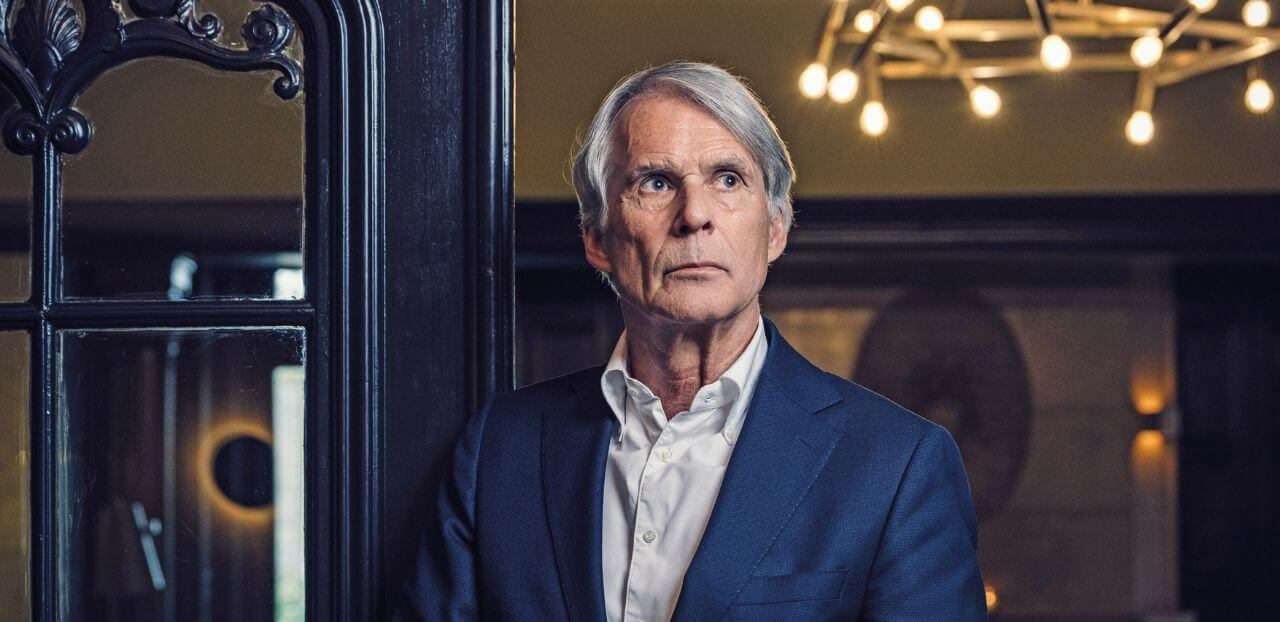
Defense has become interesting again. For years, companies preferred not to be associated with war huggers, but the tide is now turning. On the one hand, for idealistic reasons - ‘we are proud of our European values-based society, and we will not let anyone take that away from us’ - and on the other, for purely commercial reasons, as billions are to be invested in defense in the coming years. Plenty of opportunities, then, to cash in on. Gerbrand ter Brugge, former platoon commander and partner at mergers and acquisitions specialist Oaklins, will be engaging in open and candid discussions about the opportunities, possibilities, and risks, particularly for the Dutch business community, for Management Scope. To start, he crosses swords with Dick Berlijn, former commander of the armed forces of the Netherlands. ‘I believe every boardroom should consider whether its company can spare personnel to serve as reservists.’
The conversation takes place at the De Wilmersberg estate, not far from Berlijn’s home in Oldenzaal. Berlijn may may be officially ‘retired’, but he remains a highly sought-after figure – in the media, for appearances across the country, or for sessions with the business community – for his view on the changing state of the world. The status quo as at the beginning of this century is gone. ‘Spinning out of control,’ is how Berlijn describes it. ‘Everything is shifting. China has emerged from a developing country into a giant. Russia believes it must return to the great Russian empire. And the US has a president who does not believe in alliances, but in transactional deals.’ And Europe? ‘We have spent far too long trying to understand what this means for us and how we should relate to this new world order. We really urgently need to get to work.’
Ter Brugge, too, experiences firsthand how times are changing: ‘A few years ago, I was working with Oaklins on the sale of a Dutch lens company. A highly respected company, with about five percent of its revenue related to defense. I was, however, unable to sell the company at the time. Why? Because private equity said: ‘Defense? We no longer invest in that.’ Now, in 2026, the mood is completely different. Private equity firms are now asking me specifically for something ‘defense-related.’ We should not romanticize this, because of course this is also because there is significant money to be made from this sector over the next ten years. But still, something important has changed. An atmosphere of: ‘How can I do my bit?’, has emerged.’
Ter Brugge wants to know if Berlijn has any idea why that is. Berlijn: ‘In the past, the armed forces manufactured a great deal of equipment themselves. Back then, we had naval shipyards, and we had Fokker. We no longer have that. Now, much more than back then, we need the innovative power of the business community. Fortunately, we have many companies in the Netherlands - often in the form of startups or scale-ups - that are incredibly innovative. The problem is that these innovative companies often lack the funds. That is where we need investors. The triangle of industry, investors, and defense is where it needs to come from. They will need to work together in the coming years. And all three have their own responsibilities. The defense sector will have to articulate much more clearly what kind of capabilities they need. Industry must clearly communicate what technology it is working on and how that technology can provide a solution for the intended capabilities. Investors, in turn, will have to come on board with that. And the government must facilitate it all.’
In my experience, the government and the business community speak two different languages. Classic procurement processes take a long time and often involve total packages that are far too large. Could that be done differently?
‘We will have to speed things up no matter what. A quarter of a century ago, you might still have been able to embark on such lengthy processes. We no longer have that luxury. We have only a short window of opportunity. It has to be ready now, or within two years at most. This time pressure forces us to do a number of things differently, for example in the area of procurement.
We can take a cue from Israel. There, the Ministry of Defense indicates much more transparently what they would need in the coming period. Industry can then respond to that, and in fact are actively invited to indicate early on what it can offer, also in specific sub-areas. That system ensures much greater speed.’
Perhaps you also have to bet on multiple horses at once? Maybe it is smarter to invest in ten different drone technologies than in just one. And maybe you have to factor in losses. Do you see that mindset changing?
‘I hear about high aspirations, but I still see too few concrete examples. I do not yet see seven parties being allowed to get to work simultaneously. Even though I am quite often approached by relatively small companies with rather brilliant solutions.
Occasionally, things do go well, though. I know that in the field of drone and counter-drone technology, parties are now being actively approached. A good example from the past, to me, is Optics11, a small company that developed a technology that allows you to detect sound using laser light. The Ministry of Defense managed to incorporate that technology into a contract for the new submarines. So, it is possible, but in my opinion, these too often are lucky shots. There is too little vision or policy behind them. Fortunately, I am seeing initiatives emerge from the investor side. A good example is former TomTom executive Alexander Ribbink, who invests in European defense technology with Keen Ventures. He has built up a huge network, both within the defense sector and within the world of startups and scale-ups. He has a pretty good grasp of supply and demand.’
For investors, the risk is often too high. Statistically speaking, the chance of success is small. The risk of your money going down the drain is quite significant. A mechanism will need to be established whereby someone who invests in the right venture is de-risked. Should we not be moving towards a defense fund that de-risks investors?
‘De-risking is crucial. We do indeed need to figure out how to structure that in some way. Otherwise, the necessary money simply will not materialize. Furthermore, some advocacy work still needs to be done with politicians. We are dealing with a parliament unwilling to risk mistakes. The House of Representatives is quick to say: never again. As a result, we have become risk-averse - including in defense. Yet, precisely on this issue, we will sometimes need to take risks if we want to have our defense in order on time. If something needs to happen within two years, it is obvious that you will have to take certain risks. The time factor needs to be given more prominence.’
Let us shift our focus to Europe for a moment. The Netherlands will, after all, have to do this together with the other European countries. Are you optimistic about European cooperation?
‘We are sitting on a mountain of money in Europe; that is not the problem. But unfortunately, all sorts of national interests are at play. You see this now in the discussion about the sixth-generation of fighter jets, where France and Germany cannot agree on the terms and the distribution of funds. The project was supposed to project European unity, but national interests are once again playing too big a role. The European countries really will have to move past that.’
Should Europe not take a much smarter approach to defense? Should every member state not receive a certain amount to invest in a specific, defined defense mission? The Netherlands could invest billions in – just to name an example – radar technology, Germany could invest in tanks, and France could work on submarines. Would that not be an option?
‘You are describing the ideal situation now. But I do not see that materializing anytime soon. The French will never accept that they are no longer allowed to build their own planes or tanks. And neither will the Germans. Even the relatively smaller countries have their own defense culture. The Swedes build excellent submarines with Saab Kockums. They are certainly not going to give that up. So, we are dealing with domestic politics. If you tell the Swedes to stop building submarines, you will likely see a government fall. That is the political reality in Europe. We are not a federal state; we are a group of small countries that have to make it work together.’
But surely ‘freedom’ is our common interest? Would it not be good if a European defense fund could say: ‘Sorry Netherlands, no drones for you right now; build a submarine instead.’ Surely any politician can explain that to the voter?
‘Coordination is certainly desirable. In fact, there should be a European Security Council where you can consult with the member states on security and defense matters. And actually, you should also have a high-ranking general who, as supreme allied commander, can blow his whistle and say: if that is the political direction, then this is how we are going to do it; all of Europe’s armed forces are now under my command, and I will determine the deployment of the units. That general will also be responsible for conducting technical evaluations. Where do we stand, and what do we need? That will be a guiding element for identifying shortcomings. I would be very much in favor of that.’
To what extent is it wise to look at dual use technologies, that is, at technologies that can be used not only for defense but also in civilian society? I recently saw that the German supermarket chain Lidl is building its own cloud system, completely independent of American tech companies. That is an open European architecture that we will all be able to use soon. Should we focus more on that?
‘I welcome dual use. I think companies can benefit from the demand for dual-use technology. And I think it is, of course, valuable to deploy technological knowledge not only in the military but also in other places in society. For example, radar technology can be deployed much more broadly than just in defense. So yes, focus on dual use as well. As long as it does not stand in the way of further building a strong military. I will add that as a condition.’
And then there are the Dutch boardrooms. What should be high on their agenda?
‘Fortunately, I see a growing awareness in boardrooms that the world is changing and that the market is changing with it. That has consequences for everything we have done so far. We will have to be aware of this and adapt. Companies will have to develop concrete plans, think in terms of scenarios, and identify vulnerabilities. More often than before, companies will have to view their strategy through a geopolitical lens. Companies will also need to take social responsibility. This wonderful society did not just happen by chance. Together, we built it. And we will need to think about how we can defend it together.’
Would it not be a good idea to bring military knowledge or experience into supervisory boards?
‘Having military personnel on the supervisory board is not an end in itself. You should do so because you believe it brings in specific capabilities or knowledge. These days, there is a greater focus on geopolitics, logistical processes, and, for example, time management – areas where former military personnel have extensive expertise. In those cases, that knowledge can be useful.’
There are also companies – KPN, for example – that encourage their employees to serve in the military as reservists. Is that a positive development? And what else could boardrooms do to support the military?
‘I applaud what is happening at KPN. Employees who serve as reservists are given the opportunity to do so and even receive a number of hours of paid leave for it. I believe every boardroom should consider whether the company can spare employees to serve as reservists. As a company, you get a great deal in return, not only knowledge, but also a network. Moreover, as a company, you also hold a position in society. You must take responsibility for that. We are proud of our European value-based society, and we will not let that be taken away from us. Furthermore, I would certainly recommend that boardrooms reach out to the Ministry of Defense themselves and enter into dialogue, to better align what both parties can mean for each other.’
I served in the military myself, was a platoon commander, and that taught me a lot. Would reintroducing conscription be a good option?
‘I can only endorse that. Everything you learn in the military comes in handy later in your career. You learn to work together, you learn to grit your teeth when things get tough, you learn to stand tall, and you learn to deal with people who have a completely different background than you. Moreover, it is also good to realize that this wonderful society did not just happen by itself. It exists because we all contribute to it. For young people, compulsory military service also means investing. And when you invest in something, it gains more value, which makes you treat it with greater care. That seems like a win to me.’
This interview was published in Management Scope 04 2026.
This article was last changed on 07-04-2026