
How long-term investments can strengthen Europe
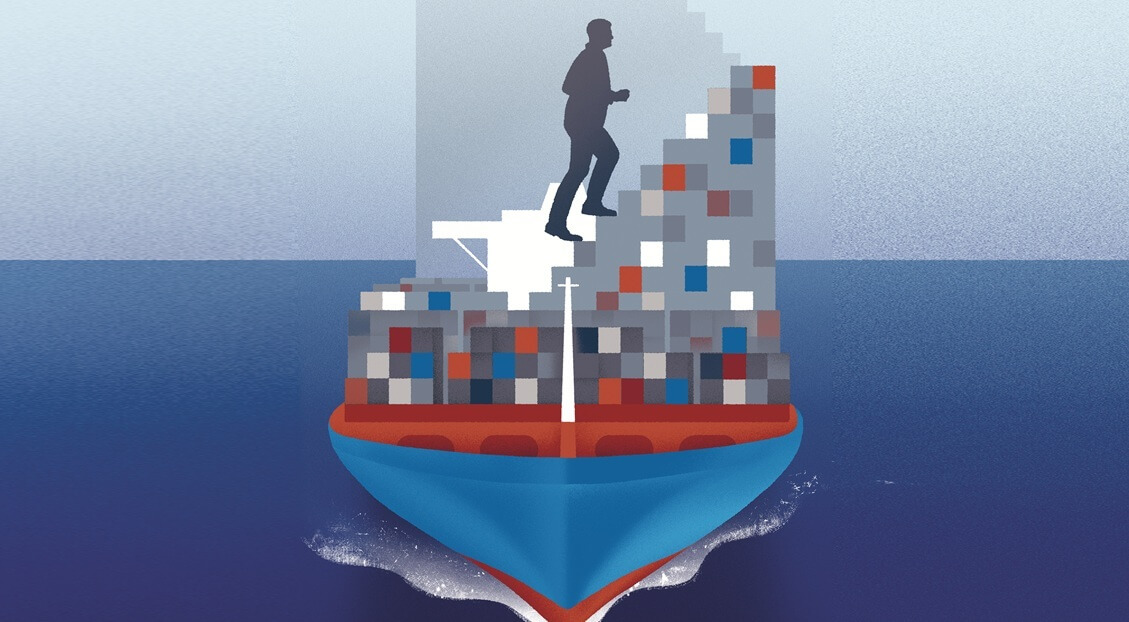
The Dutch know better than anyone that trade is an important source of prosperity. In a recent report, The Netherlands as a Trading Country 2025, Statistics Netherlands (CBS) shows that approximately one-third of all jobs in the Netherlands are attributable to export activities. Trade contributes to economic growth, the associated competition leads to innovation, and consumers enjoy cheaper and better products.
Over the years, global supply chains have become longer and more complex. An end product that enters the port of Rotterdam on a container ship now often consists of several components that have already traveled the globe. In a seemingly paradoxical way, this reflects the hyper-efficiency of the global economy. It allows us to make optimal use of the knowledge, raw materials, and infrastructure spread across the globe.
Strategic autonomy
However, the accumulation of global crises in recent years - from climate change to the coronavirus pandemic, followed by the large-scale Russian invasion of Ukraine - has exposed the vulnerabilities of this economic model. Large, complex value chains can have bottlenecks that are difficult to identify. Due to our economic interdependence, disruptions can have repercussions across the system. A hurricane in East Asia, for example, can lead to shortages in Latin America.
These risks are more worrying in a world of increasing geopolitical tensions. Trading partners can exploit this mutual dependence, which, increasingly, lead to geopolitical disputes being settled on the economic playing field. The International Monetary Fund (IMF) has calculated that, between 2019 and 2022, the number of trade restrictions has tripled. We can therefore no longer assume that the global value chains on which we have depended for decades will continue to function unhindered.
Because there are certain goods and services which we cannot afford to forgo due to the actions of another actor or even have our international room for maneuver limited by the fear of being affected in this way, we must work towards strategic autonomy.
Not self-sufficiency, but smart choices
What does that look like? The first mistake many make is to think that we have to produce everything ‘in-house’ (that is, in Europe). This is throwing the baby out with the bathwater. Globalization has brought us enormous prosperity, and it is in our interest to try to protect an open, rules-based trading system. It would be extremely inefficient to pursue a self-sufficient economic model in Europe. Moreover, in this tight labor market, few citizens are eager to return to the iron ore mines or work on smartphone production lines. Only for the most important products - for example, those related to our national security or health - should we swim against the economic tide and keep production on our continent. Otherwise, we can focus on goods and services that fit the comparative advantage of our knowledge economy. For other products, we should pursue a diversification strategy with less dependence on individual countries, technologies, and supply chains.
For a banker with a background in risk management, this is a no-brainer. The first lesson in this profession is to never put all your eggs in one basket. Hedging and diversifying a portfolio usually incurs a cost, which makes it all the more commendable that the European Investment Bank (EIB) and its subsidiary, the European Investment Fund (EIF), are contributing to improving European strategic autonomy.
Investing in innovation: from raw materials to scale-ups
As an example of the European strategy to strengthen the supply of critical raw materials, the EIB is supporting the production and recycling of copper, a raw material that is essential for the energy and digital transitions in Europe, with a loan to the German company Aurubis. EIB is also contributing to the first integrated production of lithium in the EU, a key component of batteries for electric vehicles, with financing for a project in Kaustinen, a Finnish region with one of the largest lithium reserves in Europe.
Our global activities are important, but EIB’s core business is actually in Europe. Approximately ninety percent of its annual financing, expected to reach around €100 billion in 2025, goes to (semi-)government institutions and companies on the European continent. Investment needs here are sky-high. And EIB is increasingly interested in innovative, higher-risk investments to keep Europe at the technological cutting edge. This is done under the TechEU program, with its goal being to accelerate European innovation by providing startups, scale-ups, and technology companies with better access to financing.
A few examples come from our investments in the biotech sector. Early in 2025 EIB provided a loan of almost €60 million to a Danish company that wants to produce cancer vaccines, and €20 million to the Dutch company Leyden Labs for the development of nasal sprays against flu and Covid. We also finance research, development, and innovation activities of established companies to reduce dependence on foreign technologies and strengthen our competitiveness.
From startup to scale-up
The European Tech Champions Initiative (ETCI) is important within the theme of competitiveness. This EIF fund finances the growth of promising European tech companies. We want to support companies that outgrow the start-up phase and grow into scale-ups, something Europe currently lags behind compared to, for example, the US. Dutch companies are also expected to benefit from these investments. By reducing dependence on American and Asian capital, we can safeguard our technological independence. In doing so, we aim to offer a direct (partial) solution to the problems identified by Mario Draghi in his report on European competitiveness: a lack of dynamism and innovation in the European economy, not because of a shortage of researchers and entrepreneurs, but because the associated ‘ecosystem’ (including financing) is not functioning properly.
These initiatives are directly related to the broader European commitment to strategic autonomy. Europe cannot act autonomously while almost all daily digital actions depend on American or Asian companies, which, theoretically, can be shut down remotely with a switch. Europe can also not expect countries manufacturing medication to export what they themselves might need in, say, the event of another pandemic.
These cases illustrate our approach. Every investment decision is made with strict, transparent, and financially objective criteria, which form part of the standard assessment and approval procedures. At the same time, the question whether there is a strong business case for developing the technology in Europe has to be answered and weighed against the consequences of having no or limited control. The assessment is thus done not only based on financial considerations, but with a broad perspective for the potential (macro)economic impact.
Investing in resilience: contributing to Europe's strategic autonomy
A different, more rigorous form of strategic autonomy has come into focus since the Russian invasion of Ukraine. For the first time in decades there is a large-scale conflict on the European continent. It has not escaped the attention that, after years of cuts to European defense budgets, a new wind is blowing through the continent. In the coming years, hundreds of billions of euros will have to be spent on security. The EIB Group has an important role to play here.
The institution recently adjusted its criteria regarding security and defense. What does that mean? As a long-term investor, our added value lies primarily in supporting investments in new innovation and new technological developments, as well as the protection of large-scale infrastructure. For example, the EIB recently provided a €25 million loan to the French company Gatewatcher, which is active in the strengthening cyber resilience, including in the Netherlands. But think also of research and development in astronautics, radar technology, autonomous vehicles, or optics. In this context, the EIF invested €40 million in Keen Venture Partners' new defense and security technology fund, which focuses on innovative European companies active in cybersecurity, AI, and space development.
Another example is military mobility. Europe needs a transport network that allows it to move heavy equipment to counter threats if necessary. Security and resilience also mean investing in the foundations of a resilient society, such as an adequate and secure digital and physical infrastructure, including a reliable energy supply, but also medicine production, European AI, data centers, and cybersecurity. This is in line with what the EIB has been doing for many years, namely financing critical infrastructure, and is therefore a prime example of how we can contribute to strategic autonomy. We are keen to finance projects that strengthen the overall resilience of society.
Strengthening national energy autonomy is also important. Earlier in 2025, the EIB lent €500 million to grid operator Stedin. This will enable the company to make much-needed investments in our electricity grid, which will not only benefit the economy, but will also reduce the Netherlands' dependence on external energy sources.
The EIB was established to strengthen Europe as a long-term investor. For our clients, the added value lies largely in the fact that, unlike some commercial investors, with our investments they are given the time and space to realize their ambitions. This philosophy also applies in the context of strategic autonomy. In a crisis atmosphere, it is easy to focus only on urgent matters, but we are also considering investment needs that are important but not necessarily dominating the headlines. Fortunately, these investments in strategic autonomy have not yet been put to the test on a large scale. But in the unfortunate event that a conflict, pandemic, or other crisis breaks out, we will be grateful that the EIB made these investments possible.
This article was published in Management Scope 09 2025.