
Jack de Kreij: ‘Optimize, evaluate, and re-adjust’
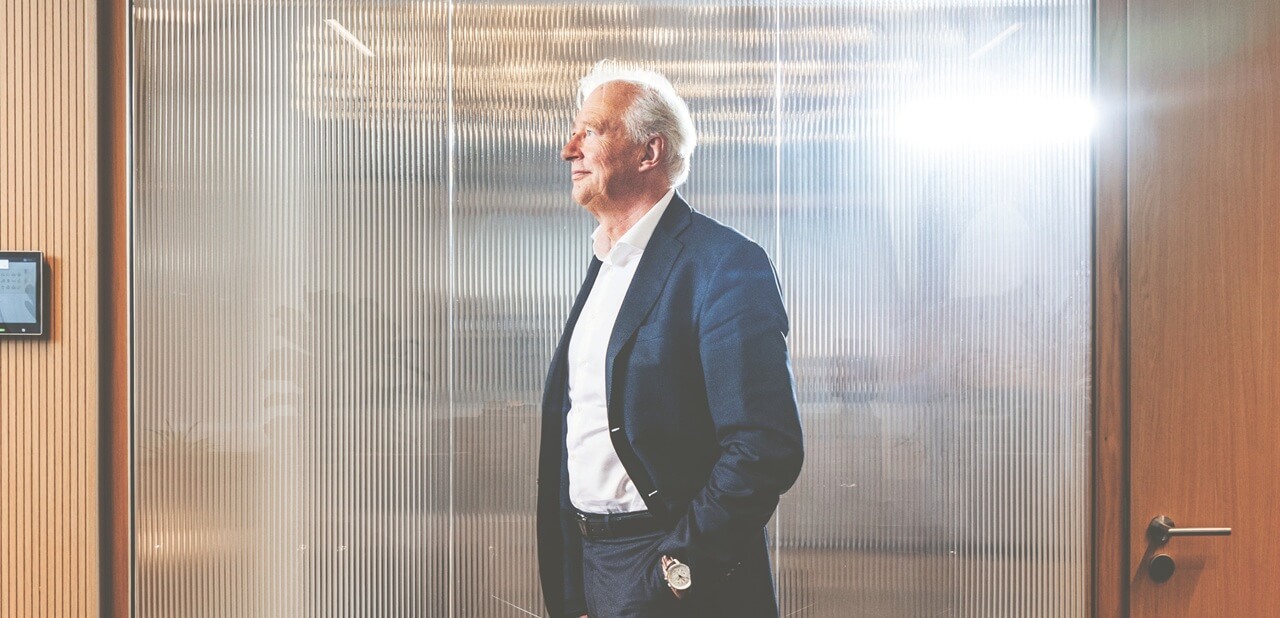
Jack de Kreij has over twenty years of experience as a supervisory board member for diverse organizations, currently ASML, Boskalis, and Wolters Kluwer. He is also chairman of the Dutch Association of Securities Issuing Companies (VEUO) and a board member of the Philips Preference Shares Foundation. This diversity characterizes him, he tells Charles Honée of A&O Shearman. ‘I have a wide range of interests, and I like to spread them across various activities. That is reflected in the supervisory boards I serve on, but also in my free time. I do not have a single dominating interest. Moreover, I believe that, especially as a supervisory board member, many issues cannot be viewed in isolation. They are often interconnected, and the trick is to see that connection and act accordingly.’
Almost every company today is affected by geopolitical tensions: climate adaptation, AI, demographic developments, and more. As a supervisory board member, which megatrend concerns you the most?
‘The first steps I see in a trend toward deglobalization – in part caused by the power shifts in the world, wars, and the trade war – is what concerns me most. We have, in a free, global world economy, developed strategies based on global value chains and the connections between them. Some cracks are appearing in these strategies. Is this a temporary situation we have to work through together? Or should we take into account that the foundation of globalization is being permanently eroded?
The latter could have a huge impact on the strategy of companies where you are a supervisory board member. A highly efficient value chain can suddenly become a very critical value chain, which can, for example, threaten the flexibility and availability of production capacity. Many companies are now exploring this and are taking some distance from the most efficient global structure to respond to a potentially serious disruption. Where and how do you choose your suppliers? Where is the best place to concentrate production? Every company must identify potential risks and develop various scenarios, but ultimately need to make clear choices. At the same time, geopolitical decision-making makes this complex. Companies increasingly have to comply with new regulations and therefore run compliance risks. This playing field forces them to constantly consider how their growth strategy can still be executed in a sensible and balanced way.’
Many of these megatrends create unpredictability. How do you, as a supervisory board member, come to a well-considered decision?
‘The issues a supervisory board member gets involved in at the moment are indeed subject to quite complex, dynamic changes. You need to be well aware of that. It is essential to create an environment in which you do not supervise from a distance but rather share reflections with the management board at an early stage. As supervisory board members, we are becoming increasingly creative in our approach. It is not enough to discuss the traditional three-year plans in detail once during a two-day session. On top of that, taking into account the enormous dynamics and swing factors, you need to find natural opportunities to explore, together with the board, what is fit for purpose. This creates a good mix of virtual and in-person meetings. For example, at one board, we set aside a dedicated time slot at each regular meeting to reflect on the impact of global developments, invite external guest speakers, and organize deep-dive sessions on specific topics. Where useful and important, we also hold meetings with strategic partners, key suppliers, or customers. Finding the ideal balance is unique to each company and requires a joint effort from the management and supervisory board.
Essentially, you are constantly searching for the optimal cooperation, which you then evaluate and adjust. This is necessary to ultimately anticipate possible future scenarios based on current knowledge and the experiences gained by the board and individual supervisory board members, and then to arrive at analyses and decisions in a very practical manner. For me, the emphasis is on practicality and pragmatism, because one thing is certain: one hundred percent certainty is, on many topics, totally unattainable. Uncertainty is inherent to business anyway, but especially now that the dimension of unpredictability and changing regulations has become more intense. You will have to do much analyzing using the knowledge you have, but you also have to make decisions and, above all, not get bogged down in details.’
You have a financial background, were CFO and vice-chairman of Vopak for many years and are now chair of the audit committee at all the companies where you serve. How do you think finance and business should interact?
‘They are inextricably linked. As CFO, you are primarily a manager and you also perform your other important responsibilities as CFO, not the other way around. That is a crucial point to note, because you are collectively responsible for the overall strategy and for maintaining and further improving the license to operate, and creating a distinctive competitive advantage. However, as CFO, your specific financial expertise means you have additional areas of focus within the collective. For example, you support decision-making around strategic scenarios with risk analyses and financial sensitivity analyses. However, this should not be a solely financial exercise. Your financial analysis must encompass all business components and provide a complete picture of the operational reality and strategic impact. Otherwise, you end up with good-looking spreadsheets and financial PowerPoint presentations that are disconnected from daily practice.
Once the strategic choices have been made, you, as CFO, also have an important role in controlling and adjusting. Are we using the right KPIs? Do the investment proposals fit seamlessly into the strategy? What risk-return narrative is appropriate? Is the internal control environment robust? Is the financing structure appropriate?’
You are also chairman of the Dutch Association of Securities Issuing Companies. You recently formulated a number of priorities to improve the Dutch business climate. Do you agree that the business climate is rather fragile?
‘I think that is putting it mildly. The business climate is extremely worrying. The reasons for this have been excellently outlined by the Confederation of Netherlands Industry and Employers (VNO-NCW). The Draghi report also outlines the main shortcomings, so we do not need to repeat them all here. What concerns me most is that we do not have an effective governance structure for making breakthrough decisions. We rightly expect the business community to pay close attention to so-called sustainable long-term value creation, that companies develop strategies for this, and explain to stakeholders through reports and quarterly reviews how they intend to achieve this and whether they are on track. If you translate that to the Netherlands as an organization, we do not have a master plan for the business investment climate that clearly sets out how the Netherlands' earning capacity should develop in the future. Without such a plan, it is almost impossible to develop coherent strategies and transformation plans for issues such as the energy transition, climate adaptation, education, labor migration, and so on. We lack the foundation that should help us to have robust discussions with each other from time to time, but then also to make clear and powerful decisions. We lurch from one sticking point to the next, but fail to consider the interconnectedness. Yet, that foundation is essential for creating clear transition plans that everyone is willing to support.
In that regard, I look forward to the decisive implementation of the advisory report that Peter Wennink has drawn up on behalf of the Dutch government on how to strengthen the investment climate in the Netherlands and increase the future earning capacity of the economy. I hope that he will be able to translate this into very practical reference points that the cabinet can quickly implement. Right now, we're literally and figuratively stuck.’
And how do we break this impasse?
‘I hope that all these findings and reports on the business climate will lead to a breakthrough. For example, instead of a once-off study, the cabinet could create sounding boards for the future, in which the business community and academia regularly evaluate the dilemmas and key points for long-term policy, so that better-informed decisions can be made. This can only succeed in a structure in which the collective long-term interest is paramount, where people are willing to give each other some leeway, and everyone does not need to score a political point on everything, so it certainly will not be easy. That is the price we are paying for a seemingly wonderful democracy, but which lacks a master plan, clear decisions, and decisive transformation plans.
Everyone is entitled to their own opinion and have their own say, but it is currently working against us and can paralyze decision-making. Please note: this is not a plea to abolish democracy, but rather to give it a new direction with practical wisdom. We need a collective conclusion, so that we can then make clear decisions in a highly functional and instrumental way. This may also mean that you are not entirely sure of the way yet, but make the decision to take action and, if necessary, make adjustments along the way.’
A new issue for supervisory board members is the Risk Management Statement (VOR) in the corporate governance code, which companies will have to report on from the 2025 financial year onwards. Do you support this?
‘In my role as a supervisory board member, I personally do not consider it progress. I also believe it is unnecessary, because companies already provide ample explanation in their annual reports about how they deal with risks and challenges. The VEUO, together with the other parties supporting the code and the NBA, has taken on the challenge of formulating the principles for the VOR (General Financial Reporting Standards), because the alternative was even worse, namely an impractical and more stringent statutory regulation. Dutch listed companies are currently exploring how best to incorporate this into their 2025 annual reports. Ideally, it could serve as a framework for a robust dialogue between companies and stakeholders on these topics. In that case, I believe it would make a positive contribution.’
In your view, the VOR should then be a kind of discussion document. Reading what the accounting community is saying about what the VOR statement should look like, it does not seem to have been fully achieved yet.
‘My concern is that a statement like the VOR will again be interpreted too broadly and extensively. That it will lead to excessive regulation. That it could be used to hold directors liable if things do not go entirely as expected or hoped. We are also discussing this point in good harmony with the various parties, including the NBA. If you expand the VOR too much, you actually undermine the fundamental characteristics of entrepreneurship, namely taking calculated risks and explaining clearly why and how you do so, so that stakeholders can form a clear picture of this. I think it is unfortunate that companies are now confronted with this.
We already have so many challenges, and yet we manage to come up with additional rules that do not apply elsewhere in the European Union. We need to stop this local gold-plating and, in the context of striving for balanced developments, coordinate important issues at the European level and regulate them in a clear manner. I therefore hope for a joint practical implementation of the VOR that will make a positive contribution to the dialogue between companies and stakeholders.’
Another much-discussed topic. Many companies are making huge investments in AI. ASML, for example, wants to invest €1.3 billion in the French company Mistral AI. Is such a strategic choice wise, given concerns in the market about AI as a potential bubble?
‘AI is definitely not a bubble. Depending on the type of company, it can support internal processes and contribute to efficiency improvements. It can also improve the services or product range offered to customers, for example through better-quality data or more efficient software. The trick is to examine which AI applications have the greatest impact on an organization, taking into account the characteristics of its business operations and the value chain in which it operates, and to make decisions based on that. Are we moving fast or slow? Where do we experiment? Where do we aim for a breakthrough? In my opinion, AI is therefore a really important and lasting component in the future of companies. That said, AI may well turn out to be a financial bubble in parts of the financial markets. The stock markets often react violently based on trends and behavioral finance-like movements. Uncertainty about AI and its interpretation by the financial markets can easily lead to extreme and sometimes unjustified fluctuations in the valuation of companies, while the thematic scenarios used for this are sometimes based on one-dimensional substantiation.’
You have over twenty years of experience as a supervisory board member. What type of supervisory board member do companies get with you, and what qualities do you yourself value in management and supervisory board members?
‘I have worked as a team player my entire life, because I strongly believe in the added value of the collective. I really enjoy working with people with very different experiences to identify bottlenecks and opportunities, and to determine where we can make strategic or operational decisions to implement improvements. What I value in others is actually quite simple. I always look for authenticity, which I can gauge, among other things, in the way someone seeks connection. Authenticity is something you cannot simulate. The same applies to integrity. Integrity can be developed, but not taught. Because we as companies are focused on sustainable long-term value creation, I also consider high performance to be important – but always in combination with a people-focused approach. Over the past decades, this mix of elements has helped me assess how employees, managers, and supervisory board members fulfill their roles. If someone is less strong in one area, that needs to be compensated for or strengthened by others. When you bring me on board, you are bringing in someone who is well aware of this and has gained experience in various areas. It is not about Jack de Kreij, but about the collective and the contribution to the greater good.’
This article was published in Management Scope 01 2026.
This article was last changed on 16-12-2025