
Ralph Hamers: ‘A CEO should never delegate strategy’
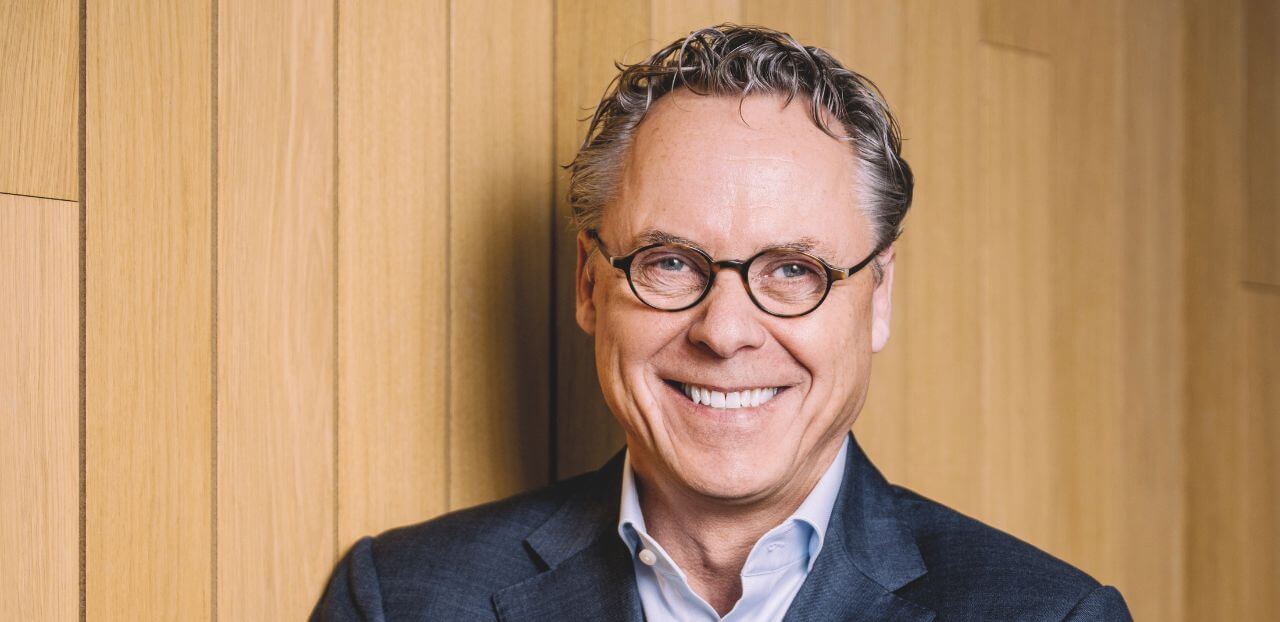
Ralph Hamers came to the offices of Management Scope specifically for this interview: At almost sixty, the executive, advisor, and supervisory board member from the global financial world looks fresh, fit, energetic, and young. Hamers normally spends his days in Switzerland, preferably in the fresh outdoor air, the country where he settled after leaving UBS in 2023, but he is happy to make time for an exclusive interview with independent board advisor Paul Nobelen. Hamers is seen as the man who successfully ushered ING - the bank that, a few years before Hamers took office as CEO of the Group in 2013, still needed to be ‘bailed out’ by the Dutch government - into the digital age. It gave him insights he still draws on today. Such as: ‘If you want to innovate and change, you have to look beyond your own sector and draw inspiration from developments there. If your inspiration comes solely from developments within your own sector, you are copying. Then, by definition, you are not leading the way.’ He has been gone from ING for six years now. But what stands out immediately is how he still speaks of ‘we’ when talking about ING. ‘Yes, it will always be ‘we’,’ he emphasizes. ‘As CEO, you simply identify with the company. And the company identifies with you. It cannot be any other way. That is just how it is.’ He says he feels the same way about UBS. That, too, has become a ‘we.’
A candid conversation about his appointment as CEO of ING – which came as a surprise to some at the time - the lessons he learned along the way, his vision on leadership, innovation, and transformation. About the cultural differences between the Netherlands and Switzerland, and about how he views the alleged ‘ministerial responsibility’ you sometimes seem to have as CEO. ‘There is a vast difference between a government ministry and a company.’
If we can first go back to your appointment as CEO of ING Group in 2013. I understand that it was a special process, with a legendary session in Noordwijk where you made a powerful impression with your vision for the future of the bank. Can you tell us something about that?
‘I was part of the process, so about the idea behind it, you really have to ask the then chairman of the supervisory board, Jeroen van der Veer. In my opinion, it was a fairly standard process, starting with about six candidates. For the part you are referring to now, I was unexpectedly called to report to Noordwijk. ‘For important consultation.’ That did not necessarily surprise me, because that happened quite often during that turbulent period of restructuring. And when you are summoned, you go. But when I arrived in Noordwijk, I was received by the supervisory board. I was given an hour to prepare a presentation on the future of ING.’
Unprepared?
‘To the extent that the session was unprepared. But of course, it would have been strange if I had not already thought about how I saw the bank's future. So, I did have my story ready. If I remember correctly, they were not even so much focused on the content of my presentation. It was more about mental agility and the ability to improvise. How clearly do you think under pressure?’
Ultimately, the supervisory board concluded that you were the most suitable candidate. To outsiders, it was quite a surprising choice. You did not yet have any experience in a top-level executive role. Moreover, with your appointment, you outshone colleagues who had this ambition, plus managerial experience at the highest level. How did they experience that, but more importantly, how did you experience that appointment?
‘The hardest part was the beginning: when you have been informed of the intention to nominate you, but you are not allowed to say anything yet. To no one. That is a bit tricky. As soon as the news came out, I immediately called my colleagues: everyone on the executive board and also the colleagues who had the ambition to become CEO. I did the same thing immediately later at UBS when I became CEO there: call everyone right away. That very same evening. At UBS, that was even more important, because I was coming from outside the company. The most important thing is to establish a connection immediately. With the existing team. That is where you start working from. ‘I look forward to working with you.’ ‘I am really excited about this collaboration.’ And, also to colleagues: ‘You have been important to the company, and if it is up to me, you will continue to be.’ That is how you break the ice right away.
And then you start discussing your plans, and you will naturally figure out who is on board and who is not, who is interested and who is not. That is the way I work. Trying to get people on board.
I have always, throughout my career, done this with the existing people in the team. I never brought my own people with me; I have never had my own inner circle. As CEO, you also have to be somewhat humble in the beginning, especially if you are coming from outside. You do not know the history of certain issues; you do not know exactly how the relationships stand. You really have to take the time to familiarize yourself with that.’
As CEO of ING, you immediately went all in on digital banking. And you once said that you did not look so much at other banks for that, but much more to the Apples and Googles of this world. Why was that?
‘If you want to innovate and change, you have to look outside your own sector and draw inspiration from developments there. That is my core belief. If you get your inspiration from developments within your sector, you are just copying. By definition, you are not leading that way. That is why, when I started as CEO at ING, I began looking at how companies like Apple and Google operated. What kind of smart applications, for example, did they come up with for the mobile phone? How did they work? The knowledge I gained outside the sector formed the basis for ING’s transformation. I made technology an integral part of the business. It was no longer an enabler or support function, as it had been before; it became our differentiator, our unique selling point. At ING, we were good at accessible banking. We started thinking about how we could make banking even more accessible. That was only possible through digitization. And the smartphone was crucial for that. I was convinced that in the future, we would do everything via that phone screen.’
Such a digital transformation also requires a different way of working. How did you approach that?
‘We had to adapt our entire way of working. We started working agile, we started working flexibly, we started working cross-functionally. We brought people from different disciplines within the company together in teams. And we did not measure our progress every quarter; no, we measured it every two weeks. Fail fast, learn faster. If we realized after two weeks that something offered no improvement, we came up with something else. That put us at the forefront globally.’
Do you think that ‘Hamers’ Law’ – summarized as: if you want to lead, look at other sectors; if you want to follow, stay within your own column – is universal? Does that law apply to all companies and sectors?
‘Yes, it is simple: if you follow your peers in the sector, you will never be the frontrunner in the sector. And that does not have to be wrong at all, do not get me wrong. It can be a well-considered, sustainable strategic choice. Let others make the mistakes; we will wait and see how things play out first. That is perfectly fine. But if you want to lead the way, it does not work like that. Look at AI – the next step we are taking in the digital realm.
The same applies if you are wondering what your business model might look like in the future. The financial industry, for example, needs to look now at how other sectors are using AI to improve their services. At UBS, we have built our reputation on private wealth management. We have always employed excellent advisors for that – the best in the world. But believe me, AI can do that many times better. AI knows and understands the many thousands of products available in the financial world and applies that knowledge to your personal financial situation and needs. No advisor can do that. So take advantage of it.’
If we focus on the role of a CEO during major transformations, how do you view that role? What should a CEO definitely do, and what not?
‘The prerequisite is that there is a need for transformation. Whether that need arises from of a burning platform or a burning ambition. With a burning platform, it is clear: things are on fire, and everyone needs to act. It gets a bit more complicated when there is no raging fire – for example, if, as a CEO, you see that everything is going to change in the industry over the next five years. Try getting everyone on board for transformation then, especially when the results are acceptable enough. You can only do that when driven by a burning ambition. You will have to bring people on board with your vision. You have to convince them, and you have to inspire them. And that brings us to my next conviction: a CEO cannot delegate a transformation. That is impossible. It just will not work. You will have to take the lead yourself, particularly in the areas of strategy, brand and reputation, and culture and behavior. Those are the only three things a CEO should not delegate. The CEO must connect the points of that triangle, connecting the dots. You cannot hand this off to someone else. You should not delegate your brand to marketing. Strategy, brand & communication, and HR should be the CEO’s direct responsibility.’
And what, in your view, is the critical success factor in a transformation?
‘The consistency that you, as CEO, must safeguard. For example: not going public with a customer promise that you cannot yet deliver on. At ING, we did not go public with our new pay-off – 'Do Your Thing' – until seven years later. Only then could we truly deliver on what we promised. So, consistency in direction and content is what you as CEO needs to stay on top of. That is what the CEO is for. There is only one conductor. The problem is: transformations take time. You cannot do it in a year. But everyone is always in a rush.’
You took the time, but - perhaps more importantly – you were also given the time…
‘And that is where a supervisory board is extremely important. That they give you that space. Of course, there are also moments when they, too, think: is this ever going to happen? Are we heading in the right direction? Are we not moving too slowly? As CEO, you have to invest a lot of time to get your supervisory board on board with your vision. To show that things are really changing. Even though it is not necessarily being reflected in the quarterly figures. That is quite difficult. Fortunately, I was supported by good results at ING. We gained more than a million new customers every year. That helps enormously, of course.’
But impatience can suddenly arise. How do you make the invisible visible? How do you take the supervisory board members along on that journey?
‘You do not only report on the hard numbers, but also on the soft components. You explain what you are doing in terms of governance, how you have implemented codes of conduct, and performance regarding the Net Promoter Score. At ING, we also used the organizational health index, a methodology that shows how a company is performing across nine key elements. You can then measure quite effectively whether there is improvement or change. The financial results follow.’
Let us move on to Switzerland. In 2020, you became CEO of UBS. How were you prepared?
‘I left ING on July 1, and two months later, on September 1, I started at UBS. That did not leave much time for preparation. Switzerland turned out to be completely different from the Netherlands. Or no, that is not quite right: the Netherlands is completely different from Switzerland. I think it is important to realize that the Netherlands is different from the rest of the world in many respects. Not the other way around. Anyway, it took some getting used to. To start with, in the Netherlands you work with a two-tier board, with a supervisory board at some distance. In Switzerland, it leaned more towards a one-tier board, with an executive chairman who truly bears responsibility for strategy and overseeing day-to-day operations. I also noticed many cultural differences. Swiss corporate culture is hierarchical. Although it is true that almost the entire world has a hierarchical culture, except for the Netherlands. In Switzerland, I had to clearly state what I expected from everyone. More so than in the Netherlands. But in the end, it does not really matter that much. No matter how hierarchical it is, how responsibilities are defined, or how the governance is structured: what matters is that you build good relationships with both the supervisory board and your own team. That you can trust each other and keep each other informed. No surprises. Ultimately, that story is the same everywhere.’
How did you approach the culture change at UBS?
‘You do not undertake a culture change just because you feel compelled to do so as a CEO. There has to be a reason, it has to fit your vision of how you believe success can be achieved. So, it starts with the question: what does this company stand for, and where do we want to go? We said that private wealth management had to become the distinctive part of UBS. The other divisions – investment banking and asset management – had to align with that. You have to have that conversation as well. How you want to make it happen. You need commitment, especially from the divisions that no longer have the highest priority. Do you agree with this vision? Do you agree with the role the division plays in it? How are we going to do this together? There, too, you need a compelling narrative. Collaboration became an important behavioral element for success.’
During your time as CEO of the ING Group, you had to deal with an investigation at ING Netherlands into the policy for combating money laundering. How did you experience that?
‘At ING Netherlands, we were confronted with shortcomings in our anti-money laundering processes. We could have engaged in a protracted battle with the Public Prosecutor’s Office over that, but at the time, it seemed wiser to us to cooperate and settle. We said: we do not agree with the characterization of the findings, we do not admit guilt, but we just want to move forward. We will settle and focus our energy on improvement. As CEO, you really have to step up to the plate in a situation like that. I publicly apologized on behalf of ING, through videos and interviews in the media. I gave an account in the House of Representatives and at our shareholders' meeting. I also explained the measures we had taken. And at the same time, I did my best to stand by my people in the Netherlands. Because they were also shocked. They wondered what they had done wrong. And even now, I would like to emphasize: nothing went wrong or was done intentionally here. Not by a single employee, nor by a single board member.’
The matter had further repercussions for you personally – a personal case was initiated against you via an Article 12 procedure?
‘Yes, that can happen to any director. The Public Prosecution Service had already concluded that no criminally culpable acts had been found involving ING employees or directors. We thought that was the end of it. But then the Foundation for Research into Business Information (SOBI) headed by Pieter Lakeman initiated a procedure. I could do nothing but wait. And that is what I did. It was investigated again, and the Public Prosecution Service once more concluded that there were no criminally culpable acts.’
How did you experience that personally? What impact did it have on you, on your family? It does seem to me like a Sword of Damocles hanging over you…
‘I have always had faith in a good outcome. Always. Because I have always acted with integrity. Acted in good faith. So no, I had no doubts. I never thought or feared that this could end badly. Of course, the case is on your mind. It is on your family’s minds. But it never distracted me. I was able to put it in perspective right away. And now I have truly put it behind me. And above all, I am very happy that I have always been supported one hundred percent by my fellow board members, both at ING and at UBS.’
The case does, of course, raise all sorts of questions about how responsible or liable a CEO is for things that go wrong within the organization. It is almost seen as a kind of ministerial responsibility…
‘There is a big difference between a government ministry and a company. I think the analogy with ministerial responsibility is a misconception. A company really works differently. If you run the company poorly, one day a supervisory board member will come to you and say: we are ending this. That is the role of a supervisory board; that is how it is structured in a company. But drawing a direct link between the CEO of an international group with dozens of subsidiaries and what goes wrong six or seven layers down the organization is much more complicated. In any case, it is very different from the ministerial responsibility as applied in politics.’
It seems to me that it is becoming increasingly difficult for executives and CEOs to do the right thing. Who still wants to become a CEO? After all, how do you know if what you are doing now will still be socially acceptable in five years?
‘That is an important question. I think it is becoming increasingly important for a CEO to be able to read the signs of the times. Reading the tea leaves. Decisions must be made not only within the current context—current norms, values, and expectations—but also within the expectations of where we will be in five years. The expectations of society and politics change rapidly. What was once ethical might no longer be so in the future. For many companies, and therefore also banks, this is extremely complex. Banks, for example, have stayed out of financing nuclear energy and a large part of the arms industry. Society and politics now view these sectors differently. But as a bank, you enter into long-term contracts with your clients. You cannot alter long-term financing overnight simply because political preferences change. It is extremely complicated. And that requires new capabilities from a CEO.’
This interview was published in Management Scope 04 2026.
This article was last changed on 07-04-2026