
Kaya de Lange (BeFrank): ‘A leader needs both reason and intuition’
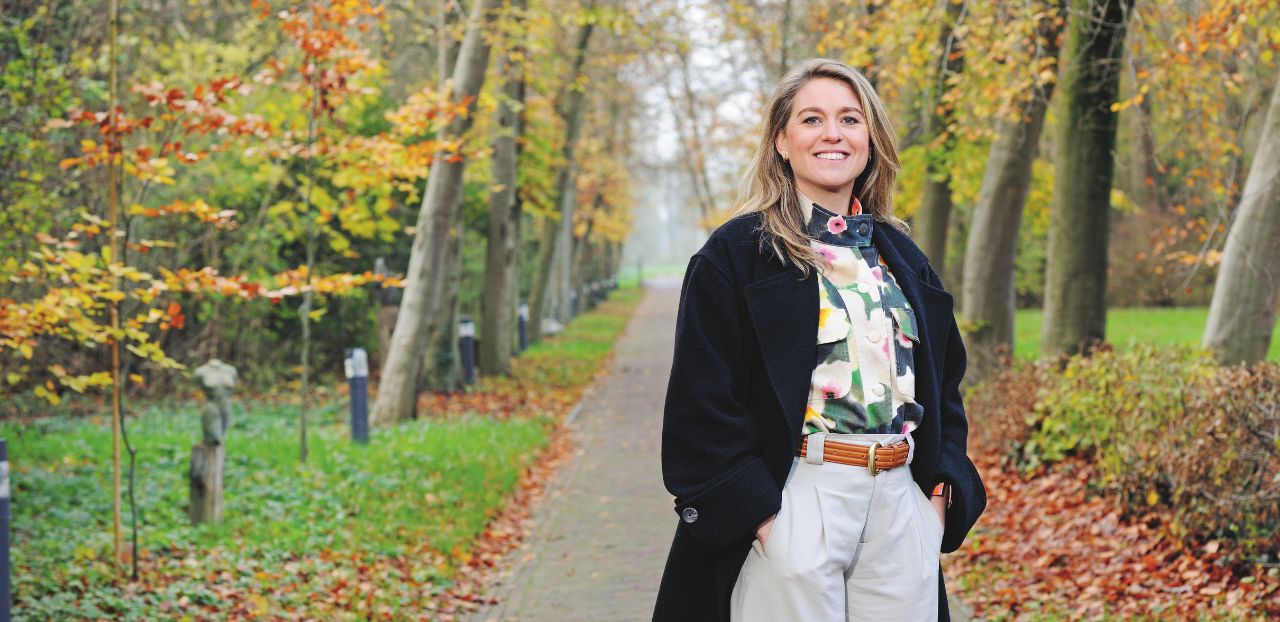
The Young Captain Award was first awarded in 2005. Its aim is to provide a platform for business leaders operating just below the top of the company. Candidates are young professionals between the ages thirty-three and thirty-nine who distinguish themselves through innovative leadership, an international vision, and the desire to contribute to a sustainable society. The winner receives a year-long program, including participation in the renowned New Board Program at Nyenrode Business University. This year's three finalists were Damla Hendriks (CRO at Van Lanschot Kempen), Brian Broeders (SVP Finance at DSM-Firmenich), and Kaya de Lange (CEO of BeFrank since last year). Kaya de Lange ultimately won the award, which was presented to her on November 24, 2025, by Minister Vincent Karremans of Economic Affairs. The day after the award ceremony, De Lange spoke with Vincent Moolenaar, business director of board & governance programs at Nyenrode Business University.
What is it like to win the Young Captain Award? And was there something from the jury report that stuck with you?
‘The first few days were a rollercoaster. From the moment my name came out of the envelope, I was overwhelmed by reactions and my own emotions. I still have not caught up on all my WhatsApp, Teams, and LinkedIn messages. But I am incredibly happy and proud, even though I still need to recover a little. I am still in a daze. What stuck with me from the jury report is that my authenticity and enthusiasm stood out, and that combination was also unique. It also emerged distinctly that I have a clear vision for my current position at BeFrank and that I set ambitious goals accordingly. In addition, I recognize that I cannot do everything myself and that I consciously surround myself with people who complement me and each other. I believe that knowing yourself only helps you to build a good team.’
Prior to the awards ceremony, all thirty candidates completed a Young Captain Program. What was your experience?
‘It was an intensive program alongside my work, with several training days facilitated by Nyenrode Business University. It started with yourself: what have you learned in recent years, how did you get to where you are today, what steps have you taken, who are you? Then you zoom out to your job and the impact you are making. What results have you achieved? What do you stand for? What position do you take? And then we went all the way to the macroeconomic level: what is your vision of the world and what is your role in it? That was also the most challenging assignment. Normally, I read the news and used to think: these are the facts. Now I kept thinking: but what do I think about this? Do I think this is good? Do I think this is bad? What position do I take? Challenging, but also very enriching because it forces you to step back from everyday practice.’
How was the dynamic in the group?
‘Very good. I think it is a good idea that the Young Captain Program is separate from the award. We started the program and discussed important management themes with each other. That was all before it was clear who the final candidates for the award were, so, at the time, I did not experience any competition. It is also special that you follow the program together with peers, all in a similar situation. This allows you to brainstorm about your role as a young leader, and the added value, but also about the obstacles you encounter. Everyone was very open, and we all gave it a hundred percent, which made it a success from start to finish. I also found it particularly valuable that the program allows you to view leadership from different perspectives. It certainly keeps you out of your bubble, which I see as an added value of this program. For this group, we think we can sustain it by literally staying in touch. The first initiatives for this have already come from the group. The Young Captain network also helps, with several initiatives each year to ensure cross-pollination.’
One of the questions you had to answer during the competition was what you see as the biggest challenges in the world. What was your answer?
‘I see many challenges, and I focused on two major themes. The first is the polarization I see in the Netherlands, but also in Europe and the world. I do not think focusing on differences will help us move forward. Of course, these differences are significant, and we must take them into account, but this division is a major problem. The second is Europe's role on the world stage. It does not help that Europe is so divided and that every country wants to maintain its own autonomy. We need to unite much more.’
Do you see Europe as a blessing or a burden?
‘I would like to argue that Europe is a blessing. There are many good things about Europe: our values, security, space for minorities, economic opportunities. But we do need to fundamentally resolve a few issues to ensure it remains a blessing. These issues are about speed and effectiveness, mutual cooperation, and the efficient use of regulations. That is the major challenge.’
The Netherlands is working towards a new cabinet. If you had fifteen minutes with the informateur, what would you discuss?
‘Europe, definitely. I think it is important that the Netherlands cooperates fully, without trying to regulate everything. There are, of course, major issues that cannot be ignored, such as migration and the housing shortage. From my professional perspective, I would certainly also like to discuss the pension transition. We are in the midst of the biggest transition ever. It is often said that the Netherlands has the best pension system, and that is true. Only, due to the aging population, it is no longer sustainable. We need a different, more individualized system. It is therefore becoming increasingly important for people to inform themselves about their pensions. The pension transition is far from complete.’
What is your vision for BeFrank?
‘BeFrank will be fifteen years old next year and has truly shaken up the pension market with features that are now market standards: everything online, real-time information, understandable language. BeFrank has a defined contribution product, which largely fits well into the new system. For us, the transition is therefore much less significant than, for example, for a pension fund. At the same time, we have grown so rapidly, to over €12 billion in invested assets in a short time, that we also need to focus on strengthening our internal organization and processes. My vision is that we should not make choices for people but rather present them with choices. It is your money. You have to make the bigger decisions yourself, such as how much you save through your employer and how much you save on top of that. We can explain that in simple terms. Because pensions are often low-interest, we organize Pension Power Hour webinars, aimed at specific target groups such as fifty-five-year-olds or young people. Last time, a thousand people registered. We know what questions they have and discuss them in half an hour. These sessions receive an 8.5 or higher rating. If you empathize with the target group, you can really make this an opportunity.’
What kind of leader are you, and what aspects do you still want to develop?
‘When I look at my current leadership style, I can see that I tend to be too consensus-seeking. I like to engage in dialogue and really get the support, because then I know we will actually organize it. But that is also the safe and easy way, of course. I have come to realize that sometimes it is necessary to express a position earlier. That is also expected of me as CEO. It is not about resolve, I am very results-oriented and make sure plans get implemented. It is about more speed. I could speed things up by expressing my position a bit sooner, for example, by saying, ‘I heard you all, but we are going left’. I have discovered that my tendency to conform and not stand out stems partly from my teenage years. Until I was eighteen, I had a large spot on my nose, which was quite noticeable. During that time, I learned to adapt, listen carefully, and not stand out too much. I have carried that behavior into my working life. I am now beginning to see that this has had an impact. It is good to be aware of that, because then you can address it.’
Which contemporary leader inspires you?
‘I will stick with the theme of Europe and mention Ursula von der Leyen. I listened to the entire State of the Union address in preparation, and thought: we should do this. The way she calls on countries to take responsibility is truly inspiring.’
During the dinner preceding the Young Captain Award ceremony, Peter Bakker, president of The World Business Council for Sustainable Development (WBCSD), called on leaders to stick their necks out, as people like Paul Polman and Feike Sijbesma have done. How important do you think that is?
‘That is very difficult these days, with social media as it developed. We have come to see that if you stick your neck out and people disagree, it can literally mean your safety is compromised. But I think it is absolutely necessary. If you are a strong leader, you simply have to do it and effectively promote the values you stand for. It really resonated with me when Peter Bakker said: who will be the next Paul Polman? I am going to think about what I can do. At the moment, I am making an impact in the pension sector, and we are also working with international parties. But pensions are still limited to national borders. I think it would be very interesting and challenging to further expand my impact.’
How do you see the role of a new technology like AI? What is its influence on leadership?
‘The connection between people and technology will be crucial to being a good leader in the future, because technology is becoming increasingly dominant. As a leader, you do not have to be the smartest as you can get most of your knowledge from AI tools. But you have to be the best at making that connection: understanding what you can get out of technology and where you need people. That assessment also requires good intuition.’
Where does your drive come from?
‘I had the drive to take on things from an early age. I used to be a horse girl and lived in a village where there was not much to do. I would create a horse newspaper for all the other horse girls in the village, for example. Even then, I enjoyed being creative, coming up with ideas, and taking on a leadership role. That has been a common thread throughout my life. I went to study in Tilburg, even though I was from North Holland. I liked the fact that it was a bit further away. Then I started rowing at a high level. I learned a lot about myself from that. If you have a training program and follow all the steps, you know you can achieve an ambitious goal. At the end of my student days, I was even president of the student association. Even then, I noticed that I took the lead quite naturally. I get energy from the belief that my work adds value. I really cannot sit still, after an hour of TV, I think: what has this brought me? When I work, play with my son, or put together a photo album, I feel more fulfilled. It is just me. But it also needs to be managed, because I have to find moments to recharge. I do that while exercising, cooking, or with friends.’
What do you want to achieve in the future?
‘I would love to go beyond the Dutch borders and work internationally. That way, you can increase your impact, learn much more about cultures, and exert influence on the world stage. That is challenging now because we have a blended family, so maybe this is something for the future. I think it is very important to maintain a balance between my work and private life. A friend texted me: ‘Kaya, I am so proud of you. You are doing so well at work, and at the same time you are also a good mom and continue to enjoy fun things with friends’. That balance is important. I work really hard and go the extra mile, but sometimes I have to hit the pause button. That remains the challenge, but as long as I have a good balance, I am at my best.’
What is the most important lesson for the next generation of leaders?
‘Believe in yourself and invest in the things you enjoy. I sometimes think that in my younger years, I lived too much according to what I thought others expected of me. Now that I know myself better, I can make better choices in that regard. I wish that for everyone. Furthermore, my advice would be to seek a balance between commercial success and making a positive impact on the world around us in a business context. Leaders are responsible for steering towards relevant value for all stakeholders in the short and long term. To give substance to this, it is necessary to have the courage to trust both your reason and your intuition.’
This interview was published in Management Scope 01 2026.
This article was last changed on 16-12-2025