
Why moral imagination is decisive now
The way we as society behave has an analogy in a house being on fire, while the inhabitants carry on doing what they do without calling the fire department. We get caught up in the issues of the day and react to the immediate, without thinking about where we want to be in ten or twenty years. It is like walking through life without knowing where we are heading. This reactive mindset can be fatal, as this means that structural problems remain unaddressed, and can fester. And there are quite a few such problems.
To begin with, there is the rise of movements that distort facts, attack expertise, and fuel polarization. In the Netherlands this is evidenced in parties such as the VVD and the PVV which are often facilitated by inflammatory talk shows. The situation in the US is much worse. There, we see representatives of major tech companies endorsing authoritarian figures, which contributes to the normalization of anti-democratic tendencies. In fact, ‘tech bros’ such as Musk, Thiel, and Bezos are outspokenly anti-democratic. Many tech bros are supporters of accelerationism, an ideology that argues that societal tensions and crises should be deliberately accelerated in order to bring about the collapse of the current system, i.e. democracy and social services. Out of that chaos, a new order should emerge: a technocracy dominated by large corporations. Of course, the Netherlands is not the US. But the speed with which political change is taking place in the US shows how fragile democracy is. And we notice the stress cracks in European democracies too.
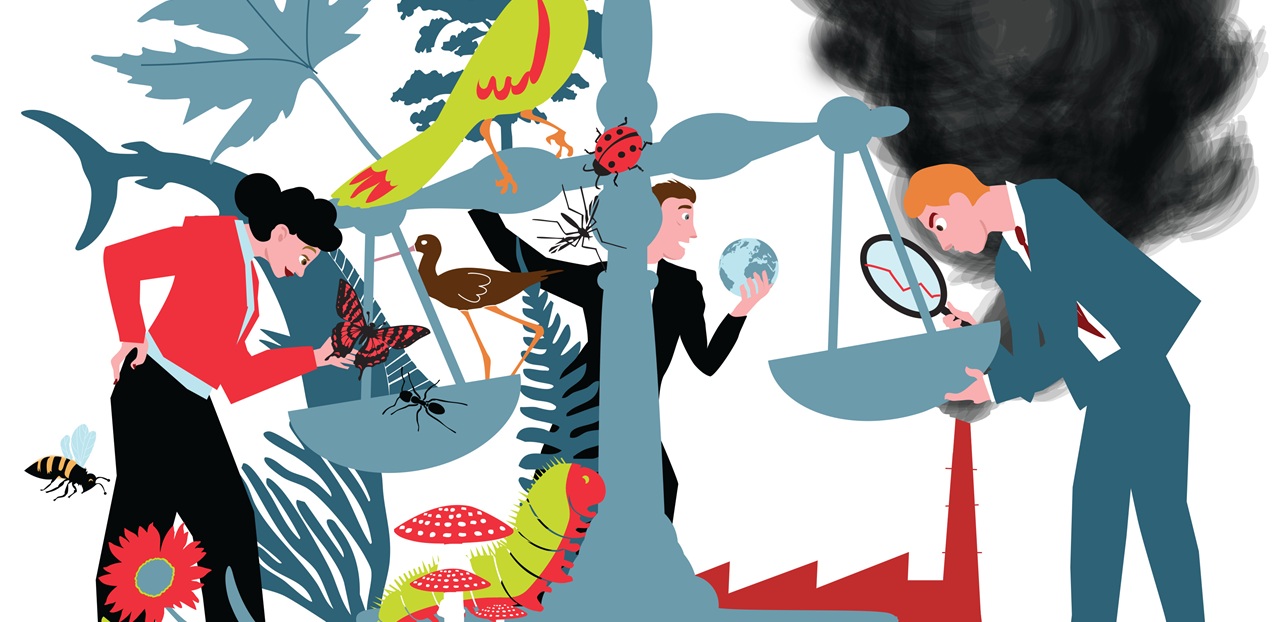
In addition to political instability, there is an ecological crisis. The scientific facts about climate change and biodiversity loss are worrying. Biodiversity loss is less visible than climate change, but just as serious, because it is irreversible. With climate change, we can still try to limit global warming or adapt, but species that become extinct are gone forever. This means that not only unique life forms disappear, but also crucial links in ecosystems that ensure stability – pollination, water purification, soil fertility. Modern ecology teaches us that there is no guarantee of a natural balance that will always restore itself. This ecological crisis exacerbates political instability, as conflicts over scarce resources and climate migration further increase social tensions.
Neoliberal Policy
These problems did not arise out of nowhere. They are the result of decades of market-centric policy, lacking in a clear social direction or strong ethical framework. The neoliberal idea, then, that the market, without active intervention based on non-economic values, will automatically generate the best outcomes. This proved to be nonsense. Because if the market is not kept in check, it leads to companies that focus primarily on profit, even at the expense of the well-being of people and nature.
Profit maximization as the sole goal, disconnected from broader values, is destructive and often leads to fascist tendencies. A purely capitalist system without a strong moral or regulatory compass erodes social cohesion, creates fear, and can pave the way for systemic breakdown or authoritarian power grabs. This creates a world in which a small group of the super-rich lives safely while the rest of humanity suffers from wars over water and food, extreme heat, and natural disasters.
This is not where the Netherlands is, but as neoliberal thinking has penetrated society in recent years, it has fueled a narcissistic, selfish, and short-sighted culture. In other words, a society in which everyone thinks primarily of themselves and not of the future.
Never Too Late
This bleak picture is no reason to give up. It is never too late to initiate positive change. Even in the darkest hours of World War II, a turnaround proved possible. Of course, it is becoming increasingly difficult – the choices are becoming more limited, the risks greater, the costs higher. But cynicism is a luxury we cannot afford. Many problems that seem unsolvable can be tackled. This can lead to a world in which life is more creative, more social, more meaningful, and more joyful. A world with cleaner air, more green spaces in cities, stronger communities, fulfilling work, and an economy that prioritizes well-being.
Companies can help bring about such a world. Many executives are still hesitant to do this; they are afraid to take the lead for fear of weakening their competitive position. Understandable. But leaders in the business world are first and foremost people with an inherent responsibility to society. They should not hide behind abstractions such as the financial system, shareholder value, or business as usual. In fact, those are empty words. They are lies that testify to a narrow, impoverished view of what it means to be human and a leader.
Executives must take their moral responsibility seriously. This means that, above all, they must ask themselves questions such as: What kind of world do we want to live in? And what kind of society do we all want to create in the long term? In other words, questions related to what is called ‘prefiguration,’ which means actively imagining the future you are striving for and already trying to shape that desired future through your current actions.
Stronger Together
Collaboration with others is an absolute must if leaders want to set a course in the direction they have chosen with their answers to these morally charged questions. Unfortunately, progressive forces around the world are currently fragmented, while others, such as the far-right movements all over the world are collaborating, building networks, and creating shared narratives. But why should a similar approach not lend itself to a sustainable and just future?
That this is possible is demonstrated, for example, by the case of the ABP pension fund. A long-term campaign by Fossil Free, supported by a broad coalition of activists, concerned citizens, and participants in the fund itself, led to ABP ultimately deciding to withdraw fifteen billion euro in investments from the fossil fuel industry and invest in sustainable energy. This was not only financially significant but also of enormous symbolic value. It shows that even large, established institutions can change under pressure from a well-organized coalition.
Break the Dynamic
So, connect the business community with civil society organizations, scientists, and progressive politicians. Create power blocs that counterbalance destructive forces and are capable of enforcing systemic change. Consciously build coalitions across sector boundaries, for example, to approach the government together to advocate for stricter regulations for the entire sector. Do not wait for regulations to be formalized but actively demand them to create a level playing field. This breaks the dynamic of fear for our competitive position and enables collective progress. Why not?
The choice is ours. Do we want to actively steer change based on our values and vision for the future, or do we remain passive, allowing ourselves to be swept along by destructive forces. The world is more unstable and fragile than ever. But that does not mean the world cannot become far more beautiful than it has been until now. The choice is ours. Hopefully, we will not allow this opportunity to pass us by.
Essay by Joost Vervoort, associate professor of transformative imagination at the Copernicus Institute of Sustainable Development at Utrecht University. Published in Management Scope 08 2025.