
Robbert van Rutten (Shell): ‘A more flexible and competitive IT organization’
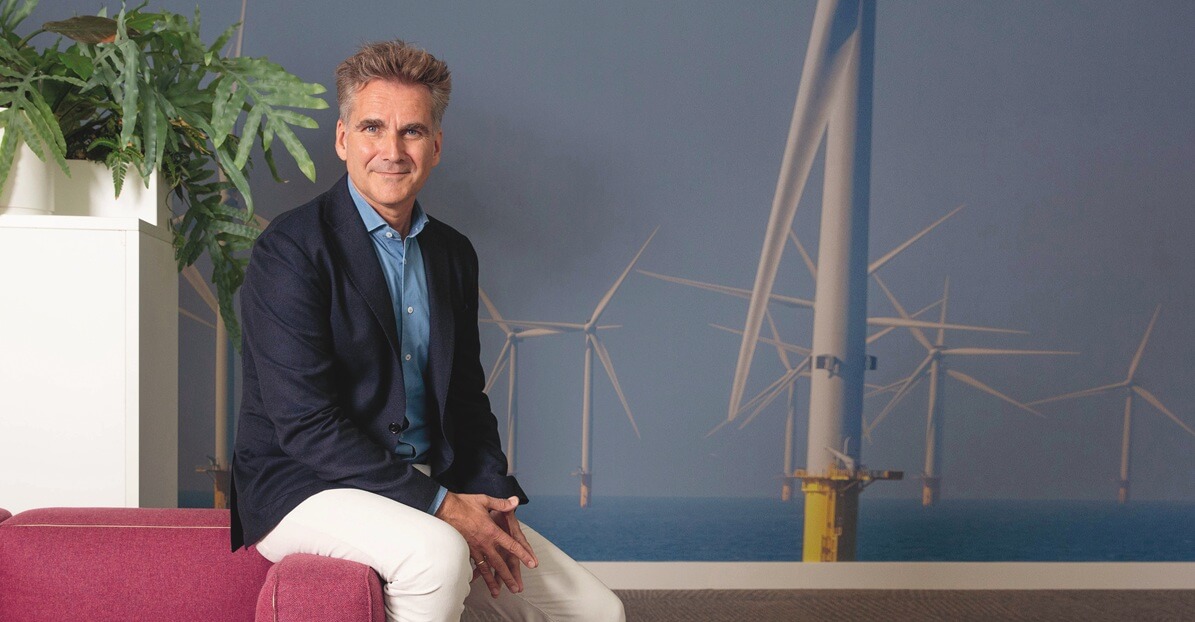
Robbert van Rutten became Shell's global CIO in 2023. Now, two years later, it has been announced that he will report directly to Shell's CEO from the middle of 2026. Van Rutten speaks with Frank Schmidt, VP Shell Global at CGI, about this fundamental change in the organizational structure that speaks volumes about how the role of technology within organizations is changing.
Van Rutten and his team face a complex challenge. On the one hand, Shell must optimize its traditional oil and gas activities to continue creating value in a competitive market. At the same time, the group must lay the technological foundations for the energy transition, a movement that, while socially urgent, currently still operates on low margins. A conversation about the crucial role of digitization in Shell's new strategy and how the organization is changing.
Shell’s strategy under CEO Wael Sawan places a stronger emphasis on value creation from traditional oil and gas activities, while the energy transition remains crucial. How does digitization bring these two worlds together?
‘It Is important to realize that Shell is first and foremost an engineering and technology company. The idea that technology creates value and is a competitive advantage is deeply ingrained in our DNA. We were already in the 1970s working on advanced software for seismic data processing, and twenty years ago we were already applying machine learning to interpret that data. Digitization is therefore not a new concept, but a continuation of what we have always done, albeit with an ever-increasing sense of urgency.
Our current strategy requires us to optimally apply technology in two worlds. In our existing business, our traditional source of income, everything revolves around productivity, cost efficiency, safety, and CO2 reduction. For example, we use digital twins to optimize and monitor our assets. This helps us to avoid dangerous situations and reduce maintenance and emissions. A concrete example is how we approach methane reduction using a combination of satellite technology, drones, and data that we share with the entire industry. This is an orchestration of technologies that was unthinkable ten years ago.
At the same time, digitization allows us to redefine things from the ground up in the world of renewable energies, such as wind and hydrogen. The underlying science of these technologies has often already been proven, but the challenge is to make them reliable, scalable, and cost-efficient. Digitalization plays a crucial role in modeling, optimizing, and scaling up these new energy systems.
To be clear, we do not see these as two completely different business activities. Shell has traditionally had a diverse business portfolio, from exploration and production to the trading of energy products to millions of customers. While the energy transition adds new elements, the way we shape our digitalization strategy is similar. It is not a one-size-fits-all approach. We consider the maturity of the technology and the specific needs of each business. The core is that we use technology to address the challenges of the energy trilemma – access to energy, affordability and sustainability.’
You are the first CIO in Shell's history to report directly to the CEO. What does that say about the changing role of the CIO?
‘The importance of this should not be exaggerated. But the change in the reporting line - which, incidentally, will only take effect in 2026 - is a recognition that the impact of technology is undeniable and it creates an opportunity to accelerate.
The direct line to the CEO allows us to address dilemmas about resource allocation, investments, and the choice between in-house development or collaboration with partners more quickly and effectively.
Five to ten years ago, we developed IT strategies; now we develop business strategies that are digitally enabled. The focus used to be on costs and efficiency; now it is on value creation.
As IT leaders, we asked for a seat at the table; now we have it, and we must handle that significant responsibility wisely. The focus has shifted from automating processes to reinventing the business to drive transformation and remain competitive. The days when we were the techies you could call when there was a problem are over. Our strategy is: we deliver competitive outcomes, business backed and technology forward. It starts with formulating the business strategy, where we sit at the table with the business management. It is our role to bring the technology lens to those conversations. We need to understand the business – how a trading process works, how a lubricants plant functions, or what the B2C dynamics in mobility look like.
Only then can our position at the boardroom table be valued and only then can we bring the technological possibilities to optimize and transform our business processes.’
Shell traditionally had a culture of building unique, customized IT solutions. In recent years, the company has been moving away from that. For example, Shell started using OSDU, the open-source data platform for the energy sector that standardizes data exchange and management. This ecosystem, to which CGI also contributes, helps the sector improve interoperability and reduce costs. How do you navigate between standardization and customization?
‘Over the past ten years, we have indeed undergone a major transformation from custom software to standardization. We shifted our focus to off-the-shelf packages that can run in the cloud to reduce costs. This was a huge cultural shift for both IT and business. It can take considerable persuasion to explain to your organization that their processes are not always unique and distinctive, and to convince them to work with standard packages available on the market. That transformation is now largely complete. Today, our philosophy is: market standards, unless. We accept the processes as dictated by the market and adapt accordingly. IT's differentiating factor lies less and less in the product or application and more and more in the data. How do we use the data? How do we turn data insights into actions? A good example is our B2B customer portal, MarketHub. This is an award-winning platform built on a market standard, not on customization. Its success stems from an obsession with the customer experience, not from unique technology.
We still develop our own software, but only in areas where we have built a truly distinctive business process or, more importantly, unique proprietary data that gives us a competitive advantage. Think of the exploration domain or the way we run certain assets. Even there, we seek a balance between standard and custom products. For example, we use the OSDU Data Platform to standardize data but apply our own unique data and algorithms to it.’
The organization is inundated with AI solutions. How do you create a consistent strategy without losing agility?
‘This is the core question that many companies struggle with. On the one hand, management asks why we cannot move faster, while on the other hand, going too fast sometimes leads to value not being realized and thus to value destruction. Our solution is to not have an overarching AI strategy for the company but rather respond to the needs and maturity of the various businesses. Productivity gains for standardized activities with AI are very rapid, while the application in physical assets is relatively slow. Time and again, it turns out that the real value of AI is not in making existing processes more efficient, but in fundamentally changing business processes. For example, when the quality and speed of decision-making improve because you gain new insights. This is only possible if the business is on board and willing to change.
Our approach at the business level remains the same. First, we look at which process we want to improve, then what data we need, then what skills our people need to have, and only then, at the very end, does the technology come into play. We set bold goals, a North Star, but we achieve them through small, incremental steps that generate immediate value. This allows us to avoid large-scale, cumbersome implementations, remain flexible, and ensure that the technology does not outpace the business. It is a dynamic between ambition in both business and IT, and we as IT leaders must be the catalyst for that activation. Not just the ones who bring the technology, but the ones who facilitate the transformation. A certain degree of humility is essential for this. We need to learn from other sectors. How an HR, finance, or customer service process works is often similar in other sectors; with an external perspective and a learn-and-adapt mentality, we can translate knowledge and experience from other sectors to the reality of Shell.’
Last year, Shell underwent a major IT reorganization. What was the motivation behind this?
‘A reorganization is never easy to implement. It has a personal impact on colleagues, and it takes time that we could invest in our core activities. The main reason is that we wanted to and were able to improve our competitiveness and flexibility. The current strategy creates the space for us to focus more on where we want to spend our time and capital. To increase creativity and create a greater need to prioritize, we have restricted ourselves in terms of the capacity within the organization. We do not only want to do things that add value; we want to do the things that add the most value.
As an example, last year we investigated hundreds of use cases for GenAI. A third of them were about solving problems that should not have existed in the first place. For example, how we could add half an FTE’s worth of value somewhere. We no longer want that. We want a more flexible and competitive IT organization that will support the business strategy with a certain degree of urgency, focus, and dedication.’
Shell competes with large tech companies for scarce IT talent. How do you win that battle?
‘Personally, I do not feel that we are in a war for talent. We have always had access to the talent we need. The clarity of our strategy and our transparent positioning in the energy transition make us an attractive proposition. The importance of energy in the world, the increasing demand, and the need to carry out the transition in a balanced way are socially relevant themes that appeal to many people. They want to be part of the solution, not just have an opinion. This, combined with the scale at which we operate, gives us a value proposition that helps attract the right talent. A large part of our technological capacity is located in Bangalore, India. The scale at which a city like Bangalore can offer talent offers a completely different dynamic than in other parts of the world.
We do not want to do everything ourselves either. We actively seek partnerships, such as with CGI, to help us achieve our goals. The key is to formulate a proposition that works for both parties. With CGI, this means that they not only supply technology, but also use their expertise to train our employees, future-proof data infrastructures, and make AI solutions practical.’
What game changers do you see for the coming years? What should CIOs be preparing for above all else?
‘There are so many! That is also the challenge: how to deal with all the changes that are taking place at the same time. Of these changes, AI is obviously the biggest game changer. Not only GenAI, but also agentic AI and the orchestration of agents. We are probably the first generation to manage a workforce that consists not only of people, but of a combination of people and agents.
In the short term, I expect AI to mainly increase the productivity and efficiency of organizations. In the longer term, it can disrupt the entire structure of organizations. The advent of AI can also lead to the democratization of technology in the form of low-code and no-code, what we call DIY IT – Do-It-Yourself IT. With DIY IT, employees can create and implement their own software solutions within the context of their own work. But to do so, they need data - you could say that data is the fuel for that autonomy. That is why we are offering our employees more and more data products, standardized, reusable datasets. For large-scale data migrations, for example, CGI helps us with agentic AI solutions to make that data clean and usable in data lakes.
A final consequence of the rise of AI is that risk management is becoming more complex. We are moving toward a world in which AI is created by AI, controlled by AI, and where we account to regulators using AI. How do you manage risks in that scenario? How do you implement effective controls? How do you demonstrate ethical accountability to your clients? This is further complicated by the complexity of varying regulations. The EU AI Act is not quite the same as the California Act, which is not quite the same as the China Act. How do you navigate a world with global processes? It is clear that integrated risk management is the solution, and that the CIO plays a key role in this.’
What is currently high on your own agenda? And what drives you personally in this role?
‘High on my agenda is managing my time to ensure that I spend it on the things that really matter. In a role like this, it is easy to get bogged down in operational and tactical issues, while the real challenge lies in creating time for strategic discussions with the business, spending time outside the company to learn and being open to examples from other industries. Finding the right balance is my biggest challenge.
I am incredibly energized by the enthusiasm I experience within my team and the organization about our impact and relevance. People enjoy contributing to a good business strategy in an industry that is crucial to society. Working for a company that has an impact on global access to affordable and sustainable energy is incredibly rewarding. But ultimately, for me, it is also about the people. The opportunity to work with such a talented, culturally and generationally diverse team on relevant societal issues is fantastic. I am passionate about investing in people and giving them trust and autonomy so that they can reach their full potential. The rewards are priceless. That is what keeps me going.'
This article was last changed on 03-11-2025