
A&O Shearman
Here you will find all content created in cooperation with our partner A&O Shearman.
Interviews
.jpg)
.jpg)
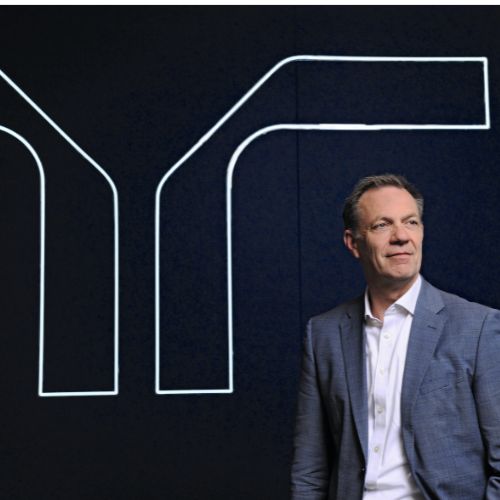
What must companies, organizations, and the government do to survive in the digital age? Hilde van der Baan and Gijs Linse of A&O Shearman explore this question in depth in a series of articles in Management Scope. This time, they speak with Jeroen Tiel, CEO of Randstad Group Netherlands, about the impact of AI on the labor market. ‘The speed of change is overestimated, but the impact is underestimated.’
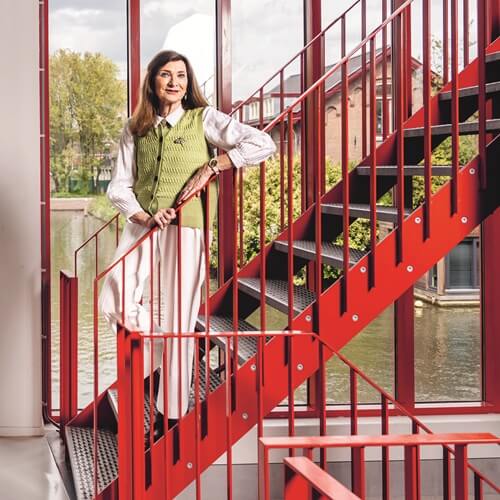
Read moreWe are on our way to a new order: innovation outside of the established structures, driven by people who no longer want to wait for The Hague and who see that the narrative can take on a different meaning by taking action themselves. That is the firm conviction of emeritus professor and multi-talent Annemieke Roobeek. ‘Decisions are no longer made by the lucky few, but together with the lucky many. Both within society and within companies, this leads to innovation and a promising perspective.’
Read moreHow can organizations survive in the digital age? This question is explored in depth in a series of articles in Management Scope by Hilde van der Baan and Gijs Linse of A&O Shearman. This time, they interview Wouter van Benten, CEO of DHL eCommerce, about his digital journey, about speed – ‘we were moving so fast that we had to fight quite a few battles with head office to get our way and keep going’ – about choices that differed from those of the competition, and about what will be needed for the next ten years.
Read moreWhat must organizations do to survive in the digital age? This question is explored in a series of articles in Management Scope by Hilde van der Baan and Gijs Linse of A&O Shearman. This time, they interview Roos Slegers, philosopher, ethicist, organizational consultant, and assistant professor at Tilburg University. She foresees problems in the field of innovation. ‘GenAI does not offer anything surprising or niche. For that you need old-fashioned human virtues – such as courage and the willingness to ask critical questions.’
Read more
Jeroen Tiel (Randstad): ‘The labor market must be priority number one’
What must companies, organizations, and the government do to survive in the digital age? Hilde van der Baan and Gijs Linse of A&O Shearman explore this question in depth in a series of articles in Management Scope. This time, they speak with Jeroen Tiel, CEO of Randstad Group Netherlands, about the impact of AI on the labor market. ‘The speed of change is overestimated, but the impact is underestimated.’
Read more
Annemieke Roobeek: ‘Democratization, anchoring, and imagination’
We are on our way to a new order: innovation outside of the established structures, driven by people who no longer want to wait for The Hague and who see that the narrative can take on a different meaning by taking action themselves. That is the firm conviction of emeritus professor and multi-talent Annemieke Roobeek. ‘Decisions are no longer made by the lucky few, but together with the lucky many. Both within society and within companies, this leads to innovation and a promising perspective.’
Read more
Wouter van Benten (DHL): ‘I am a tech optimist’
How can organizations survive in the digital age? This question is explored in depth in a series of articles in Management Scope by Hilde van der Baan and Gijs Linse of A&O Shearman. This time, they interview Wouter van Benten, CEO of DHL eCommerce, about his digital journey, about speed – ‘we were moving so fast that we had to fight quite a few battles with head office to get our way and keep going’ – about choices that differed from those of the competition, and about what will be needed for the next ten years.
Read more
‘Critical thinking in a world smoothed over by AI’
What must organizations do to survive in the digital age? This question is explored in a series of articles in Management Scope by Hilde van der Baan and Gijs Linse of A&O Shearman. This time, they interview Roos Slegers, philosopher, ethicist, organizational consultant, and assistant professor at Tilburg University. She foresees problems in the field of innovation. ‘GenAI does not offer anything surprising or niche. For that you need old-fashioned human virtues – such as courage and the willingness to ask critical questions.’
Read more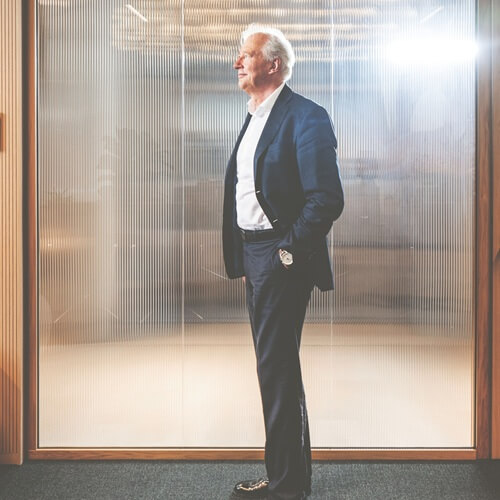
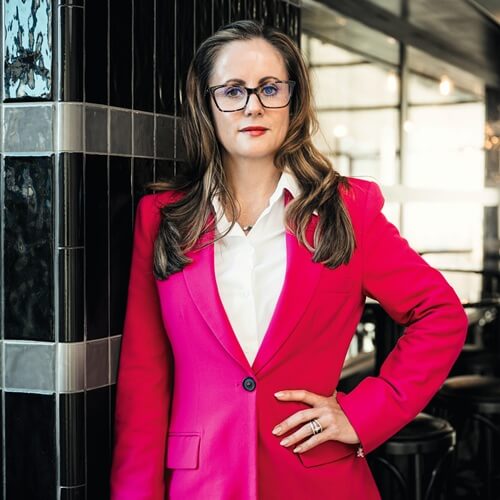
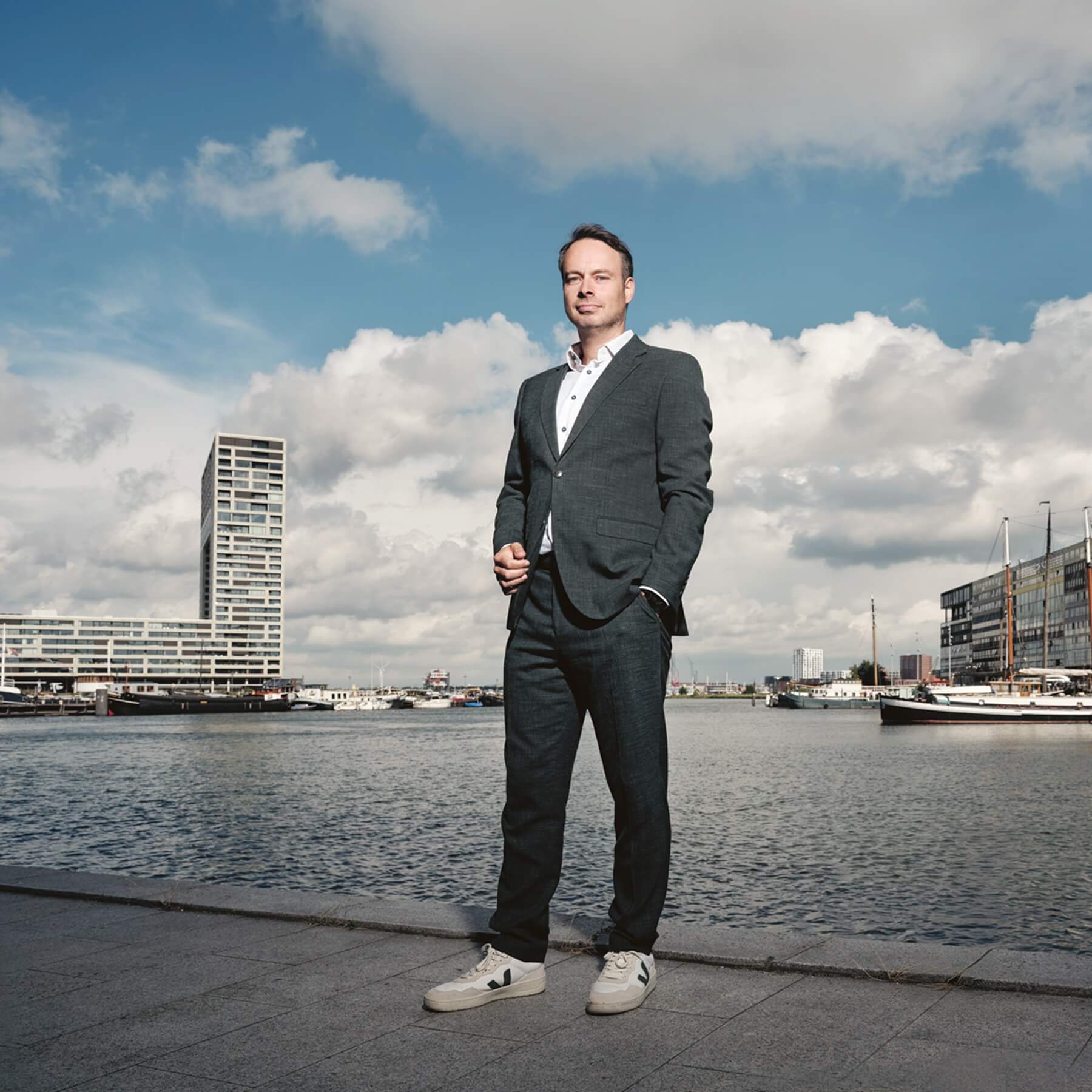
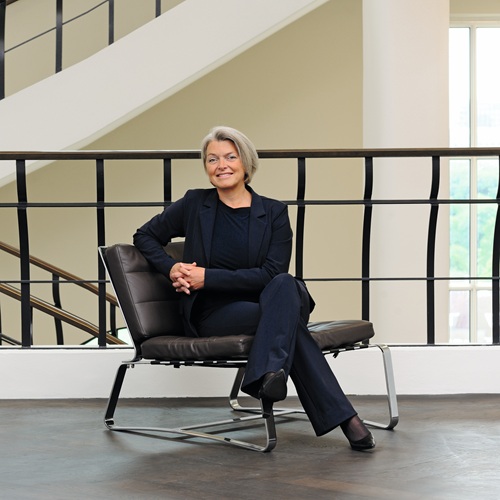
Top supervisory board member Jack de Kreij – number 10 in the Top 100 Supervisory Board Members 2026 – sees the supervisory board as a perpetual motion machine in which colleagues are constantly working together to find the connections between current and complex issues, so they can act on them with ongoing adjustment. ‘It is all about the collective and your contribution to the greater good.’
Read moreCorné Greyling is company secretary of Ahold Delhaize. She sees modern company secretaries as multifunctional governance experts. In that role, she contributes to the supermarket group’s new Growing Together strategy. ‘All the themes from our strategy are reflected in virtually every meeting agenda. I see it as my personal responsibility to ensure this.
Read moreWhat do organizations need to do to survive in the digital age? This series on entrepreneurship in the digital age will explore that question in depth over the coming months. This time, we speak with Raymond van Eck, who has been CEO of Fairphone for a year and wants to scale up as a producer of sustainable and fair smartphones without compromising on core values. ‘If we want to show the industry that you can produce consumer electronics in an ethical way, we will have to prove that you can be successful doing so. That means we now have to take commercial steps to achieve some serious scale.’
Read moreDaniëlle Melis was recently appointed to the Corporate Governance Code Monitoring Committee. If there is confidence that good governance standards are adhered to at the level of principles and accounted for in a transparent manner, there is really no need for detailed rules, she argues. All players in the governance of companies need to discuss this with each other. In her own roles as a supervisory director, she puts that into practice. Preferably in even more roles than she already has. ‘A good supervisory director always has time for a good conversation.’
Read more
Jack de Kreij: ‘Optimize, evaluate, and re-adjust’
Top supervisory board member Jack de Kreij – number 10 in the Top 100 Supervisory Board Members 2026 – sees the supervisory board as a perpetual motion machine in which colleagues are constantly working together to find the connections between current and complex issues, so they can act on them with ongoing adjustment. ‘It is all about the collective and your contribution to the greater good.’
Read more
Corné Greyling: ‘The cosec navigates an increasingly complex landscape’
Corné Greyling is company secretary of Ahold Delhaize. She sees modern company secretaries as multifunctional governance experts. In that role, she contributes to the supermarket group’s new Growing Together strategy. ‘All the themes from our strategy are reflected in virtually every meeting agenda. I see it as my personal responsibility to ensure this.
Read more
Raymond van Eck (Fairphone): ‘We are done being the exception’
What do organizations need to do to survive in the digital age? This series on entrepreneurship in the digital age will explore that question in depth over the coming months. This time, we speak with Raymond van Eck, who has been CEO of Fairphone for a year and wants to scale up as a producer of sustainable and fair smartphones without compromising on core values. ‘If we want to show the industry that you can produce consumer electronics in an ethical way, we will have to prove that you can be successful doing so. That means we now have to take commercial steps to achieve some serious scale.’
Read more
Daniëlle Melis: ‘Always time for a good conversation’
Daniëlle Melis was recently appointed to the Corporate Governance Code Monitoring Committee. If there is confidence that good governance standards are adhered to at the level of principles and accounted for in a transparent manner, there is really no need for detailed rules, she argues. All players in the governance of companies need to discuss this with each other. In her own roles as a supervisory director, she puts that into practice. Preferably in even more roles than she already has. ‘A good supervisory director always has time for a good conversation.’
Read more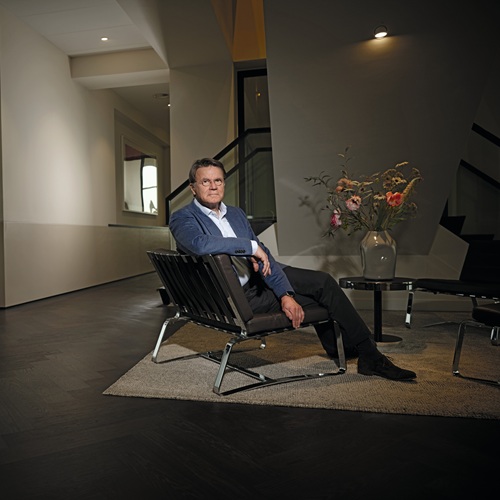
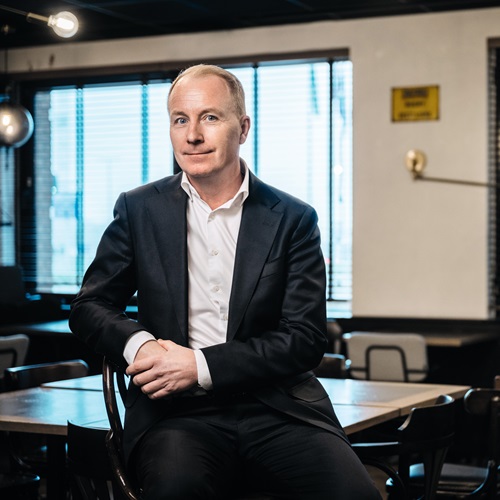
Rob van Wingerden, chairman of the new Corporate Governance Code Monitoring Committee, is concerned that directors and supervisory board members still tend to see the code as a box-ticking exercise. His committee aims to shift this perception to what the code has to offer. ‘Dive into it as a basis for a good discussion about corporate governance. We want the code to become a source of inspiration again.’
Read moreRoyal Ahold Delhaize is constantly confronted with conflicting interests from various stakeholder groups. The company faces activism focused on sustainability and climate but also groups pushing in exactly the opposite direction. Chairman of the Supervisory Board, Peter Agnefjäll, has a heartfelt interest in listening to everyone's concerns and criticism. ‘As a customer-focused company, you must cater to all your stakeholders to be successful. There is a constant friction between various interests so finding balance is a continuous process.’
Read moreWhat actions should leaders take now to be confident in a decade that they made the right choices? Hilde van der Baan and Gijs Linse from A&O Shearman set out to explore this question for Management Scope with shareholders, employees, and employers. In this final interview of a series centered on reflection, they speak with Jumbo CEO Ton van Veen. ‘I make my decisions carefully, with a well-calibrated compass. There is not much more you can do. But I suspect the conclusion later might well be that I should have done things differently.’
Read moreJelle Miedema, company secretary at Randstad, is first and foremost the linking pin between the executive board and the supervisory board. With the role of the supervisory board changing, that of the company secretary is changing with it. 'Members of the supervisory board are busier and the responsibilities of the position are expanding. They therefore find it increasingly critical to have someone who informs and advises them well.'
Read more
Rob van Wingerden: ‘We want the code to become a source of inspiration again’
Rob van Wingerden, chairman of the new Corporate Governance Code Monitoring Committee, is concerned that directors and supervisory board members still tend to see the code as a box-ticking exercise. His committee aims to shift this perception to what the code has to offer. ‘Dive into it as a basis for a good discussion about corporate governance. We want the code to become a source of inspiration again.’
Read more
Peter Agnefjäll (Ahold Delhaize): ‘We need to navigate between interests’
Royal Ahold Delhaize is constantly confronted with conflicting interests from various stakeholder groups. The company faces activism focused on sustainability and climate but also groups pushing in exactly the opposite direction. Chairman of the Supervisory Board, Peter Agnefjäll, has a heartfelt interest in listening to everyone's concerns and criticism. ‘As a customer-focused company, you must cater to all your stakeholders to be successful. There is a constant friction between various interests so finding balance is a continuous process.’
Read more
Ton van Veen (Jumbo): ‘Making the Best Decision with the Knowledge at Hand’
What actions should leaders take now to be confident in a decade that they made the right choices? Hilde van der Baan and Gijs Linse from A&O Shearman set out to explore this question for Management Scope with shareholders, employees, and employers. In this final interview of a series centered on reflection, they speak with Jumbo CEO Ton van Veen. ‘I make my decisions carefully, with a well-calibrated compass. There is not much more you can do. But I suspect the conclusion later might well be that I should have done things differently.’
Read more
Jelle Miedema (Randstad): ‘I Am Becoming More Outspoken in my role as Company Secretary’
Jelle Miedema, company secretary at Randstad, is first and foremost the linking pin between the executive board and the supervisory board. With the role of the supervisory board changing, that of the company secretary is changing with it. 'Members of the supervisory board are busier and the responsibilities of the position are expanding. They therefore find it increasingly critical to have someone who informs and advises them well.'
Read more- Jeroen Drost: ‘An Extensive Legislative does not Automatically Produce Superior Supervisors’
- Ton Hillen (Heijmans): 'Rather overly Bold than Feeble Goals'
- Geerte Hesen (Ferrovial): 'Stable frameworks are crucial'
- ‘ESG as a Bridge Between Industry and Society’
- Jan Rotmans: 'Without Faith in Progress, It Will Not Work'
- Pinar Abay (ING): ‘My Appointment Was a Bold Move for the Bank’
- Rients Abma (Eumedion): ‘The European Capital Markets Union Needs to Urgently Get Off the Ground’
- ‘Being Critical of the Shareholders can be Risky for a CEO’
- Frans Muller (Ahold Delhaize): ‘We Aim to Grow Faster Than the Market’
- Karin Bergstein: ‘Test Not Only the Strategy, but Also the Execution’
- The Challenges in Making the Value Chain More Sustainable
- Kitty Koelemeijer: ‘Becoming Future-Proof? Address The Supply Chain’
- Farewell Interview Martin van den Brink and Peter Wennink: ‘ASML Remains a Very Dutch Company’
- Piero Novelli: ‘The Dutch Governance Model Is Highly Relevant’
- Gerben Everts (VEB): ‘Do Not Let Financial Analysts Guide You’
- Bram Schot: ‘Make Use of The Competences Of Non-Executives’
- Gerdi Verbeet and Marguerite Soeteman-Reijnen (Siemens): ‘A Breath of Fresh Air for the Board’
- Carin Gorter: ‘Look at Opportunities as Well as Risks in Companies’
- Working on Future-Proof Work
- Anne Megens (AWVN) on Big Future Risks in the Labor Market
- Jos Nijhuis: ‘A Supervisory Director Should Know What it is Like at the Helm’
- Olof van der Gaag: 'A Project Developer’s Mind-Set Accelerates the Energy Transition'
- Top Women's Dinner 2022: 'Use Your Momentum to Make Your D&I Mark'
- Elise Stevens-Fokkens: 'Make Time for Your Company Secretary'
- Kitty Koelemeijer: ‘Make Supervisory Board Members Earn Education Credits’
- Aniek Moonen: 'Use Generation Test to Determine Strategy'
- Linda Hovius Sees Professionalization In Supervision
- Pauline van der Meer Mohr on the Actualization of the Dutch Corporate Governance Code
- Eelco Blok: ‘Greenwashing is Unacceptable’
- Feike Sijbesma: 'Nobody can be Successful in a World that Fails'
- Roland van der Vorst: 'Shared Interest Before Sentiment'
Essays
.jpg)

.jpg)

The labor market is about to undergo a transformation that is deeper and more fundamental than many organizations realize. AI is about to redefine the nature of work, turning the world upside down. This calls for urgent action, including in the boardroom. That is why it is time for a new tool: the workforce budget, argue Hilde van der Baan and Gijs Linse.
Read moreTechnology is designed for convenience, speed, and comfort. This makes it more difficult to consider whether we should actually want something. The challenge of the digital age is not so much a technical one as a moral one. It is precisely in the boardroom that we should look for friction, argue Hilde van der Baan and Gijs Linse of A&O Shearman.
Read moreGeopolitical risks, the rise of AI, and sustainability will dominate the agenda of the upcoming AGMs. What issues should company secretaries take into account? During the annual seminar AGM 2026 - What’s New?, company secretaries were updated for the coming season.
Read moreTechnology, with artificial intelligence in particular, is forcing organizations to rethink everything from strategy to culture, from revenue models to personnel. The digital age is not just a new phase of technological innovation and is not limited to AI; it is a fundamental transformation. Entrepreneurship also means anticipating the ethical, social, and economic impact of this transformation. What must organizations do to survive in this era? Hilde van der Baan and Gijs Linse of A&O Shearman will explore this question in the coming months.
Read more
A workforce budget for every organization
The labor market is about to undergo a transformation that is deeper and more fundamental than many organizations realize. AI is about to redefine the nature of work, turning the world upside down. This calls for urgent action, including in the boardroom. That is why it is time for a new tool: the workforce budget, argue Hilde van der Baan and Gijs Linse.
Read more
Technology should be open for discussion, not considered a fait accompli
Technology is designed for convenience, speed, and comfort. This makes it more difficult to consider whether we should actually want something. The challenge of the digital age is not so much a technical one as a moral one. It is precisely in the boardroom that we should look for friction, argue Hilde van der Baan and Gijs Linse of A&O Shearman.
Read more
Ready for the 2026 AGMs
Geopolitical risks, the rise of AI, and sustainability will dominate the agenda of the upcoming AGMs. What issues should company secretaries take into account? During the annual seminar AGM 2026 - What’s New?, company secretaries were updated for the coming season.
Read more
Entrepreneurship and survival in the digital age
Technology, with artificial intelligence in particular, is forcing organizations to rethink everything from strategy to culture, from revenue models to personnel. The digital age is not just a new phase of technological innovation and is not limited to AI; it is a fundamental transformation. Entrepreneurship also means anticipating the ethical, social, and economic impact of this transformation. What must organizations do to survive in this era? Hilde van der Baan and Gijs Linse of A&O Shearman will explore this question in the coming months.
Read more



Executives and board members should brace themselves as, given the current turbulent conditions, an increase in activist interest in European companies seems highly probable, writes Charles Honée. Preventing and responding to activist approaches is not a science but an art and every interaction with investor activists has its own dynamics and requires a tailored response based on the situation.
Read moreMost companies and business leaders are fully cognizant of the role they play in society and have already taken the steps needed to make their organizations more sustainable, more humane and thus more future-proof, argue Hilde van der Baan and Gijs Linse of A&O Shearman. In other words, a solid foundation is already there. The further development required to stay on course and to accelerate is a joint effort by all parties, from government to citizens.
Read moreCompanies will be facing significant challenges in 2025. What items will be on the agenda of the shareholders' meeting? At a seminar for company secretaries, organized by Management Scope and A&O Shearman in cooperation with Computershare, the principal issues were discussed.
Read moreESG and corporate social responsibility have become an integral part of conducting business. Hilde van der Baan and Gijs Linse of A&O Shearman argue for transparency and less polarization to restore the trust between industry and society. According to Van der Baan and Linse companies see ESG legislation as an opportunity to bridge the gap with society.
Read more
Activist Alert: In 2025, an increase in the likelihood of an activist campaign
Executives and board members should brace themselves as, given the current turbulent conditions, an increase in activist interest in European companies seems highly probable, writes Charles Honée. Preventing and responding to activist approaches is not a science but an art and every interaction with investor activists has its own dynamics and requires a tailored response based on the situation.
Read more
Acceleration asks effort by all parties
Most companies and business leaders are fully cognizant of the role they play in society and have already taken the steps needed to make their organizations more sustainable, more humane and thus more future-proof, argue Hilde van der Baan and Gijs Linse of A&O Shearman. In other words, a solid foundation is already there. The further development required to stay on course and to accelerate is a joint effort by all parties, from government to citizens.
Read more
Issues on the AGM's Agenda in 2025
Companies will be facing significant challenges in 2025. What items will be on the agenda of the shareholders' meeting? At a seminar for company secretaries, organized by Management Scope and A&O Shearman in cooperation with Computershare, the principal issues were discussed.
Read more
ESG Can Bridge the Gap Between Industry and Society
ESG and corporate social responsibility have become an integral part of conducting business. Hilde van der Baan and Gijs Linse of A&O Shearman argue for transparency and less polarization to restore the trust between industry and society. According to Van der Baan and Linse companies see ESG legislation as an opportunity to bridge the gap with society.
Read more


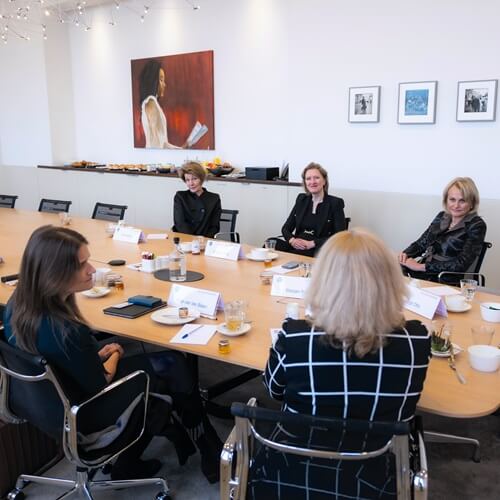
Corporate social responsibility and profit maximization do not necessarily have to be opposing interests, argue Hilde van der Baan and Gijs Linse of A&O Shearman, though investors do often differ in their views on the risks of sustainable investments and the timeframe in which they expect these investments to pay off. To further accelerate the transition, a more competitive capital market and consistent government policy are required.
Read moreWhat are the pros and cons of using artificial intelligence (AI)? Should employees be allowed to use AI in performing their tasks, and where have things already gone wrong? These questions were addressed during an AI masterclass for company secretaries, organized by A&O Shearman and Management Scope. What is evident is that the European AI Act, the first comprehensive regulatory framework, will have a significant impact. ‘It will not only be the big tech companies that need to comply with the law.’
Read moreMore and more directors are intrinsically motivated to make their company's value chain more sustainable and fairer. Legislation can help to also get their partners in the chain moving and create a level playing field, argue Hilde van der Baan and Gijs Linse of Allen & Overy.
Read moreDirectors and supervisory directors are under the magnifying glass of both the media and society. During a breakfast session by Management Scope and Allen & Overy, top female executives exchanged thoughts on how they perceive this and what consequences it has, and subsequently came to four inspiring insights for not putting the brakes on excessively. ‘It cannot be that we all do nothing because we are too afraid.’
Read more
Shareholders as allies in the sustainable transition
Corporate social responsibility and profit maximization do not necessarily have to be opposing interests, argue Hilde van der Baan and Gijs Linse of A&O Shearman, though investors do often differ in their views on the risks of sustainable investments and the timeframe in which they expect these investments to pay off. To further accelerate the transition, a more competitive capital market and consistent government policy are required.
Read more
Masterclass AI: ‘A Huge Impact on the Corporate World’
What are the pros and cons of using artificial intelligence (AI)? Should employees be allowed to use AI in performing their tasks, and where have things already gone wrong? These questions were addressed during an AI masterclass for company secretaries, organized by A&O Shearman and Management Scope. What is evident is that the European AI Act, the first comprehensive regulatory framework, will have a significant impact. ‘It will not only be the big tech companies that need to comply with the law.’
Read more
Take Responsibility Of The Chain And Accelerate Progress Together
More and more directors are intrinsically motivated to make their company's value chain more sustainable and fairer. Legislation can help to also get their partners in the chain moving and create a level playing field, argue Hilde van der Baan and Gijs Linse of Allen & Overy.
Read more
Boards Under The Magnifying Glass
Directors and supervisory directors are under the magnifying glass of both the media and society. During a breakfast session by Management Scope and Allen & Overy, top female executives exchanged thoughts on how they perceive this and what consequences it has, and subsequently came to four inspiring insights for not putting the brakes on excessively. ‘It cannot be that we all do nothing because we are too afraid.’
Read moreRelated themes
Corporate governance