
Next50 Forum 2026: The supervisory director in 2035
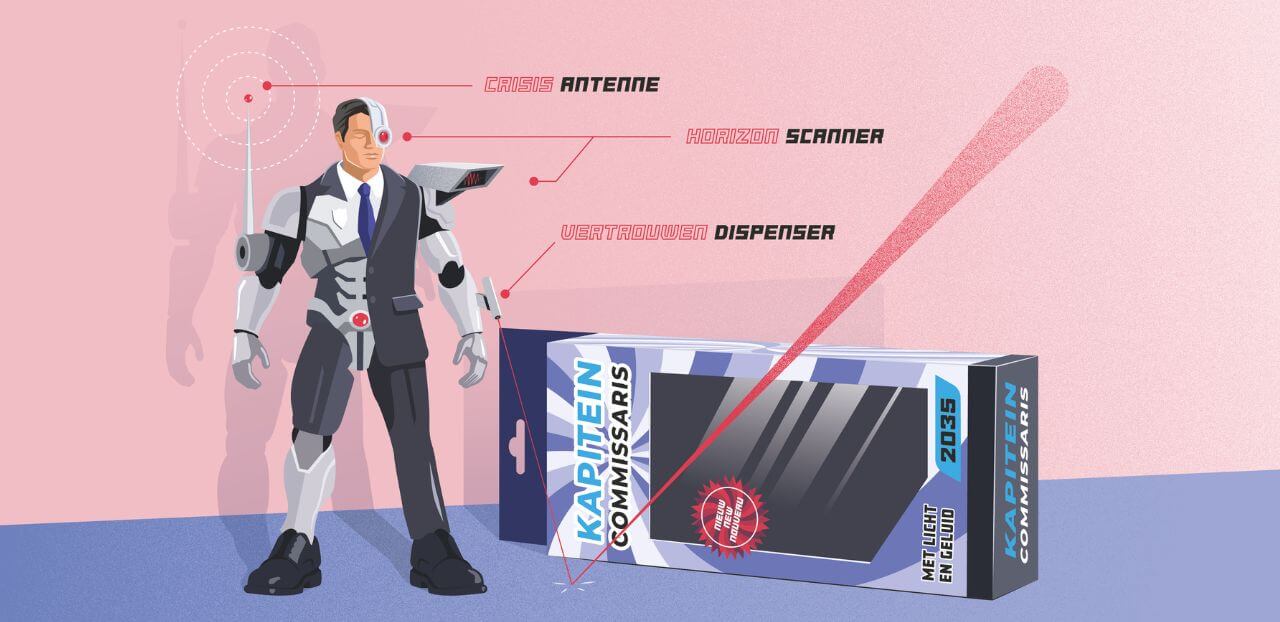
With the expectation of inspiring one another and learning from fellow board members, some thirty supervisory board members gathered in early March during the Next50 Forum. The invitees were welcomed on the twenty-sixth floor of the ‘green’ tower The Valley in the Zuidas business district. The terrace of restaurant Twenty-Six offers a sublime view of Amsterdam. The world is changing rapidly which raises the question of what these geopolitical and technological developments, the societal pressure, and increasing complexity in governance mean for the role of supervisory members? What does this require of oversight? What competencies, mindset, and knowledge do a supervisory board member need to remain effective in 2035?
The Next50 Forum, a substantive program for supervisory board members who are part of or just outside the Next50, was organized for the first time by Management Scope and founding partners A&O Shearman, AXECO, Deloitte, and The Board Practice. It led to insightful discussions and new perspectives. And also, to surprises: the evening concluded with the announcement of the Next50 Supervisory Board Members 2026, the list of emerging supervisory board members.
Social awareness
During the dinner, keynote speaker Kuldip Singh spoke about his evolving role as a multi-supervisory board member. Singh currently serves on the supervisory board of KPMG, TenneT, and Invest-NL. He is also chairman of the supervisory boards of Kyndryl Netherlands, Whiffle, and Skoon Energy. In 2024, the New Delhi born, Amsterdam-raised supervisor topped the Next50 Supervisory Board list. He currently ranks among the Top 100 Supervisory Board Members.
During his speech, he shared valuable insights, such as the advice for the supervisory board to create more informal moments with one another, as well as with the executive board. ‘Meeting a few times a year is not enough,’ Singh believes. ‘Avoid discovering who you need to put out the fire with only during a crisis.’ He also urged members to regularly seek out the ‘balcony scene’ to ensure that the supervisory board engages in sufficient reflection on its collaboration with the executive board. His call was endorsed at many tables. ‘Spend time together outside of meetings as well. This strengthens mutual trust and ensures that you can be a successful team,’ said one participant. Especially when making challenging decisions, trust is the key lubricant. ‘I have seen deals fall through at the last minute because of the lack of trust,’ says Olivier Valk, a lawyer at A&O Shearman. He advises investing in this trust, for example through simulation games. These could involve a simulated cyberattack or an activist shareholder. This way, colleagues learn what reactions to expect of each other in potential crisis situations and allow them to build mutual trust.
Several organizations use simulation games to understand how colleagues act in potential crisis situations,. ‘In a panic room, executives and supervisors have to work together,’ a supervisory board member explained. ‘Such an exercise reveals the dynamics in the group. The relationship between the supervisory board chair and the CEO is particularly important at such moments. Who takes the lead and when, what do you coordinate and with whom, and how do you keep each other on your toes?’ It is incredibly valuable.’
Always a benevolent maverick on the team
During the plenary session led by moderator Marijke Roskam, the focus was on how a supervisory board member seeks out discomfort. How do you serve as a critical sparring partner for the board without causing tension? This yielded various insights. For instance, diversity on the supervisory board is a must. ‘Board members with different backgrounds sometimes ask questions that others no longer ask. They look at an organization's fundamental principles with an open mind. ‘Why do we do things the way we have been doing them for years?’ Transparency is also essential. This applies to the provision of information, but also to the way we communicate. ‘Do not ask questions in an accusatory tone, but from a constructive attitude. Ultimately, you are working together toward the same goal.’
Good decision-making should, however, also be accompanied by disagreement. ‘It is dangerous when directors or supervisory board members agree too quickly and unanimously on a decision,’ emphasized Victor Prozesky, founder and partner of The Board Practice. ‘Pause the meeting and ask everyone to critically reconsider the matter. Often, after a time-out of a few days, different perspectives emerge.’ According to Prozesky, there should always be a benevolent maverick in the team: someone who questions the enthusiasm for a plan and is critical, but still able to work harmoniously with the executive board. ‘Dissenting opinions help the board better understand decisions, identify uncertainties and manage risks.’
Another factor not to be overlooked is the human factor in the decision-making process, according to Gijs Linse, lawyer and partner at A&O Shearman. ‘Especially during acquisitions, someone with a large ego can dominate the process. Someone –an external advisor or another member of the supervisory board, for example – must then see through that and explicitly involve other colleagues so that they, too, can make their voices heard. This ensures that decisions are made with greater deliberation.’
Critical questions are useful and so is support to executives, a participant emphasized. ‘Being an executive is a lonely profession. Offer a compliment after a good presentation or strong quarterly results. Not via WhatsApp message, but in person in the presence of others. As a board, you are ultimately also the employer of the CEO or CFO.’
The supervisory board is changing too slowly
Within a supervisory board, it is essential to know whether there are knowledge gaps. ‘Do you dare to admit that you do not know something?’ According to one panelist, supervisory board members should have such a bond among themselves that such an acknowledgement is not a problem. ‘That knowledge can be brought in, whether it concerns AI, cybersecurity, or less obvious topics such as culture.’
However, it is also explicitly about the question of whether supervisory boards possess the right competencies for current societal challenges. ‘The composition of a supervisory board changes slowly, while developments in AI or digitization are happening at lightning speed,’ says Maurits Duynstee, partner at AXECO. ‘Sometimes we have to admit that we have no idea what is happening and what the impact of, say AI, will be. You can hire external experts, but if the basic knowledge is lacking, it is difficult to reach a sound judgment.’ According to Duynstee, the crux is: ‘When appointing supervisory board members, we should look less at traditional CVs and more at knowledge and skills that align with today’s dynamics.’
Good News show
Another theme that surfaced was the culture necessary for supervisory board members to exercise effective oversight. Effective governance goes beyond assessing numbers and asking critical questions, it was argued. ‘It is also about proximity and genuine curiosity. Do you really know how the organization works and what is going on?’ Supervisory board members are currently missing opportunities in this regard, according to a supervisor who previously served as a director for many years. ‘Ride along with the conductor.’ In other words: spend a day shadowing employees. ‘That not only provides information about processes, but especially about the culture. It says so much more than the scores in employee satisfaction surveys.’
Many companies organize deep dives or dialogue sessions to gain a fuller understanding of the culture within the company. ‘But often these are good news shows. Often there is deference towards the board. You do not always hear the real story.’ One suggestion was to create more informal moments where supervisory board members can ask employees genuine questions. ‘For management, it can be valuable to occasionally sit down with the supervisory board without the executive board being present. This way, signs that something is going on somewhere surface sooner.’
How do you improve the culture within an organization when necessary? Gera Hamer, managing partner audit & assurance at Deloitte, explained that her organization held a series of integrity dialogues. ‘In groups, partners and managers discussed what they considered acceptable and unacceptable, and what mistakes they could learn from. Supervisory board members also occasionally joined these sessions to experience the state of the culture.’ What Hamer learned from this is that there are many gray areas. ‘You are quick to assume that everyone thinks the same way about certain issues, but that is not always the case. That is why such a dialogue is enormously important.’
The supervisory board members present agreed that culture should be a recurring agenda item. ‘It is never finished. Culture should be a sustained program within every organization.’
Continuing to learn
The discussions during the Next50 Forum made it clear that the role of the supervisory board member is changing drastically. Management experience and knowledge are important. In addition, supervisors should have a keen social awareness, dare to ask uncomfortable questions, and be curious. They will need to pay attention to culture, organize dissent continually, and be alert to potential crises. More than ever, it comes down to keep learning and adapting to a world that is changing at an exponential pace.
This article was published in Management Scope 04 2026.