
CEO NEO NL: ‘Nuclear power plants are long-term projects’
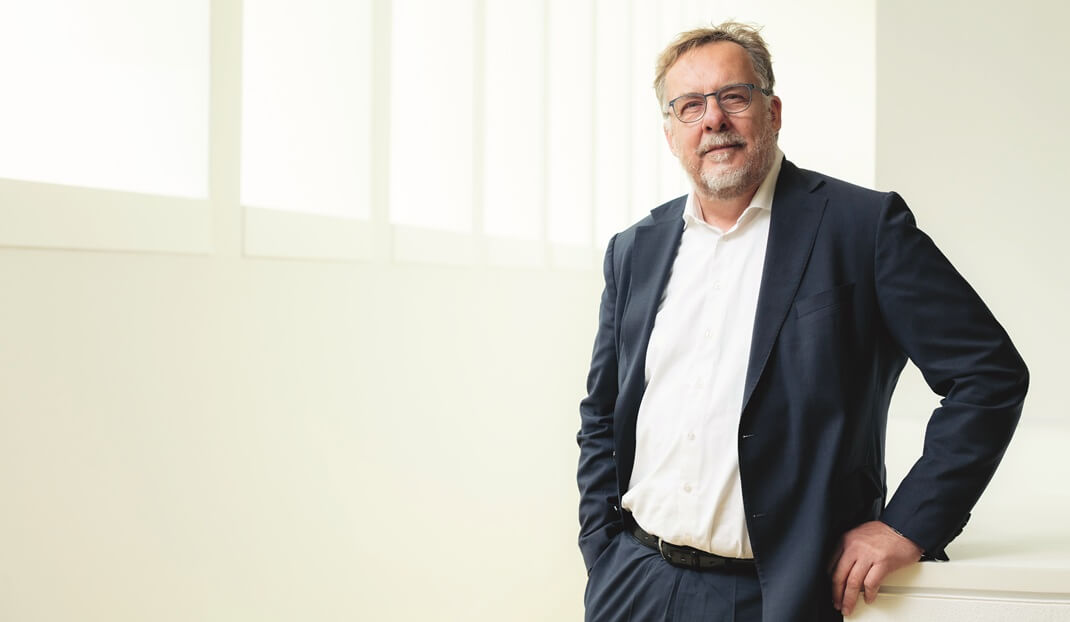
The Netherlands depends on foreign sources for about eighty percent of its energy supply. During the 2022 energy crisis, fueled by the war in Ukraine, it became painfully clear just how vulnerable the Netherlands is as a result: rising prices, uncertainty regarding supplies, and direct exposure to geopolitical tensions. ‘The assumption that international energy markets would always function smoothly disappeared,’ says Jan Willem van Hoogstraten to Aylin Bilic, partner at De Vroedt & Thierry. ‘Yet energy is a basic necessity, just like food, housing, security, and drinking water. Without energy, society grinds to a halt.’ And it looks as if the likelihood of society coming to a standstill is only increasing. Europe is already coming under growing pressure due to the grand ambitions of China and the United States. ‘As European Commission President Ursula von der Leyen has already stated, energy sovereignty – the ability to control one’s own supply and no longer rely on imports – has become a strategic necessity for Europe,’ according to Van Hoogstraten.
The course towards Dutch energy sovereignty was charted already under the Rutte IV cabinet and Energy Minister Rob Jetten. The goal is to provide a sustainable, reliable, and affordable energy system. Solar and wind play a major role in this, but do not always deliver at the moment when demand is high.
For that reason alone, the energy mix needs to also include nuclear energy; at least two large nuclear power plants must be built. To make this possible, NEO NL, a hundred percent state-owned enterprise that formally came into existence on February 16, 2026, was established. At the helm is Jan Willem van Hoogstraten, former CEO of Energie Beheer Nederland, with over thirty-five years of experience in the international energy sector. At EBN, he focused on reducing dependence on gas through geothermal energy and sustainable heat networks, thereby laying the foundation for his current role.
For readers who are not yet familiar with the details: what exactly is NEO NL’s mandate? And why was a company wholly owned by the state chosen?
‘The core mandate is clear: we are in charge of the preparation, construction, and operation of the first two new large-scale nuclear power plants in the Netherlands. In doing so, we are building something that may have to last a century. Look at the plant in Borssele: it has been operating for about sixty years, and we are looking at further expanding its lifespan, perhaps up to eighty years. Building a plant like this for multiple generations is on a completely different scale than a regular commercial project.
The market simply cannot handle this, because the risk profiles and lead times of fifteen to twenty years do not fit the return expectations of private investors. It spans multiple cabinet terms, multiple permitting processes, and political uncertainties that cannot be quantified. The state being the hundred percent owner sends a powerful signal of commitment, of taking the public responsibility seriously. Also, the government can borrow more cheaply, which has a positive impact on the final energy price.’
The state plays multiple roles simultaneously: shareholder, financier, and policymaker. How do you ensure that those roles remain separate?
‘That is indeed crucial. The separation of the policy role and the shareholder role has been deliberately placed at the highest administrative level within the Ministry of Economic Affairs and Climate Policy. NEO NL operates as an independent private limited liability company. There is a strict separation between the management board dealing with nuclear policy and the shareholder advisors. Those checks and balances are not bureaucracy for the sake of bureaucracy; they are the prerequisite for public trust. Especially in the Netherlands, after everything that went wrong with gas extraction in Groningen, we must be extremely vigilant on this point.’
NEO NL is a new organization in a sector that already exists in the Netherlands. How do you relate to parties like EPZ in Borssele, Pallas, and Urenco?
‘We are the newcomers, but the nuclear sector in the Netherlands already has knowledge and experience which we desperately need. EPZ manages the plant in Borssele and has been doing so for decades at a high safety level. Pallas is working on a new research reactor, and Urenco is a global player in fuel enrichment. What I want to achieve is for us, as a sector, to make a promise to society together – and to deliver on it. That requires connection: not silos focused on own benefit, but working together, sharing knowledge, and demonstrating that the nuclear sector in the Netherlands operates responsibly.’
You mention Groningen. What did that parliamentary inquiry teach you personally?
‘Around fifty recommendations were rolled out, and a number of them are directly relevant to the development of new nuclear power plants. But the core message is simple: people must actually feel the benefits of a major energy project. The burdens and benefits must be distributed more fairly. A new clubhouse or swimming pool is no compensation for damages suffered. But the biggest lesson was that the politicians and civil servants in The Hague and the residents of Groningen were too far removed from one another. We are taking all the recommendations on board.’
Where does NEO NL stand in the process?
‘First, we are building up the organization itself – and that is moving fast. We are currently at around 110 people and are growing every month. At the same time, we are holding talks with potential suppliers: Westinghouse and EDF, both based on proven western technology. We are collaborating with a technical support organization, a consortium of four engineering firms, to develop our own technical capabilities. This will be followed by a design phase, the choice of a site, and ultimately the selection of a single supplier on a basis of design. Then the detailed design begins, along with the business case, and a series of dozens of permitting processes– from the Authority for Nuclear Safety and Radiation Protection (ANVS) for the nuclear license to the province for the environmental permit, from the national government to the water boards.
A reactor has a lead time of ten years. We already have to start thinking now about when to place the order. And I also want to be clear about the promise we are making: safe, thorough, within budget, and as on time as possible. Those are the standards by which NEO NL will be judged. Society is investing taxpayers' money in this. The expectations are entirely justified. I do not expect to see the first spade in the ground during my term of office; I can be appointed for a maximum of two four-year terms. But my contribution lies in this development phase: laying the foundations, obtaining the licenses, and selecting the suppliers. Someone else can then continue the preparatory work.’
In the debate, countries such as France, which relies heavily on nuclear energy, and Germany, which is taking a more challenging route, are often cited. Where on this spectrum do you place the Dutch ambition? And what can we learn from the best practices and mistakes in our neighboring countries?
‘We look at Belgium first, a country with a serious nuclear sector. The border is close by, and activities on one side have an impact on the other. It makes sense to work together. The Netherlands recently signed a memorandum of understanding with the Belgians during the Belgian-Dutch Nuclear Energy Conference.
But the comparison with France is also instructive. France has a system that relies largely on nuclear energy and was significantly less impacted from price shocks in 2022 than we or the Germans. That is a lesson. At the same time, we are not copying the French model one-to-one. The Netherlands has its own energy mix, with the North Sea as a hub for offshore wind, with geothermal potential. Nuclear energy is not an end in itself in this context. It is a necessary pillar alongside solar, wind, and sustainable heat.’
There is growing political interest in small modular reactors, the SMRs. Why is NEO NL still opting for large power plants?
‘SMRs are promising. In the long term, SMRs may well play a role in meeting the growing demand for electricity. Especially because they can be located closer to urban areas than large power plants, making them suitable for combining district heating with electricity generation.
But the technology is currently not yet mature enough to form the cornerstone of nuclear energy policy. SMRs still need to go through the licensing phase. Countries are working on this – the United Kingdom, Norway, the United States, China – but a proven, approved, commercially available SMR does not yet exist. It is not without reason that our mandate is the realization of two large power plants with proven technology within the established frameworks: that is what the Netherlands needs right now. The organization is vigilant regarding new developments, but we are not going to experiment with supply security at this time.’
Public debate in the Netherlands is often deeply polarized. The debate on nuclear energy in the coming years will likely be no exception. How do you prevent NEO NL from getting caught up in such a debate?
‘We want to engage in an informed dialogue, based on facts and figures. That also means being honest about the downsides. Nuclear waste is a real problem. It has not yet been definitively solved. You cannot brush that aside. Ultimately, I think citizens will feel the difference in their wallets as the energy system becomes more stable and their energy bills go down. That is what society wants to see.’
Statistically, nuclear energy is one of the safest energy sources, but the emotional association with Chernobyl and Fukushima remains. How do you deal with that?
‘I understand that association. Even though the numbers show that accidents per kilowatt-hour produced in nuclear energy are lower than in any other energy source, including wind. What makes nuclear energy unique is not the frequency of incidents, but the potential scale. The probability is extremely small, but if things go wrong, the consequences are severe. That makes it different from other large-scale energy projects.
Chernobyl and Fukushima teach us above all that we must not be wary of technical failures alone. Culture is also important, far more important in fact. In both cases, the weak points in the system were known – but no one dared to say that it was unsafe. Psychological safety, regardless of rank or position, is not a soft value in nuclear energy. It is an operational necessity. We are building that culture now, while the organization is still small. This is the moment to embed this culture.
Incidentally, energy security is just as important as safety. Without a reliable energy supply, society is threatened in a different way. The two are inextricably linked. Safety without security of supply is no safety.’
There is a severe shortage of technical personnel. You are competing with TenneT, ProRail, and dozens of other companies for the same people.
‘That is true, and it is a serious issue. But the advantage of a long-term project is that you can also pursue a long-term strategy for people. We are already active at vocational schools, colleges, and universities – we are consciously investing in getting young people excited about a career in the nuclear energy sector. Recently, we were at the All Energy Day at TU Delft, and it was impressive how many young people came to us asking for internships, graduation placements, and traineeships. A new generation is emerging that no longer views nuclear energy as the taboo of the 1980s, but as a serious option for addressing a serious societal challenge. We are a relatively small organization – but we are building something that the Netherlands has not built in generations. That attracts people. We already have more than ten nationalities on our team.’
This interview was published in Management Scope 06 2026.
This article was last changed on 23-06-2026