Strategy
Strategy sounds like a relatively simple concept: these are our goals, and this is how we’re going to achieve them. But that also makes the concept incredibly broad; it encompasses the very raison d’être of the organization. Strategy involves leadership, innovation, implementation, and transformation—everything the company needs to achieve its goals and elevate itself to the next level.
A good strategy almost always involves innovation. When implementing a modern strategy, there is a great deal of innovation required along the journey of executing the strategy to actually achieve the strategy’s goal (for example: doubling revenue or global dominance). It all sounds abstract, and it is, so let’s make it concrete. Just think of an internet platform like Facebook. If this company were to adopt a new strategy, you know that this would lead to dozens, if not hundreds, of adjustments and innovations for the platform and the website. Innovations are then the solutions that haven’t been thought of yet. How different, by the way, innovation used to be. Back then, you came up with a product or a service, and you also immediately figured out how that product or service would come about. From A to Z, it was a well-thought-out process.These days, it’s all about trial and error. Does that apply to strategies as well? In any case, when it comes to (new) business development—often the most adventurous aspect of a strategy—failure has become acceptable. That is, if failure means you can use that setback as a springboard to move forward. Because when it comes to strategies, the times are unforgiving. Organizations that lack a sound strategy and corresponding plan risk being quickly overtaken by competitors, old or new. There must be room for experimentation in this era, which is socially brimming with innovation. But time is always limited—especially since competitors are also feverishly trying to innovate. The goal these days is almost always to achieve a digital transformation or a digital transition.
Disruptive innovation
Due to the rise of digitalization, strategies sometimes evolve into concepts so radically different that they have the potential to disrupt entire sectors. This is called disruption, serving as the starting point for changing value chains. Disruptive innovations are increasingly forcing companies to increase and then maintain their agility. Agile organizations respond more easily and quickly to trends and developments in the market. It is clear that digitalization is almost always at the core of a new strategy. Whether it involves the use of GenAI or cloud computing, which has given remote work a massive boost since COVID-19 and changed offices and HR processes forever.
Mission and vision
Moreover, consumers increasingly expect companies and other organizations to have a compelling narrative: one that addresses the environment, climate, international stakeholders, and their own employees. Focusing on social impact is the overarching theme, as Management Scope has also identified it as a key theme alongside diversity. Impact often boils down to sustainability, but socially acceptable policies—the so-called “S” in ESG (environmental, social, and governance)—are becoming an increasingly important focus for organizations.

.jpg)
Wouter van Benten (DHL): ‘I am a tech optimist’
How can organizations survive in the digital age? This question is explored in depth in a series of articles in Management Scope by Hilde van der Baan and Gijs Linse of A&O Shearman. This time, they interview Wouter van Benten, CEO of DHL eCommerce, about his digital journey, about speed – ‘we were moving so fast that we had to fight quite a few battles with head office to get our way and keep going’ – about choices that differed from those of the competition, and about what will be needed for the next ten years.
Read more
When Stephen van Rooyen (CEO of Ziggo Group since September 1 of this year) was appointed top executive at VodafoneZiggo in 2024, he found a company in freefall. He turned the tide with a recovery plan with a simple name: ‘How We Win.’ He did this without, as is common in turnarounds, completely replacing the management team. Van Rooyen explains his decisions: ‘We had to bring back the customer focus.’
The transportation sector is on the cusp of the biggest change in decades: the sector must electrify. TVM Chairman Michel Verwoest, whose insurance cooperative focuses on transportation and logistics, on a daily basis witnesses how members struggle with the energy transition. At the same time, there are also opportunities. ‘Sometimes there is more money to be made from energy management than from the truck itself.’
Stephen van Rooyen (Ziggo Group): ‘Forget the competition’
When Stephen van Rooyen (CEO of Ziggo Group since September 1 of this year) was appointed top executive at VodafoneZiggo in 2024, he found a company in freefall. He turned the tide with a recovery plan with a simple name: ‘How We Win.’ He did this without, as is common in turnarounds, completely replacing the management team. Van Rooyen explains his decisions: ‘We had to bring back the customer focus.’
Michel Verwoest (TVM): ‘Electrification to survive’
The transportation sector is on the cusp of the biggest change in decades: the sector must electrify. TVM Chairman Michel Verwoest, whose insurance cooperative focuses on transportation and logistics, on a daily basis witnesses how members struggle with the energy transition. At the same time, there are also opportunities. ‘Sometimes there is more money to be made from energy management than from the truck itself.’
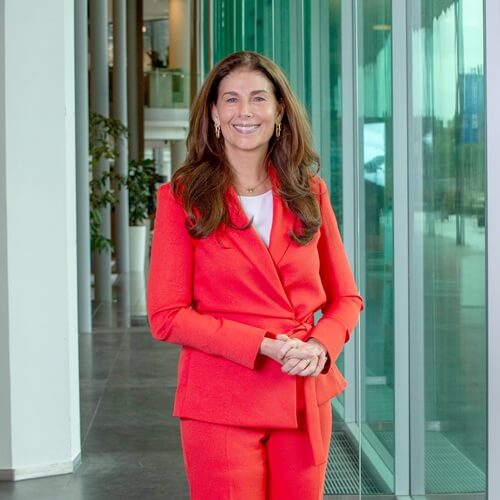

Since May 1, 2026, Jan Willem van Hoogstraten has been leading the Nuclear Energy Organization Netherlands (NEO NL), the state-owned company tasked with preparing, building, and operating two new large-scale nuclear power plants. He will most likely not see the completion of the project during his term. That does not bother him. ‘My strength lies in this development phase: laying the foundations, obtaining the licenses, and selecting the suppliers.’
What must companies, organizations, and the government do to survive in the digital age? Hilde van der Baan and Gijs Linse of A&O Shearman explore this question in a series of articles in Management Scope. This time, they speak with Janine Vos, CHRO and board member of Rabobank, about the enormous impact of the digital age for HR and the workforce. ‘There is a clear distinction between AI readiness and human readiness.’
The results of AI investments consistently fall short of expectations. We are noticing this more and more often in our conversations with executives, board members, and other experts. Strikingly, the same root cause keeps coming up: it is not the technology that falls short, but the human judgement within the organization surrounding it.
CEO NEO NL: ‘Nuclear power plants are long-term projects’
Since May 1, 2026, Jan Willem van Hoogstraten has been leading the Nuclear Energy Organization Netherlands (NEO NL), the state-owned company tasked with preparing, building, and operating two new large-scale nuclear power plants. He will most likely not see the completion of the project during his term. That does not bother him. ‘My strength lies in this development phase: laying the foundations, obtaining the licenses, and selecting the suppliers.’
Janine Vos (Rabobank): ‘We need to recalibrate work’
What must companies, organizations, and the government do to survive in the digital age? Hilde van der Baan and Gijs Linse of A&O Shearman explore this question in a series of articles in Management Scope. This time, they speak with Janine Vos, CHRO and board member of Rabobank, about the enormous impact of the digital age for HR and the workforce. ‘There is a clear distinction between AI readiness and human readiness.’
Human judgement is the scarce resource of the AI era
The results of AI investments consistently fall short of expectations. We are noticing this more and more often in our conversations with executives, board members, and other experts. Strikingly, the same root cause keeps coming up: it is not the technology that falls short, but the human judgement within the organization surrounding it.
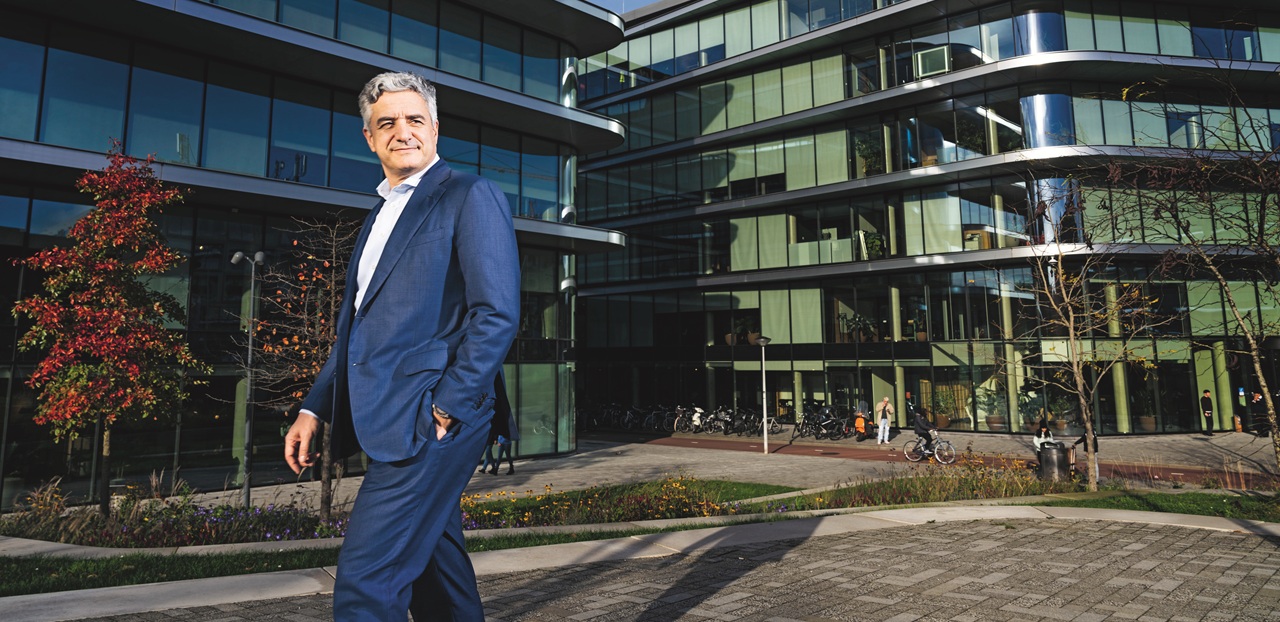
Daniele Tonella (ING): ‘Innovation is also about behavior and governance’
As chief technology officer and member of the management board banking at ING Bank, Daniele Tonella is responsible for the bank's entire IT landscape, with its nearly twenty thousand employees. His mandate covers everything within the organization ‘that contains a chip or line of code’, as he puts it. Tonella discusses his concerns about knowledge development and how technology and organizational development are becoming increasingly intertwined. ‘ING's digital transformation is more a challenge in terms of organization, culture, and governance than a technology issue.’
Read moreMost read
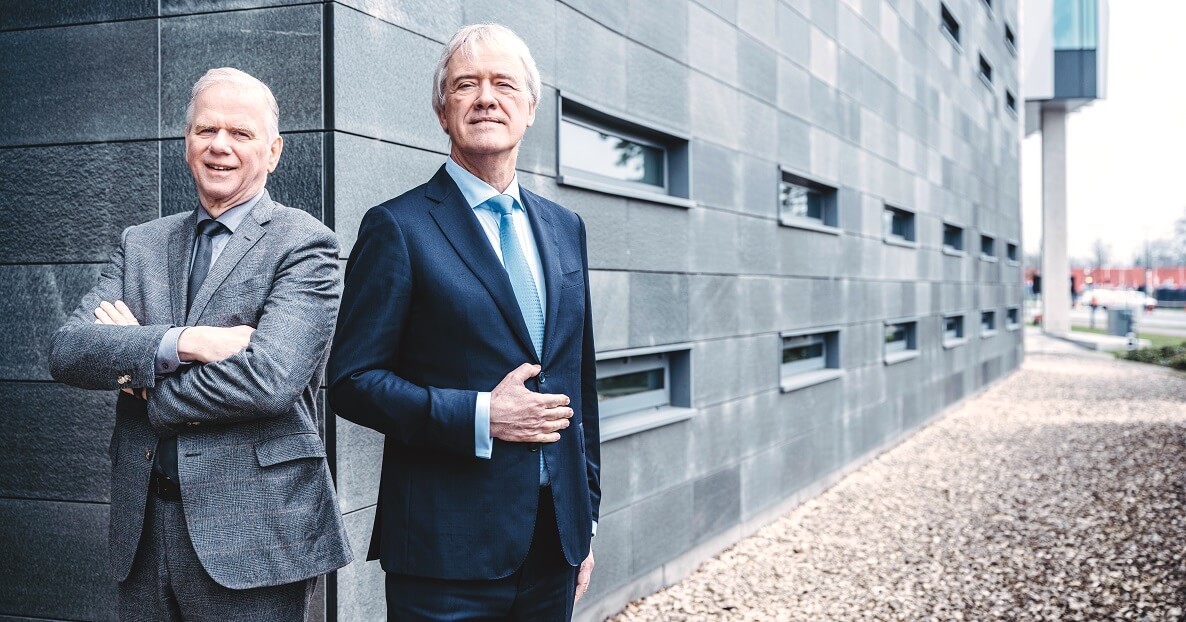
Farewell Interview Martin van den Brink and Peter Wennink: ‘ASML Remains a Very Dutch Company’
The legendary leaders of semiconductor equipment manufacturer ASML, are retiring. A very good reason to engage in an exclusive conversation with the co-presidents Martin van den Brink and Peter Wennink on everything that contributed to their evolution into a global player.

Carsten Bittner (ABN Amro): ‘Do As The Dutch Do’
The German CI&TO (Chief Information and Technology officer) of ABN AMRO needs to take cognizance of the differences between the Dutch and German cultures. His observation is that these are not that significant. ‘Nuances do exist, of course, and, as a director, it is important to take heed of these.’
Ralf Knegtmans (De Vroedt & Thierry) on fifty years in executive search
.jpg)
.jpg)
A workforce budget for every organization
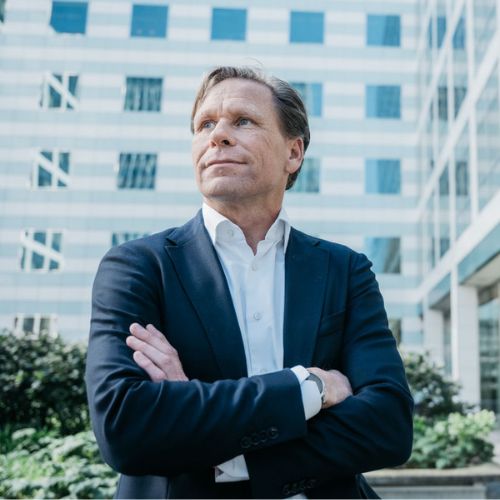
David Knibbe (NN Group): ‘Leadership begins where analysis ends’
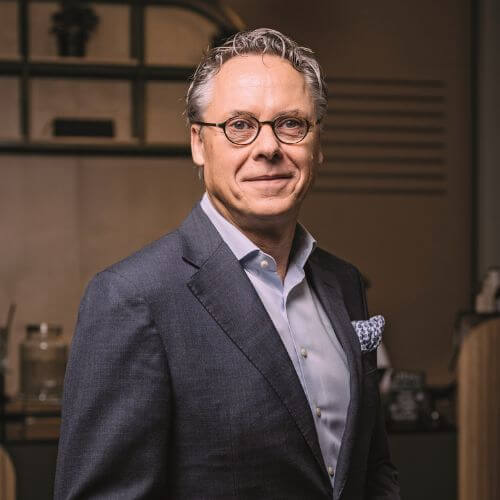
Ralph Hamers: ‘A CEO should never delegate strategy’
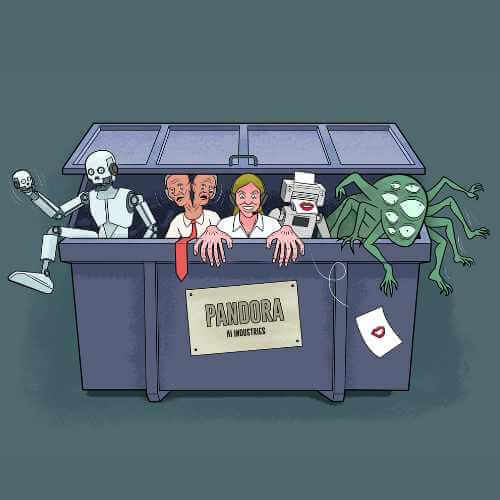
Why AI projects fail
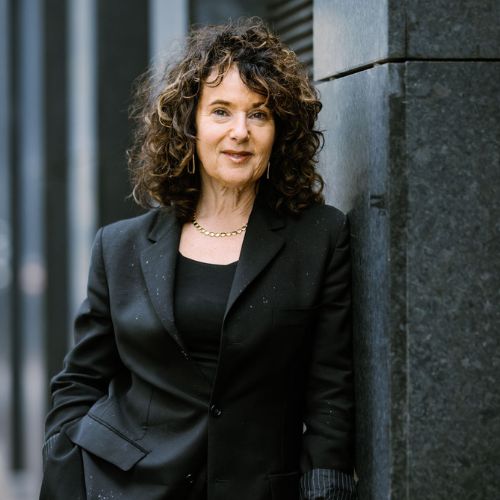
Mirjam van Praag: ‘Innovation requires a systemic approach’
 (1).jpg)
Lotte Hart (SeederDeBoer): ‘The human side is crucial’
.jpg)
.jpg)
.jpg)
.jpg)
.jpg)
.jpg)
Many organizations are actively working to optimize their digital work environment. However, it is often too narrowed on technology and processes, with too little attention paid to the needs of employees. This is evident from the recent Future of Work study commissioned by KPN. Just as companies map out the customer journey, they should also continuously measure the digital interactions and experiences of employees, writes Jurgen de Jong.
Do more to prevent absenteeism and be open to employees who do not fit the ideal picture. With this appeal to employers, Maarten Camps, who is chairman of the UWV, the Dutch Employment Insurance Agency, and number 81 in the Top 100 Supervisory Board Members, hopes to address the shortage in the labor market and reduce the rapidly increasing waiting times for a WIA, the Work and Income (Capacity to Work) Act, assessment. But changes are also needed within his own organization. ‘We will have to create more uniformity in the working methods of our professionals.’
Invest in a people-centric digital work environment
Many organizations are actively working to optimize their digital work environment. However, it is often too narrowed on technology and processes, with too little attention paid to the needs of employees. This is evident from the recent Future of Work study commissioned by KPN. Just as companies map out the customer journey, they should also continuously measure the digital interactions and experiences of employees, writes Jurgen de Jong.
Maarten Camps (UWV): ‘A different mindset is needed’
Do more to prevent absenteeism and be open to employees who do not fit the ideal picture. With this appeal to employers, Maarten Camps, who is chairman of the UWV, the Dutch Employment Insurance Agency, and number 81 in the Top 100 Supervisory Board Members, hopes to address the shortage in the labor market and reduce the rapidly increasing waiting times for a WIA, the Work and Income (Capacity to Work) Act, assessment. But changes are also needed within his own organization. ‘We will have to create more uniformity in the working methods of our professionals.’

Kaya de Lange (BeFrank): ‘A leader needs both reason and intuition’
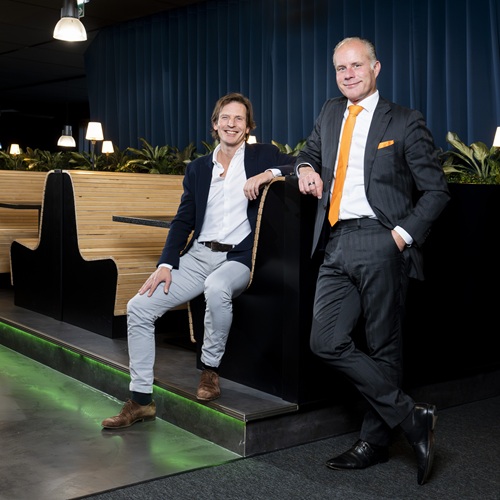
Siete Hamminga and Guus Verhees on Robin Radar's scale-up journey
Rutger van der Leeuw (Enexis): ‘More copper in the ground is not the solution’

Millennial leaders are warming up – and here is what you can expect
André van der Linden: ‘Make cybersecurity as self-evident as fire safety’