
Joseph Kuling: 'A director and major shareholder actually wants you to be critical'
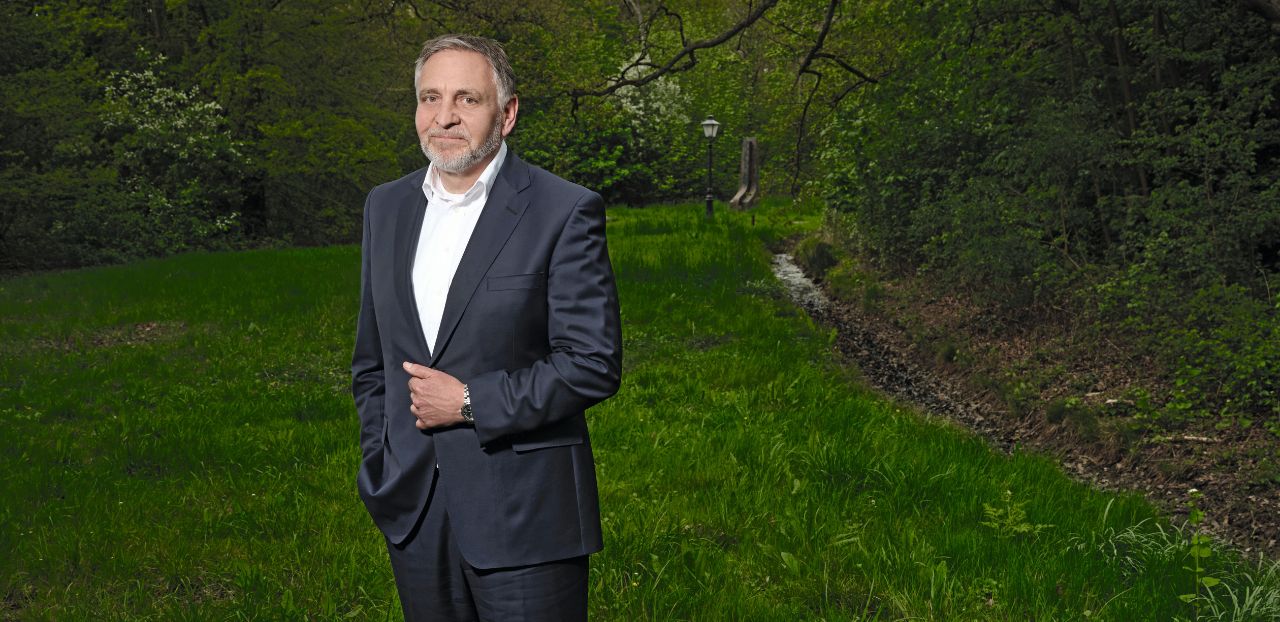
In recent years, Joseph Kuling has held some of the most challenging supervisory board positions imaginable. As chair of the supervisory board of construction company Strukton, Antea, and parent company Oranjewoud, he became embroiled in high-profile proceedings at the Enterprise Chamber. There he faced the man he still respects for what he achieved as an entrepreneur: director and majority shareholder Gerard Sanderink – once one of the Netherlands’ leading entrepreneurs, but later heavily discredited by accusations of mismanagement and various business and private conflicts that were partly played out in public. Sanderink was dismissed as a director by the ‘commercial court.’ At the Enterprise Chamber, Kuling also encountered Vincent Moolenaar, who today serves as interviewer for Management Scope. In daily life he is business director board & governance at Nyenrode Business University, as well as ‘counselor’ at the Enterprise Chamber, and, in that role, involved in the Sanderink case. ‘It was a tense time. Very complex,’ says Kuling. He cannot and does not wish to say much about the Sanderink case, ‘partly because parts of the case are still pending in court.’ Kuling: ‘My most important task is to ensure that Strukton is back on track and that Antea can continue to build on its success. And fortunately, that is succeeding. Ultimately, that is also good news for shareholder Sanderink.’
Kuling talks with Moolenaar about the lessons he learned as a professional supervisory board member, about the importance of scenario planning, and the bond of trust you need to have with your CEO/major shareholder – just as he had with Sanderink. ‘Every controlling shareholder eventually comes up against some wall.’
You have been active in executive roles for a long time during your career. Why did you actually want to become a supervisory board member?
‘During my time as a director, I dealt with supervisory board members for over twenty-five years. With good ones and with less good ones. At Rabobank, I ended up on the supervisory board more or less by chance due to a change in the local governance model. And I really enjoyed it. When I was in my late fifties, it seemed like a good idea to pursue the role of supervisory board member professionally. More or less full-time. It is a rewarding profession with many facets. It is also a profession you have to learn. Especially in the beginning, you have to be careful not to jump straight to solutions or take the CEO’s chair, but rather to focus on asking the right questions in your role as a supervisor That is essential. Furthermore, I believe it is important to not only approach the CEO critically but also to inspire them You can do both. My experience with good CEO’s is that they can handle that well.’
There is a lot of routine work involved in the supervisory board’s responsibilities. You have to go through an entire control cycle with a great many compliance obligations. How do you ensure that, as a supervisory board member, you are not solely preoccupied with those kinds of obligations?
‘I think it all starts with curiosity. That is a key trait for a supervisory board member. As a supervisory board member, you could limit yourself to ‘ticking boxes.’ But that would be a very defensive role and a waste of the knowledge and expertise collected in the supervisory board. As a supervisory board, you must ensure that all compliance matters are properly safeguarded. You can use that data as a starting point for discussion. The time you have as a supervisory board is limited. You must use it as effectively as possible, for example, to challenge the organization at a strategic level regarding growth and resilience. I am also in favor of dedicated strategy days. And I am in favor of involving external consultants in that process. Consultants are often hired at the wrong times, for example during reorganizations. But it is precisely in strategy development that they can be of great help. They bring a fresh perspective on the company and knowledge of the outside world. Incidentally, I believe that strategy development is the responsibility of the executive board primarily. Of course, as a supervisory board, you can formulate certain frameworks in advance, but I believe that first, a CEO, together with his board and management, should devise and develop the strategy.’
The world is unprecedentedly volatile. Geopolitically, there is a lot going on; there is war, there was a pandemic. To what extent has that changed your work in recent years?
‘The advantage of getting a bit older is that you have already seen and experienced quite a lot. Crises are timeless. So, you cannot really be surprised by them. Although the current geopolitical crisis is indeed very fundamental. For years, we thought we were moving toward a globalized world. That brought huge prosperity. But also, significant interdependence. Now, a number of power blocs have emerged, and Europe is struggling. For Dutch companies, this is extremely challenging, but it also offers great opportunities. If you globalize less, you will have to do more on your own.’
What should you as supervisory board member do in times of crisis?
‘Above all, assess whether the organization is resilient and agile enough. We might not have foreseen that the Strait of Hormuz would close, but you can certainly evaluate your organization against the scenarios that are already in place, for example, if the oil price triples. What is the worst-case scenario for the company?
During the financial crisis, I was at the local Rabobank. I remember that we asked the local board at the time what we could do if Rabobank were to collapse. What would that mean for our local bank? Could we continue? The management thought it was a strange question. But it was a question that keeps you sharp and provides new insights. Scenario planning is very important. I am sometimes described as a chess player. I always try to think one or two moves ahead and consider all the possible variations involved. Companies should do that too. Come up with variations.’
Diversity in the boardroom is an important theme. Do you think the average age of supervisory board members should be lowered?
‘I think experience is important. In Japan, you do not really start counting until after you turn sixty. I think there are very good supervisory board members over seventy. But that does not mean you cannot have someone in their forties on your board. The main thing is that the team complements each other. If you have to discuss matters with the CEO on the remuneration committee, it is quite helpful if you have experienced that yourself as a CEO.’
And on subject matter? Should there be room for true specialists on a supervisory board?
‘I think it is more important that they are within the organization itself. It should not be that a cybersecurity specialist has to sit on the supervisory board to ensure that the company operates securely digitally. You cannot have a specialist in every field on your supervisory board. The main thing is to spark the discussion and, as a supervisory board, assess whether the mindset within the company is on the right track. I was recently in a meeting where the CEO proposed using AI for a particular purpose. That was not exactly embraced. On the contrary. To me, those are signals that make me wonder: are they sufficiently engaged with the digital future yet?’
In your role as chair of the supervisory board, what is the relationship with the CEO typically like? Is there frequent contact?
‘A good relationship between the CEO and the chairman is incredibly important. I try to catch up with him once every three weeks. Preferably an informal one-hour meeting. Preferably without an agenda. You often revisit topics from the previous meeting. How is something developing, what is the current state of affairs? You try to support the CEO in that way. It can be lonely at the top. I remember that when I was a director myself. My company was once hit by a major strike. I was already at the office at seven o'clock to make sure I could get in on time. At a quarter past seven, the phone rang: it was the chairman of the supervisory board. Just to wish me strength. ‘Stand tall,’ he said. That was important to me. In any case, I have never forgotten it.’
In your supervisory life, you have gained experience with various ownership structures – with cooperatives, with directors who are also majority shareholders. You have worked on one-tier boards and two-tier boards. Do you have a preference?
‘At Nordic Climate Group, I am chairman on a one-tier board. That is a different role than the one I have on Twence’s supervisory board, which operates under a two-tier model. A one-tier board, in a private equity-owned situation, is actually fantastic to experience. It is incredibly hands-on. Ultimately, the roles must always be clear. Role consistency is the starting point. But if you ask me personally, the Anglo-Saxon model appeals to me less than the Rhineland model. Certainly, in Dutch culture, for a company that thinks long-term, a two-tier board is the most obvious model.’
In models involving private equity and a director-majority shareholder (DMS), you often deal with significant shareholder involvement. Is that pleasant for a supervisory board member? Or does it sometimes get too personal?
‘The word ‘pleasant’ is not exactly the first word that comes to mind. Here, too, the question is: what is best for the company? Above all: I have always had an enormous admiration for DMSs. Admiration for how they have built their company, for the perseverance they possess. They have not only economic ownership but also emotional ownership. DMSs are the company, they are the culture, they are the success.’
What added value can you then offer as supervisory board member in a company with a director-majority shareholder?
‘Every DMS runs into limits at some point. How will he or she take the company to the next phase? Often, you see that certain principles and convictions have brought a DMS success. But at a certain stage, those can also work against you. You have to discuss that. What does it mean for the company’s future? What does it mean for succession? What does it mean for future financing? As a supervisory board member, you can play a very important role in that.’
How much tension does a critical role create in that process?
‘When we decided to suspend and dismiss a director-majority shareholder (Sanderink, ed.), I thought that no DMS would ever appoint me as a supervisory board member again. But I spoke to a DMS who refuted that. A DMS also appoints you as a kind of insurance. They actually want you to be critical. That is what you are appointed for. And the moment a company becomes at risk, you have to intervene. That moment is quite difficult to determine. Not too early, not too late. And if there is still trust in the DMS, you naturally try to help first. Only when a DMS refuses to accept help is there no other option but to suspend them… or step down yourself.’
What would have to happen for you to step down?
‘I am not really one for walking away. I would say: first we solve the problem, then we can see what happens next. Walking away is easy in a sense, too. You leave the organization and your successor with a major problem. That is not in my nature. I would rather be asked to go than walk away.’
The last time we met was in the Enterprise Chamber. How do you reflect on the institution of the Enterprise Chamber?
‘I am incredibly happy that we have an Enterprise Chamber in the Netherlands. It is unfortunate that there are cases where the Enterprise Chamber is necessary, but it is very useful that the institution exists. It cannot be the case that companies stagnate due to conflicts, to be unable to move forward, or even end up at risk. An objective ruling from the Enterprise Chamber is then of vital importance.
There is a great deal of expertise within the Enterprise Chamber, both legal and business-related. I also experienced the process as pragmatic and thorough. It helped us through the darkest period. And I must say that I also really appreciated seeing how the Enterprise Chamber dealt with our DMS, Gerard Sanderink, who did not have a lawyer of his own. They showed a great deal of consideration for his interests.’
What did the ruling bring you?
‘The safety net provided by the Enterprise Chamber– in our case, the appointment of an administrator for five years – brings much-needed peace of mind. It gives us the time to offer Strukton a new perspective. Since the Enterprise Chamber’s intervention, the company’s value has increased significantly. And we see many opportunities to add even more value in the coming years. That is good for employees and customers, and also for Sanderink.
Ultimately, we hope to restore a working relationship with him. Because I understand very well that he is angry, but we have to move forward.’
He remains, in any case, the man behind the success of these companies…
‘That is the case. It is unfortunate that things turned out this way. Sanderink was always mesmerized by his companies. And eventually, he became mesmerized by a woman (his partner Rian van Rijbroek, ed.). That happens to most people at a somewhat younger age; in his case, it came later. But he has every right to the economic ownership of his companies. And in a way, I hope he regains that emotional connection to those companies as well. We, as the supervisory board, are keeping the door open. We still take his philosophy into account in all our decisions. The best outcome would be for him to eventually, as the founder, be proud of what his companies have become. That is what I would wish for him.’
How did you experience that turbulent period with the supervisory board?
‘The pressure was intense. Antea was performing well, but Strukton faced existential challenges. Our task was clear: preserve value and offer a vision for the future. So, questions like: what do we hold on to, what do we let go of, and how quickly can we get the executive board functioning again? It was crucial to keep the supervisory board aligned throughout this process. You have to make those decisions together, sometimes with limited information. And then stand behind them, keep the ranks closed, and push forward. It was a tense time. Very complex, legally as well.’
How did you keep it together yourself?
‘Also, by staying fit. You really have to make time for that. My wife and I are avid long-distance hikers. At the height of the crisis, we had just planned a walking trip to Santiago de Compostela. Just as the whole affair with the Enterprise Chamber was unfolding. I said: no matter what happens, we are going on that three week walk. So I held meetings while walking – with earbuds. Actually, I quite enjoyed that. The walking cleared my head and allowed me to approach matters with an open mind. I felt refreshed. There were all kinds of difficult issues to deal with. But suddenly I was at the peak of my creativity. I would call in the evening with a few more new ideas. My colleagues even said: ‘Can you not keep walking for another week?’’
How is the relationship with Sanderink now? He seems to have vanished off the face of the earth…
‘I spoke to him not too long ago. We went to visit him. Where? I will leave that open. But the stories in the press that Sanderink is ‘untraceable’ and about ‘piles of unopened mail’—those are not true. We just stood there talking to him for about twenty minutes. Outside at the door. No, he did not let us in. Fortunately, Gerard looked healthy. But he is still angry about the way things turned out. Yes, it is and remains bitter that things had to turn out this way.
Sanderink was a truly a great entrepreneur. One of the best the Netherlands has ever had, and that is what we are building on.’
This interview was published in Management Scope 05 2026.
This article was last changed on 19-05-2026