
‘We need to work together to help startups grow’
There is no shortage of innovation in Europe. Start-up entrepreneurs with promising technology find it relatively easy to raise capital in the early stages. They can count on a mature startup ecosystem with highly educated talent, leading research institutions, and committed investors. But from there on, things then often falter. Too few tech companies go on to become success stories. Many promising startups shut down due to a lack of funding or relocate their operations to the United States, where more growth capital is available.
How can we ensure that Europe not only produces innovative startups but also allows them to grow into the champions of the future? That question is central to the report by former ECB President Mario Draghi on Europe’s competitiveness, and to its Dutch interpretation by former ASML executive Peter Wennink. Both reports emphasize that Europe must better support the growth of companies in several strategic sectors – ranging from digitalization and life sciences to energy.
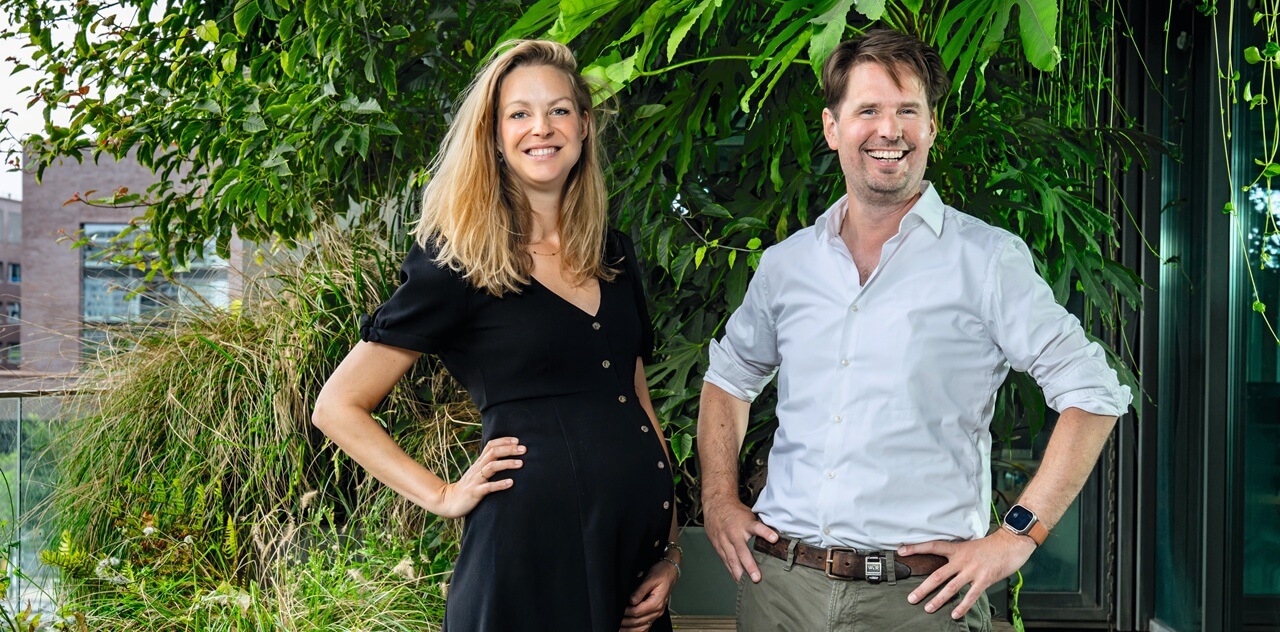
In line with the recommendations of Draghi and Wennink, two investors share their perspectives on this major challenge. Julia Padberg is a partner at SET Ventures, a venture capital fund that invests in early-stage technology companies enabling the energy transition. SET Ventures focuses on the emerging digital energy economy, driven by three pillars: hyperlocal systems, automation, and resilience.
Alex Bakker is a managing partner at Photon Capital, which invests growth capital in the physical and digital infrastructure that powers this new economy. The fund focuses on companies and projects that are already more advanced and ready for scaling up. Photon Capital invests, for example, in data centers, network service providers, and other suppliers and service providers in the digital economy.
Although Padberg and Bakker represent different links in the investment chain, they agree on one thing: without a strong ecosystem, Europe will continue to lose companies that want to grow. They discuss what is needed to strengthen that ecosystem with Tjarda Molenaar, Director of the Dutch Association of Private Equity Firms (NVP).
What is your opinion on the Wennink Report?
Padberg: ‘I largely agree with it. Europe is incredibly strong in technical innovation and produces many promising startups. But scaling up these young companies is not going as well. Wennink provides a sharp analysis of how we can improve this. We in Europe and in the Netherlands need to collaborate more effectively, reduce barriers, and collectively make more capital available for companies to be able to continue to grow.’
Bakker: ‘I find it unfortunate that Wennink focuses primarily on large key companies and technologies. Of course, those are important, but there is too little attention paid to the ecosystem surrounding them: the enabling layer. In other words, everything needed to make innovation and growth possible. In the past, we did the same with the ‘top sector’ policy: we designated certain sectors as the engine of the economy. But an economy is an entire value chain: if a single link is missing, it does not work. As investors, we are not necessarily looking for the next unicorn – we actually prefer to focus on the less visible but essential side of the economy: infrastructure, technology, and companies that enable the rest to grow.’
Padberg: ‘I can relate to that. We, too, do not invest directly in wind farms or solar panels, but in that enabling layer, the digital layer surrounding them. You can pour a lot of money in the physical infrastructure, but without the digital layer, you cannot make the system efficient, secure, and scalable. You need both.’
In which sectors can we build European champions?
Padberg: ‘There are major opportunities in the digital layer that will coordinate the future energy system. Think of smart battery management, decentralized energy networks, and AI-driven optimization in industry. We are already extremely good at this in Europe – this is pre-eminently a sector where we can build global market leaders. It is also urgent. Our energy system is undergoing the biggest industrial transformation we will experience in our lifetime: we are transitioning from a centrally controlled system to millions of decentralized sources that need to be dynamically coordinated with one another. No grid operator can manage that alone anymore. This requires new technologies and business models. These are currently being developed primarily by startups operating in that digital layer. We risk missing out on that innovation because companies are now often relocating to the United States and other countries outside Europe. We cannot afford that. We must ensure that these companies continue to grow into scale-ups in the Netherlands.’
Is it also relevant from a geopolitical perspective that these scale-ups remain in the Netherlands and Europe?
Padberg: ‘Absolutely. The transition to a decentralized, digitally controlled energy system powered by solar panels, wind turbines, and batteries reduces our reliance on fossil fuels from oil- and gas-producing countries such as Russia and the Middle East. But if the hardware for this soon comes mainly from China and the software from the US, we are trading one dependency for another. That is a risk, because whoever controls the digital layer can, in theory, also disrupt it. That is precisely why you want to keep that strategically critical layer in European hands. The technology to build this ourselves already exists. What is still missing are the large companies that can do this at scale.’
Are data centers purely energy consumers, or do they also play a role in the energy system?
Bakker: ‘Both. At first glance, they are energy guzzlers, but they can also be an important part of the energy system. For example, by making residual heat available to district heating networks. In addition, they can help keep the electricity grid in balance: with our own batteries and generators, we can partially align power consumption with what the grid needs at that moment. Precisely because we as a society are becoming increasingly electrified – think of heat pumps and electric cars – the pressure on the energy grid is enormous. We could have anticipated this sooner. The signs were there, but the political will to do what is necessary was lacking: it is a climatologically strategic, economic, industrial, and geopolitical issue that requires timely investments.’
What would your advice be to policymakers and other parties involved in the energy transition?
Bakker: ‘Let us work together more openly. There are many things we can solve ourselves. The market can, for example, also build an energy grid. Right now, the government does it alone, and a lot goes wrong. That collaboration starts with taking each other seriously. Grid operators are currently incredibly insulated: it is hardly possible to speak to anyone, let alone make plans together. There is no shortage of budget. But in practice, things go wrong. Take a planned residential area: a grid operator anticipates well in advance that cables need to be buried, but according to its interpretation of the regulator's calculation rules, it cannot plan for this. Investment is only permitted once the demand actually exists in a legal sense.’
Padberg: ‘I think there are also more short-term solutions possible. By managing the grid more intelligently, you can extract tens of percent in additional capacity from the existing grid without heavy investments. Because these solutions come from the market, market participants pay for them among themselves.’
Bakker: ‘There are plenty of possibilities, but the Netherlands views the electricity grid as a single, rigidly defined entity, even though it is part of a broader energy system. Take the district heating network: it has been partly undermined by the rule that the government must hold a majority stake – if I build an energy grid, it effectively reverts to the government.’
How do you, as investors, deal with these complex circumstances?
Bakker: ‘We do not see the complexity solely as a disadvantage. Companies that know where they can do business most easily have a massive competitive advantage. As investors, we also have a choice. For example, we hardly ever invest in new data centers in the Netherlands; we rather go to a country where you can simply pick up the phone and get a grid operator on the line.’
Padberg: ‘Regulations in Europe are extremely fragmented: it is easier to obtain a permit in one country than in another. We help entrepreneurs – always companies with international ambitions – to navigate this. We know which countries allow them to get to the market fastest. Additionally, we establish the right connections with grid operators, partners, governments, or financiers, so that they can roll out internationally step by step.’
Which regulations cause companies to move to the U.S.?
Bakker: ‘Many companies are moving to the U.S. or other countries because of our employment laws. If you want to hire the best AI engineers, and they are incredibly expensive, you face less risk in the U.S.. If your company is short on cash or an employee is simply not performing, it is easier to let them go. Moreover, these professionals can find work elsewhere in no time. Employment laws are stricter in Europe, and especially so in the Netherlands. Germany, for example, offers more flexibility than our country.’
Padberg: ‘Another point is the tax on employee stock ownership. In Europe, and certainly in the Netherlands, it is not very tax-efficient to hold options or shares in your startup because you have to pay so much tax on it. That is better organized in other countries, which is sometimes a reason for companies to relocate.’
In which European countries do you like to invest?
Bakker: ‘Denmark, for example. For an investment in a Danish data center, we wanted a connection to the district heating network. I travelled there regularly in the run-up to this deal. On one of those trips, I managed to set up a meeting with the grid operator. Two things surprised me. That the grid operator was even willing to talk at short notice, and that so much could be arranged during that single meeting. A few weeks later, the agreements were on paper. We are now feeding a lot of heat back into the grid. We in the Netherlands can learn a lot from the good cooperation between government and the market. We are the solution to their problem, and they to our problem. That is how we help each other. In the Netherlands, we are very hesitant about that.’
Padberg: ‘We have recently had good experiences with France. For example, we invested in Decade Energy, a company that installs and optimizes large batteries for logistics depots looking to electrify their trucks. Just as in the Netherlands, access to the energy grid is a bottleneck, but installing a battery makes it easier to get that connection – the market solves a problem for the grid operator, and vice versa.
France is relatively transparent: there is only one transmission system operator and one local grid operator. You can get a connection within a few months. This allows Decade Energy to grow rapidly, building expertise and economies of scale. In the Netherlands, that same process takes an average of ten years. In Germany, too, with hundreds of grid operators, it is a lengthy and complex process.’
How could the government act as a co-investor during the scaling-up phase?
Padberg: ‘The government could, for example, invest in funds with a strong track record, rather than investing primarily on its own. By doing the latter, they actually compete with the market and we might also keep propping up the wrong companies. In addition, while private investors are indeed pouring more and more money into infrastructure, if the risks are too great, it is good if these important investments are made by the government.’
Bakker: ‘Not so much the government – cobbler stick to your last – but much more (pension) capital needs to be mobilized for European innovation. Tech companies that want to expand often leave for the U.S. now because they have access to massive funds there, ninety percent of which consist of pension money. Dutch pension funds also prefer to invest their money in the U.S. rather than in the Netherlands. There is still much to be achieved in addressing this.’
If we look ten years ahead, which company in your portfolio will have grown into a European champion?
Padberg: ‘In ten years, everyone will know Instagrid. This German company develops portable batteries that provide clean energy off the grid. Many sectors – such as events, defense, and construction – currently rely on diesel generators. I expect regulations to be introduced in the near future requiring that off-grid energy consumption be sustainable. Instagrid will then take a leading position.’
Bakker: ‘I expect a lot from Penta Infra. This company owns and operates data centers in the Netherlands, Germany, France, Belgium, and Denmark. The focus is primarily on edge data centers: locations outside the major internet hubs. This allows these data centers to provide computing power close to the end user. That is a fast-growing market. The company recently added locations in Amsterdam and Paris to its portfolio. In this way, Penta Infra combines the advantages of regional proximity with locations in major European hubs. The short distance to the end user is beneficial for the energy system: data centers can return residual heat to residential areas and can also contribute to grid balancing. This allows data centers to evolve from major energy consumers into an active link in a more flexible energy system.’
This interview was published in Management Scope 07 2026.
This article was last changed on 25-08-2026