
‘Private equity and impact go hand in hand’
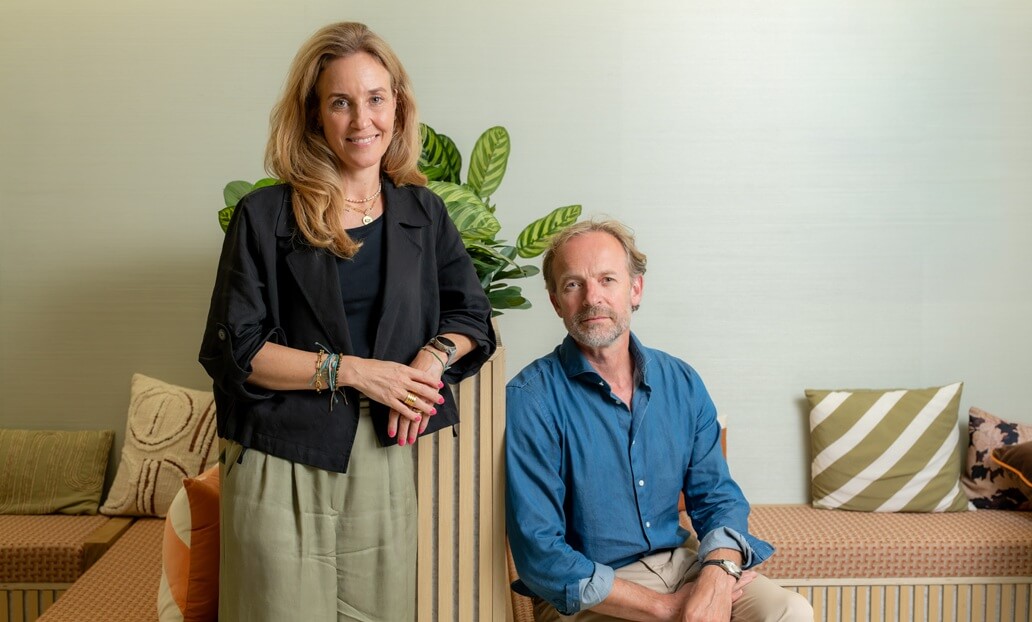
When CEO Leontien Hasselman of Alkmaar-based ImpactBuying told those around her that she was looking for a private equity investor, the unanimous advice she received was along the lines of: ‘Just keep them at a distance.’ Some even saw it as the ‘death knell’ for her company. She did, despite this, ultimately decide to partner with Mentha Impact, the impact fund of private equity investor Mentha Capital. ‘Although we had grown organically every year since our founding in 2009, with additional capital we hoped to grow from already somewhat active outside the Dutch borders into a truly European platform. Because the more buyers use our product, the more impact we can make,’ she tells moderator Bastiaan Hoogendoorn, practice lead for private equity at Boer & Croon.
‘It took quite some time in the beginning to really get to grips with the product,’ explains Edo Pfennings of Mentha Capital. ImpactBuying’s business model does indeed require some explanation. In short, it rests on two pillars: software and data service. ImpactBuying combines technology, AI, and human expertise to collect, verify, and make complex supply chain data actionable. This enables large retailers and manufacturers to make better decisions sooner and, for example, comply with regulations. In addition to the software, customers also subscribe to the verification service for reliable data on their supply chain.
Are all elements of a product truly organic or produced without modern slavery? And what is the carbon footprint? Hasselman: ‘Our team of ninety people, representing twenty-five nationalities, every day calls suppliers all over the world to verify such data. This is how we help customers make their supply chains transparent and comply with legislation such as CSRD and CSDDD, as well as product and packaging requirements. Moreover, just as we were looking for an investor, the European Green Deal was introduced, bringing with it a range of sustainability laws, including the obligation to reduce emissions. We felt we owed it to ourselves to explore how we could grow. There was plenty of interest from the private equity sector, but American and Anglo-Saxon companies in particular shared our growth ambition, but not our impact ambitions. Mentha was actually the only party that asked critical questions about combining social impact and financial returns, and that wanted to help us make that more transparent. That is why they were really the only logical partner.’
Mentha Impact was founded three years ago as the impact fund of Mentha Capital, which itself will celebrate its twentieth anniversary next year. What was its purpose in being founded?
Pfennings: ‘With our impact fund, we aim to achieve specific sustainability KPIs alongside financial returns. We believe that companies that have a positive impact on the climate and environment can grow more rapidly and increase their impact through the focus provided by private equity. We do not only invest in companies with management teams that already intrinsically want to make a positive impact, such as ImpactBuying. It could also be that they are developing a product or production system that is hugely beneficial for our climate, or that we see the potential to help them transition from brown to green. At the same time, we want to avoid chasing incredibly interesting ideas which in fact do not really offer notable impact. That is why we have developed a methodology whereby the expected reduction or improvement of, for example, a company's CO₂ emissions or water or raw material consumption must be at least equal to the annual savings of 1,000 Dutch households. At ImpactBuying, however, that translation was quite a challenge, because they do not reduce emissions themselves but use their software and data to help clients measure and then reduce their carbon footprint. In this case, we assume that this knowledge encourages customers to make more sustainable choices.’
So, in terms of substance, it was a good fit. What, nevertheless, were the sticking points during the negotiations?
Pfennings: ‘As always, the private equity firm would rather pay a little less and the seller would rather receive a little more, but both sides felt the need to reach an agreement quite quickly, and we made no secret of that. We spent a lot of time, above all, getting to know each other better.’
Hasselman: ‘For us, it was a period of major transformation anyway. My co-director Marjan (de Bock-Smit, also founder and CEO of ImpactBuying, ed.) stepped back from day-to-day operations in 2024 and has been a non-executive director ever since. An investor came on board. And we had not even signed the deal yet when part of the Green Deal was postponed and watered down, so everything changed completely – both internally and in the market.
What we found interesting was that the impact fund focuses specifically on climate. We had been looking for some time for a way to attribute the CO2 savings that clients realize thanks to our data, to our own impact. We saw eye to eye on that right away, and as a result, the discussions were constructive right from the start.’
Mentha Impact wants to prove that returns and impact can go hand in hand. How did you proceed once the contract was signed?
Pfennings: ‘Apart from the additional sustainability KPIs, we operate exactly the same way with the companies in our impact fund as we do with other companies. The Impact team consists exclusively of people with extensive private equity experience, because you really need that to leverage the benefits of private equity for these types of companies and help them thrive. At ImpactBuying, quite a few organizational changes were needed. The first priority was strengthening sales. That responsibility had actually rested solely with Leontien – and before her, with Marjan – so we immediately brought in someone from our own network to guide Leontien and the new team in refining their go-to-market strategy.’
Hasselman: ‘We completely agreed with that. Our largest clients, multinational retailers, had already indicated that it was time to bring in an investor. One of them noted that we were not visible enough in the market and that, as a result, he was having a hard time making the case internally for doing more business with us. We knew that the next phase of growth required a stronger commercial team, a scalable platform, and greater insight into the economic value of our services. Mentha helped us implement those changes more quickly and more effectively.’
Pfennings: ‘Another priority was the platform migration that ImpactBuying was already working on when we came on board. We found that quite exciting, because that new platform, Verda, is incredibly important for the company’s future-proofing. We did not intervene operationally on this point, but we did bring in additional people into the discussion. We also invested in the development team and middle management. A third change related to the service component of the company. We have a great deal of experience with, for example, how to measure whether people are working efficiently and whether your clients are actually paying for all the time and attention you put into a project. ImpactBuying had somewhat less experience in this area, so we helped them gain that insight and implement the results throughout the organization.’
Hasselman: ‘We really had to take a step forward in that regard. As an entrepreneur, you tend to rely mainly on energy and intuition. You seize opportunities, test solutions, and figure out the financial details later. The biggest change was that we started translating decisions into business cases and measurable results much earlier on. That sometimes requires a different discipline than what you are used to as an entrepreneur, but it also helps you see more quickly where you are actually creating value. Working with a private equity firm forces you to ask yourself whether you are holding on to something because you want to prove a point, or because you have been in the market for ten years and intuitively know that it is the right approach. Moreover, if you look closely at the numbers, you see that some things simply need to change. That was very confronting.’
Can you give an example of what really needs to change?
Hasselman: ‘We are very high-touch. We talk to clients a lot, we organize workshops, you can always call, you have your own account managers… That is a quite substantial overhead, where by far not everything generates revenue. Sustainability is a dynamic field, and it often requires flexibility from us. That can involve a lot of consultation without always yielding immediate results. At the same time, that close contact and the trust in our expertise, people, and data are precisely the reasons why clients tend to stay with us for years. Especially in a world with AI, that trust is crucial. AI is nothing without good, reliable data.
The question, then, is what we absolutely want to preserve because it is what sets us apart from competitors who only provide software. Our growth lies in automating knowledge building, data definitions, and quality control wherever possible, while retaining the human touch where necessary. We are now slowly making that transition, because if you take too radical an approach, you lose too much of the company’s core.’
As a private equity firm, would you not actually want to move faster?
Pfennings: ‘Sometimes, yes, but in this case, the deep domain expertise and commitment to the client were actually the trigger that made us enthusiastic about ImpactBuying. Of course, I like it when something translates into euros, but personal contact with clients is precisely ImpactBuying’s biggest unique selling point. It would be very foolish to undermine that.
For us, the success of an investment ultimately stands or falls with the right people. If Leontien is the right CEO and her team is the right team – made up of smart people who have been in this business for thirteen years - then we do not need to challenge that. In the past, we have also frequently been unsuccessful, and ultimately we came to the conclusion that our biggest failure costs are by far attributable to the wrong people in the wrong place. That is why, three years ago, we made ‘people first’ our strategy and invested heavily in it. For example, we appointed highly experienced talent & leadership directors whose sole focus is on supporting management and the Mentha deal team with the analysis, selection, recruitment, and development of top management and the layer below it, because we believe that is where the greatest value enhancement lies. Discussing the management team is also extremely important in our own investment decision-making process and our reviews. If we do not have confidence in the team, it has now even become the primary reason to say ‘no’ to an investment. It does not have to be perfect when we come on board. If it is clear where reinforcement is needed and the CEO and the management team embrace that, you can chart a new course together.’
Hasselman: ‘Conversely, as a portfolio company, you benefit from the private equity firm’s network. They have just a few more connections and can open doors when you need expertise or new people. There are some issues you want to get a clear grasp on yourself first before turning them into a formal decision or a shareholder issue. Fortunately, through Mentha, I found an investor in the impact fund who acts as a sort of coach with whom I can talk freely. Having a listening ear from a neutral person who has seen so many different situations and faced tougher challenges, is a welcome asset.’
You increasingly hear that value creation is shifting from financial engineering to value creation within the company itself. Is that trend changing here as well, and is value creation increasingly being sought within the company itself?
Pfennings: ‘The game is changing, but at the same time, I do not think the narrative around financial engineering ever really held true in our segment of the market, the mid-market. By definition, we invest in companies that are not quite there yet, where a director-major shareholder has worked tirelessly to pursue opportunities in the market and built something successful, but does not always know how to take the company to the next phase. We try to help by finding a different approach or bringing in other people to move forward better and faster. But if we bring in Mentha people ourselves, it is always temporary and from the very start with the idea of getting them out again as quickly as possible. Especially with companies like ImpactBuying, which by definition make a positive impact, our sole objective is to accelerate growth, because that inherently increases the impact. We find that much more rewarding than squeezing out the last percentage point of margin. That is not quite in line with Mentha’s DNA.’
There is a perceived difference between working for a founder and for a private equity firm. On the one hand, there is the value-driven, emotionally invested approach of a founder, and on the other, the business-oriented, financially driven approach of a private equity firm. How did you, Leontien, experience this as CEO?
Hasselman: ‘I recognize the difference, but I find the contrast between a value-driven founder and a financially driven private equity firm a bit too simplistic. Ultimately, you are working with people where trust, chemistry, and mutual respect are key.
I worked very closely with Marjan for thirteen years. Together we built the company, and I learned a great deal from her. It was almost a partnership of two, with an intensity and shared history that you cannot – and do not need to – replace one to one.
The relationship with Mentha is less intertwined with the day-to-day history of the company, but it brings an independent perspective, financial discipline, and greater momentum. My most important insight as CEO is that values and financial discipline are not opposites. ‘Doing good and doing good business can and must go together,’ is written on our wall. Our mission defines where we want to go. I have learned a lot from both forms of collaboration, but in different ways.’
You have been business partners for over a year now. If we look four years ahead: when will your partnership be considered a success?
Pfennings: ‘By then, ImpactBuying will have at least tripled its revenue and therefore its impact; which is good for the world and, of course, financially attractive. That is why the company is exploring further international expansion of its sales team, so that more European retailers and suppliers can join. If that succeeds, we will have achieved our goal: proving that it is possible to combine impact and return on investment.’
Hasselman: ‘Currently, buyers typically check the end product for issues such as child labor, sustainability, or carbon footprint. We want them to eventually use our data to pre-select suppliers that meet certain requirements and, in doing so, make choices that are better for the world.’
This interview was published in Management Scope 08 2026.
This article was last changed on 22-09-2026