
Constantijn van Oranje (Techleap): ‘Do not let yourself be limited’
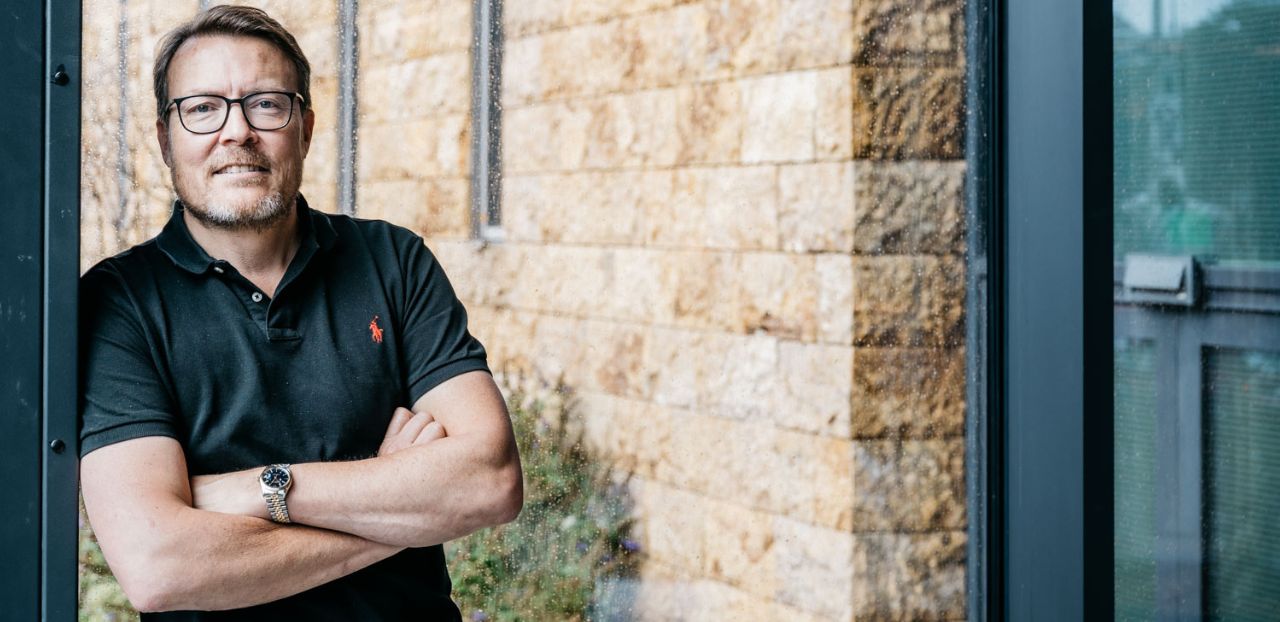
Being ‘the king’s brother’ makes Van Oranje a striking figure in the Dutch business world, but anyone who talks to Van Oranje about the future of tech in the Netherlands –as in this case Niekie Jansen and Eran Lahat from the executive search and leadership consultancy De Vroedt & Thierry – quickly realizes that he does not exactly weigh his words with royal caution. On the contrary, ‘the tech prince’, who has been involved with tech startups and scale-ups in the Netherlands for years, is outspoken about the role of the government, the business sector, and the mindset surrounding entrepreneurship in the Netherlands. In his view, the Netherlands is not ambitious enough, too slow, and too risk-averse to keep pace with international competition. According to Van Oranje, we love innovation – as long as it does not change the status quo too much. ‘‘It has to stay fun’ is not a sustainable business philosophy.’
The Netherlands has knowledge, talent, and capital. So why are we still unable to produce more world-class technology companies?
‘The single most important condition for success is a hungry entrepreneur. If you want to start a company and be global within a few years, you have to be willing to work incredibly hard. International competition is brutal. Excelling at that level is like elite sports. When you start to grow, you have to attract outside investors, and you lose some control over your company. We Dutch tend to dislike that; we want to maintain our autonomy. Rapid growth – and perhaps even making acquisitions – does not come naturally to our startup culture.
We are more into the conceptual idea. We like innovation in the Netherlands; we are delighted and proud when someone creates something beautiful or new. But then I ask: do we also build large companies? Do we take those kinds of ideas further? Does such a company dare to go global, make international acquisitions, and collaborate with major foreign players? Do we dare to invest money in such a company? Unfortunately, the answer is often no. We would rather stay within our comfort zone. The drive and sense of urgency are lacking among the government, many entrepreneurs, employees, and investors alike.’
Do you have an explanation for that?
‘It is mainly a matter of mindset. Here, the adage is that ‘it has to stay a little fun.’ But if you want to build a company that can compete with firms from China or Silicon Valley, then ‘it has to stay a little fun’ is not a sustainable business philosophy. And sure, you can also point to excessive regulation or a lack of capital – valid points – but a true entrepreneur will not let that hold them back. There is plenty of capital. Sure, it might come from the US or Singapore, but there is always money available for good companies.’
Is there sufficient demand for innovative technologies, and is that demand being stimulated enough?
‘That is a major European problem. In the US, they have a far better ecosystem for this, with innovative companies making acquisitions and a government that actively encourages this through measures like public procurement. If we want today’s major transitions – the energy transition, the food transition – to succeed, then we will have to stimulate the demand side. You cannot pour a lot of money into building bioplastic factories and then fail to enact legislation that mandates the use of that material instead of virgin plastic from China. If you want to do something with green hydrogen, then as a government you also have to offer contracts to purchase it or, at the very least, stimulate the market for it. Unfortunately, I see a government that is afraid to make such procurement commitments. And when you add to that the fact that our business community is characterized by conservative procurement practices and does little in the way of corporate venturing, we are not making any headway. We have good companies here that cannot sell their products in this market. They have to go to America, because that is where the market is. Here, the market is completely fragmented, overregulated, and everything takes far too long. Everything is slow.’
Let us look at the boardroom in the Netherlands. What role do you think it plays? Where are executives and board members missing opportunities to actually help innovation scale up?
‘European boardrooms have been slow to adopt technology for years. When we developed the Digital Agenda with Neelie [Kroes, the then-European Commissioner] in 2010, it was not even on the agenda. But even back then, you already had mobile internet, and the cloud was already on the rise. Absolutely no one was paying attention to it. It was not until 2012 or 2013 that it started to gain some traction. But even then, the conversation focused on the wrong things. The discussion was about how to cram more technology into a BMW, not how to build a Tesla. The realization that a new, disruptive industry was emerging went right over our heads. In fact, there was a certain resistance to it. The hydrogen car has been around for ages, but we never created an environment in which we gave that technology a chance. The old legacy industries also always put the brakes on it, too.
And so, we have allowed all the solar panels, wind turbines, and other energy systems to be manufactured in China. There were a great many cloud companies in Europe, but they were ultimately all crushed by Big Tech. No one here bought their services or invested in them. The same goes with social media. Hyves was here before Facebook and was a pioneer, but nothing was consolidated. We tried to keep everything national, and now it is all gone. Our business community, in tandem with our government, is primarily interested in maintaining the status quo.’
Are there any examples of things going well?
‘If you take a step back, the fundamentals in the Netherlands are actually very solid. Our location is excellent, government funding is in order, our infrastructure is a bit behind on maintenance but is generally still sound, and people from abroad are keen to work here.
We are also doing quite well in a few critical sectors, such as semiconductors. We have a number of global players there, such as NearField Instruments, a fantastic company that is a unicorn. But you do not see large ecosystems or spin-offs emerging from those companies in the Netherlands, as you do, for example, with Cisco Systems in the US, which has spawned a great many companies. We always like to point to Philips, which spawned many companies, but those were often painful processes. It was not as if Philips was necessarily the driving force behind those spin-offs. And we are not really seeing that happen with NXP or ASML yet, either.’
Why is that?
‘At ASML, it is because they have a laser focus on their roadmap. Engaging in corporate venturing alongside that roadmap would be a distraction. Things are really different abroad. Samsung has 60,000 R&D employees. And on top of that, they also do corporate venturing. And they have a unit in Silicon Valley dedicated to attracting companies. Here, the mindset around startups is that they are ‘fun and nice to have.’ But we forget that Starlink, Tesla, SpaceX, OpenAI, and Anthropic are all startups. And they are dominating our world now. They are not just ‘nice-to-haves;’ they are absolutely critical.’
Is there enough attention being paid to startups in the Netherlands?
‘We all like startups – until they grow big. Then we suddenly see it as a problem that people are getting rich from them. Whereas I would say: celebrate those people. And then, if necessary, tax them to the hilt. Or better yet: encourage them to reinvest their money into the sector. In any case, we are underutilizing our successful tech entrepreneurs and failing to involve them in thinking about our future. Our ‘top sectors’ policy is an example where the government, universities, and the business community work together, but entrepreneurs and investors have no seat at the table. That is why nothing truly disruptive has ever come of it. We are perpetuating the status quo. And on top of that, everything is fragmented, even within the ministries. Instead of pursuing an integrated strategic industrial policy, the business climate, industrial policy, digitization, innovation, and entrepreneurship are all treated in isolation, and there is even internal competition for budgets. Right now, at this point in history, we must break down the barriers and make strategic choices. Fortunately, things are starting to change a bit, but we still do not feel the urgency enough.’
Who should bear the primary responsibility?
‘It lies squarely with the government. They have to make the choices and take the lead. And they need to enable the market to implement those choices. But a rift has developed in the Netherlands between the government and the business community, where they no longer speak the same language and do not trust each other. Yet they desperately need each other, not least to keep our welfare state afloat. But somehow, over the past fifteen years in the Netherlands, things have gone off the rails. We have lost touch with one another. The atmosphere has soured. And I am actually lucky, because I operate in the startup sector, which is sort of the ‘darling sector’, so to speak. People are still rooting for us. But once you grow and become part of the solution, that distance starts to creep back in. ‘Oh, you want an alternative model because, of course, you want to commercialize...’ Well, duh – of course we want to commercialize! That is the whole point!’
I sense a fair amount of frustration...
(Vehemently:) ‘Yes, I am not doing this for myself. I am doing it for the Netherlands. And that applies to so many entrepreneurs. You do not set out to create cultured meat, a quantum computer, a cancer therapy, or a fusion reactor because you want to get rich off of it. You do it because you want to contribute to a better world. We need to support these people, instead of frustrating them. So yes, there is frustration there. Just as I am frustrated by our labor laws. They are bringing the Netherlands to a complete standstill. Right here in this building, there is a company run by foreign entrepreneurs, and they are talking about ‘the Dutch disease:’ people from abroad know that here you can call in sick very easily and that the employer is then required to keep paying your salary for two years. That is truly unheard of anywhere else in the world. Absenteeism rates here are twice as high as in France! And yet we here think that people in France do not work. People here often stay home for months or years with burnout, even when there is no medical indication for it. There is far too much room for abuse, and the bill is passed on to the companies. Small businesses simply cannot afford that. Unfortunately, there is a huge taboo surrounding this in the Netherlands. But I find myself asking: why is that? We are the most – most – generous country, yet it does not lead to good outcomes. Why can we not work toward a new, fair system – one in which we generously support people who are sick, but where companies are spared some of the burden? It is one reason why so many companies say: ‘Then we will just not invest in the Netherlands,’ or ‘We will then not grow in the Netherlands.’’
What needs to change in the boardroom? What should leaders do differently, or what questions should they ask to help come up with solutions in this ecosystem?
‘Above all, a company should do what it was founded to do: ensure it is the best company in its industry. Grow fast. Grow even faster. And if that is not possible in the Netherlands, then I say: go somewhere else. Do not let yourself be limited. Go to London or the US, but do what is best for your company. If we do not have our house in order here, you have to seek your fortune elsewhere. Maybe that is also the best way to convey the urgency. The remarkable thing is that most people actually want to do everything they can to stay in the Netherlands and make a contribution here.’
What is your most important tip for CEOs?
‘For heaven’s sake, go and see what is happening in China and Silicon Valley as soon as possible, and educate yourself on what is happening there. And then try to bring that sense of urgency to the forefront in the Netherlands. I have been to Silicon Valley with a number of CEOs from large companies and with founders of startups, and it is mind-blowing. There is a massive knowledge gap. And a huge difference in speed. ‘Speed’ is a crucial word. It is about how quickly you can iterate, launch new products, and raise capital. So, the speed at which you can obtain a permit or a connection, too, is essential. It is all about momentum. If you fail to seize it, you immediately lose ground. As a CEO, you also cannot avoid having a holistic vision of AI. If you approach this development defensively as a CEO, you run the risk of becoming completely irrelevant. AI is also truly something that belongs on the strategic side of the business. Many companies in the Netherlands still have not made that shift in thinking.’
This aligns with De Vroedt & Thierry’s philosophy on new and modern leadership, in which we focus primarily on the ability to learn, adapt, and be resilient. Is that the right approach? What type of leaders does the Netherlands need to help the next generation of technology companies thrive?
‘Those qualities are incredibly important these days. And perhaps you could even put it more bluntly. I recently heard from the CEO of Helsing SE, a fast-growing high-tech defense company from Germany. He said that in leadership aggression and hunger are important qualities. He also mentioned that he operates in an overregulated industry, with heavy government involvement and a relatively small customer base. And yet, he has built a company that is worth billions. I believe you can build a large company anywhere. Israel is a good example. There is hardly a market there, the region is unstable, and yet great companies emerge from there. Regulation should not be something that holds you back. Your ambition as an entrepreneur determines how fast you move and how quickly you find solutions. If you have that drive, nothing and no one will stop you. You have to be hyper-focused. It is all about traits like aggression and hunger. But if I use those words in the Netherlands, I will lose ninety percent of my audience!’
Techleap itself is now entering a new phase. You established a new organizational structure this year. The company has been split into a private and a public entity. The private entity includes an ambitious plan for a major AI hub in Amsterdam, called The Stack. What can we hold you accountable for in three years’ time?
‘That The Stack will be the best place for AI companies in… let us say Europe. We are building 10,000 square meters in Amsterdam-Oost for chip and AI companies. I hope and expect that we will truly bring together top companies and top talent there. Not just all kinds of consultants doing something in AI. No, we are talking about hardware, models, and frontier labs. The builders who contribute to the AI infrastructure. Furthermore, over the next three years, even beyond The Stack, we want to help deep-tech companies grow internationally. Think of companies like QuantWare, Qblox, Axelera, Fortaegis, Thorizon, and LeydenJar. They all have what it takes to become unicorns. We are working on a fund that is also integrated into our community, with which we aim to set a kind of flywheel in motion to drive entrepreneurship and innovation. We are doing all this with private funds. You can hold me accountable for that private component. Techleap also has publicly funded programs, but success there depends primarily on the government and numerous public stakeholders, such as universities. I do not take ultimate responsibility for those. Experience shows that the government is a very difficult client when you want to achieve rapid change.’
This interview was published in Management Scope 08 2026.
This article was last changed on 22-09-2026