
Dan Dorner (ABN Amro): ‘We want to mobilize capital’
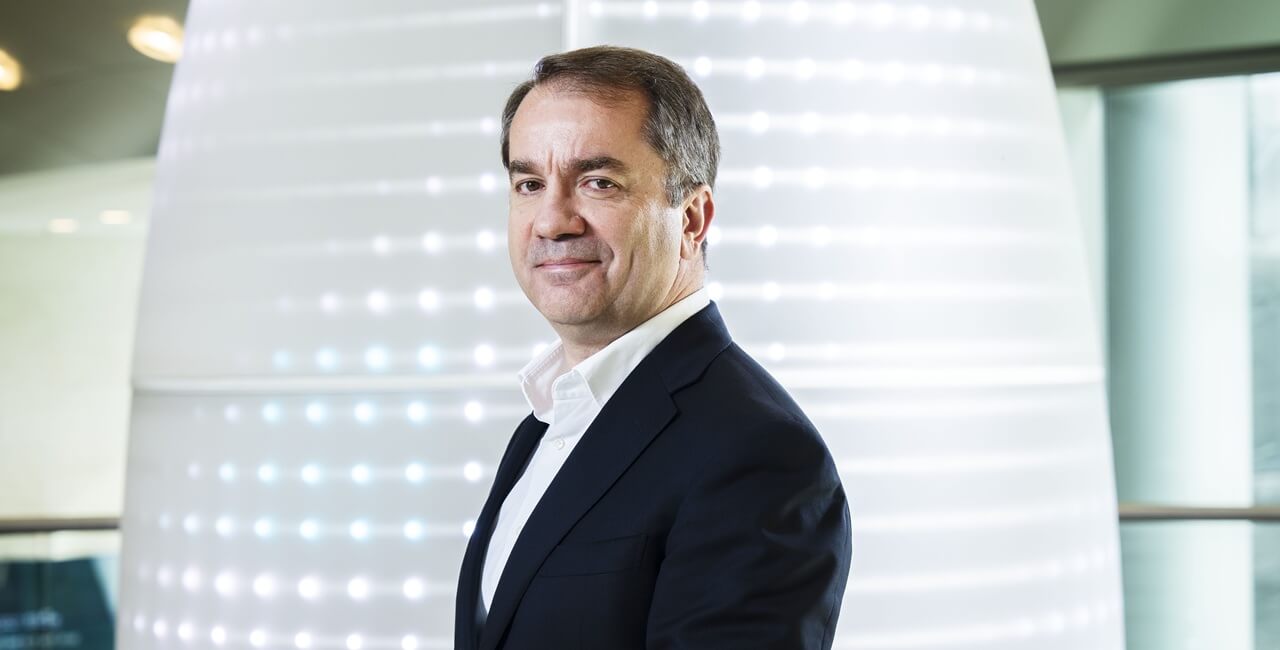
Dan Dorner, who was born in Romania, was thirteen when the communist regime in his country fell. He watched it happen on TV and experienced what it meant for his parents. After the 1989 revolution, they had the opportunity to build careers in the financial sector. Dorner followed their example and now looks back on a career spanning more than twenty-five years at ABN AMRO. His parents taught him two important lessons: value your roots – who you are and where you come from. But also, dare to step forward, even when the outcome is uncertain. That proved valuable in 1999, when he started at ABN AMRO in Romania, and especially when he moved to Amsterdam with his family nearly seventeen years ago now.
He views Europe and its current challenges through that same lens. ‘Our continent has a strong culture, well-educated people, knowledge institutions, and ample capital. The challenge now is to translate that strength back into competitiveness and innovation.’
He speaks to Saskia Klep about ABN AMRO’s strategy and the contribution the bank aims to make to the economy and the resilience of the Netherlands and Europe. Klep recently became a partner at Boer & Croon. She previously served as CEO of Saxo Bank Netherlands, among other roles.
Dorner has prepared thoroughly for the interview and hopes his story will inspire others. He himself enjoys reading about what drives other leaders, about the person behind the job title. As with his conversation partner now, Saskia Klep. He often asks follow-up questions or invites her perspective on his vision.
Both your parents worked in the financial sector; what did you learn from them?
‘They taught me two valuable life lessons: cherish your roots and spread your wings. What they meant by that was that it is important to know who you are, where you come from, and what your strengths are. At the same time, you have to dare to dream, stay positive, and have the courage to fly, even when it feels daunting.
This insight was incredibly helpful when I moved to the Netherlands for ABN AMRO. I learned to spread my wings. I realized that I could build something wonderful here, both personally and professionally. Of course, I felt uncertain. Now I know that it is precisely in times of uncertainty that you grow the most. Once you take a step forward, you never go back.’
How did you deal with those initial, uncertain years?
‘I was enthusiastic and optimistic, but I also felt I had to prove myself. Three things helped me. First was a belief in learning. If you are open to learning from colleagues as well as from other companies, you can achieve more. The second was to take responsibility by making decisions. Sometimes they prove to be right, sometimes they are wrong. Sitting by the window and hoping the storm will blow over is not a strategy. And the third was to stay true to yourself. Identity and authenticity are tremendous strengths.’
Who were the key figures in your career?
‘Aside from my parents, I rely heavily on my family. It was crucial that my wife said ‘yes’ when I asked if moving to Amsterdam was a good idea. Our children were still very young. But as a family, we have settled in well here. I also owe a great deal to the leaders around me; they taught me what good leadership looks like and gave me the space to develop and step out of my comfort zone.’
What did you learn from other leaders?
‘That you have to be good at leading yourself before you can lead others, for example. I was able to do that with the help of others, including coaches and mentors, both inside and outside the bank. They asked me the right questions and challenged me when I needed it. As a leader, you have to dare to ask for help. That is powerful. Even when you are on the executive board, you do not know everything. It is okay to have doubts.’
The world is undergoing radical change. What does this require of business leaders?
‘We are moving towards a new world order. In Europe, we always competed on efficiency. Whoever produced the most cheaply, the most smartly, and the most optimally was the winner. That was an open global trade system based on rules and standards. The world is changing rapidly, and the focus must now shift to redefining competitiveness and resilience. We need to learn to compete in a world where geopolitics and economic interests are increasingly intertwined. That requires adaptability and resilience. The reports by Mario Draghi, Enrico Letta, and Peter Wennink are clear: the Netherlands and Europe must strengthen their competitiveness. The question is: how do we do that? The future will not wait. For me, three things are important.
One: we must learn to compete in a different world. Two: we must adapt by collaborating differently and mobilizing capital. And three: above all, we must deliver – that is, formulate policies and ensure they produce results. I see a parallel here with a metaphor my parents instilled in me. Europe has tremendous roots: we have a strong identity and robust institutions grounded in sound values and norms. Europe now needs to take flight to boost our competitiveness and security, and deliver results that benefit society as a whole. Europe now has the opportunity to fully spread its wings and further build on its competitive strength.’
Are our European products and services no longer competitive enough?
‘In certain areas, we remain competitive. But global competition is intensifying, which is a strong driver for Europe to further strengthen its solid starting position. A long period of relative peace has brought Europe many benefits. At the same time, strategic dependencies have emerged that we need to manage more effectively. We will never be entirely independent, but we do need to manage our dependencies better. That requires a stronger economy.
While we excel at innovation, we are less successful at scaling these up effectively. I see significant scope for further innovation, so that more European champions can emerge. Therein lies a valuable opportunity for many companies. It is crucial for Europe to build on its strengths decisively and achieve international success. In the wake of the financial crisis, the very idea of winning took on a negative connotation – the notion that one person’s win is someone else’s loss. As a result, it has become all the more important to invest now in our future competitiveness. To effect this change, we must make choices today that will make us more resilient in the short and medium term.’
What role can ABN AMRO play in this?
‘Europe has a well-educated population and strong knowledge institutions. We also have substantial capital, not least within our pension funds. There is plenty of capital available, but the key is to link it even more effectively to investments that accelerate innovation and economic growth. That is where ABN AMRO, as a bank, can make a difference. We assess risks, structure financing, and bring together public and private capital to support businesses. This requires the right conditions: robust infrastructure and policies that bring capital and investments together. This ambition is also reflected in ABN AMRO’s strategic direction. We focus, among other things, on European transitions such as energy, digitalization, mobility, and security. Family-owned businesses, which play a key role in the Dutch economy, are also important to us. The reports by Draghi and Wennink underscore the urgency of this strategic direction. The Wennink Report also outlines a very concrete business plan for the Netherlands. At least, that is how we view it as a bank. The challenge now is to move from ambition to implementation and to mobilize the necessary capital. That is why we also welcome the recent launch of the National Investment Institution, in which we are participating: it brings together public and private capital to make investments a reality.’
How does the bank help new technologies and startups grow?
‘We do this, for example, through our own investment fund. Originally, it was a fund dedicated to climate innovation. But over time, we discovered that almost all climate solutions rely on deep tech – advanced technology used to build new products and solutions. Think, for example, of battery technology. We now invest more broadly, in deep tech companies and in funds that strengthen the Dutch ecosystem. We are also collaborating with Techleap, for example, to improve access to capital for tech companies.’
What choices is the bank making to accelerate transitions?
‘With large-scale energy projects, such as wind and solar farms, you see that, over time, technologies become commonplace. Ten to fifteen years ago, offshore wind and solar energy were groundbreaking. Not anymore. That is why we are moving along with the innovation frontier: new technologies for which financing is not yet a given. Think of batteries, geothermal energy, and new nuclear energy. It is precisely with such technologies that specialized financing expertise is needed. We combine different forms of financing. We know how to structure financing so that risks are properly distributed. Through the capital markets, we can also attract other investors. We also commit our own capital, thereby shouldering part of the risk ourselves.’
How important is ABN AMRO’s autonomy from the Dutch government?
‘Our bank is independent. While the Dutch state remains a shareholder, we determine our own course. We are not limited in our ambition to be a strong bank that demonstrates leadership in the major challenges of strengthening our economy. We are making independent financing decisions that will enable us, as Europe, to make a difference in the future.’
Can you give some examples?
‘Look at our strategy and our focus on financing transitions. Take the energy transition, for example, where we have a great deal of expertise. In the field of nuclear energy, we contribute our specialized financing expertise to an advisory board of the French energy company EDF. That board helps shape the financing of nuclear projects. We also support the National Investment Institution, because we believe in public-private partnerships and strong institutions. The Wennink report outlines the projects the Netherlands needs. It is then up to us to mobilize the capital to make them a reality.’
Where does the primary responsibility for initiating public-private partnerships lie?
‘Now is the time to take the initiative, collaborate, and set investments in motion. I am encouraged by companies that take the initiative while also seeking collaboration when necessary. For example, large projects inevitably require different parties to work together, with each playing a specific role. Companies can contribute ideas, knowledge, capital, and entrepreneurship, while the government can create the right conditions for growth and innovation. It is about generating momentum together. In doing so, we can learn a lot from past initiatives: what worked and what did not.’
We have many startups but few of them grow into scale-ups. What are the biggest challenges to scaling up innovation in Europe? And, above all, how do we address this?
‘Capital is required to realize this. That starts at the systemic level. In Europe, around sixty-five percent of corporate financing comes from banks. In the US, that figure is about one-third. The rest comes from other sources: companies raise funds through the stock market or from investors. While we have enormous amounts of capital in Europe – often in the form of savings – only a small fraction of it is available as capital for businesses. It would be beneficial if savers also started investing.
In addition, we also need a savings and investment union: a single European capital market with the same rules across all countries, so that money can flow easily to the businesses that need it.’
How do you balance the interests of all your stakeholders, including the government?
‘European governments play an important role, for example, in improving energy infrastructure and creating better conditions for innovation. They can achieve this by streamlining the permitting process and improving rules for access to capital. And to make these transitions a reality, the government and the business community must be willing to take on more risks together. In doing so, it is important to match the right capital to the right risk. We are bringing this to the attention of stakeholders and have good relationships with the Ministries of Finance and Economic Affairs. I also serve on the executive board of VNO-NCW, which allows me to contribute to discussions about the conditions for investment. In addition, as a bank, we invest in European funds and engage in co-investments. Ultimately, bringing about these transitions remains a systemic challenge: it takes many parties to create momentum.’
Is the sense of urgency greater now than it was a few years ago?
‘Certainly. I see momentum building in various areas. Major European economies – such as France, Spain, Italy, the Netherlands, Germany, and Poland – are taking significant steps to strengthen Europe’s competitiveness and resilience. In the Netherlands too, there is growing momentum, partly thanks to the recommendations in the Wennink report. Another positive development is the establishment of the National Investment Institution, with support from the government, research institutions, and private investors. As a bank, we want to make a difference in this regard. We are taking the initiative by bringing together entrepreneurs, investors, governments, and research institutions. It is precisely by connecting these parties that we add extra value to the realization of innovative and complex projects. That is also the strength of the Netherlands. Consider ASML and the ecosystem that has developed around it. When knowledge, entrepreneurship, capital, and public support come together, innovative companies can grow into global players. Now is the time to further capitalize on these opportunities and harness Europe’s potential. We need to be bolder in building upon what we excel at.’
This interview was published in Management Scope 09 2026.
This article was last changed on 27-10-2026