
Jeroen Hoencamp: ‘Avoid being a one-trick pony’
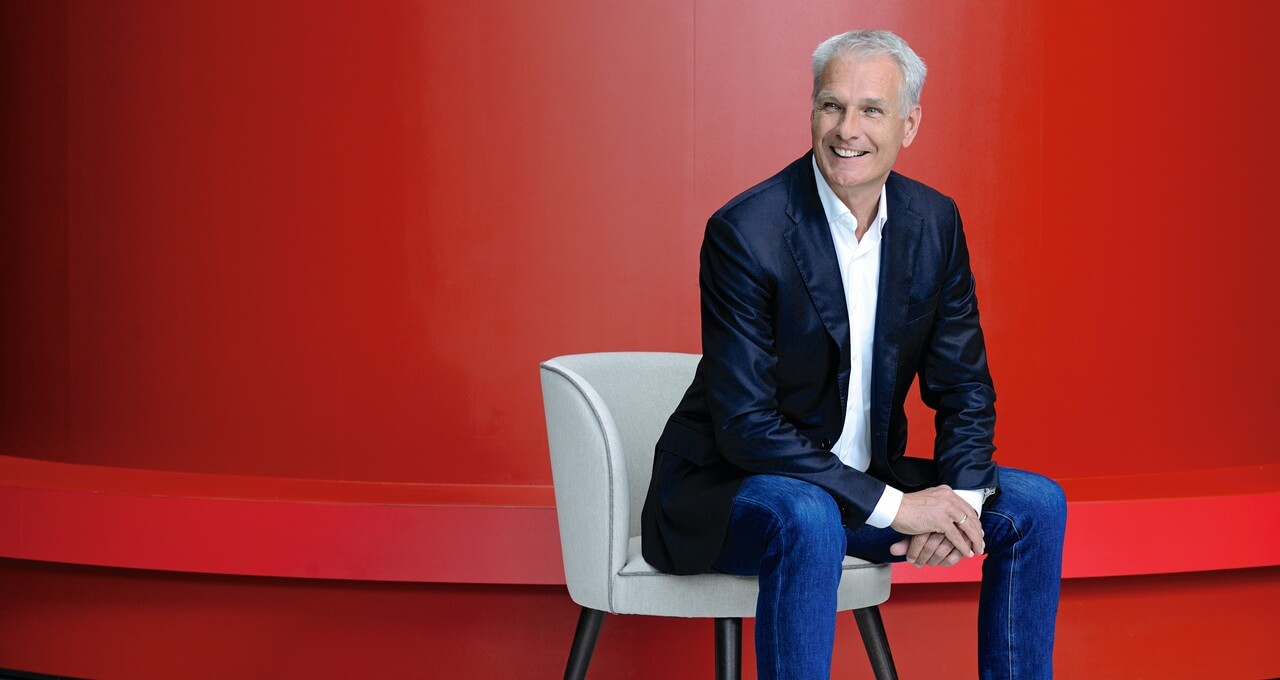
Since Jeroen Hoencamp stepped down as CEO of VodafoneZiggo in 2024, he has focused primarily on supervisory roles: at PostNL and, as of this year, at Signify, where he chairs the compensation committee. He is also board member at Cetin International and the Johan Cruyff Foundation. Victor Prozesky, partner and founder of The Board Practice, spoke with him about his experiences as a director and supervisory board member and about the quality of corporate oversight. His own CEO once called him a one-trick pony, prompting him to resolve to keep learning. He has carried that ambition throughout the rest of his career. Now, Hoencamp emphasizes how important it is for supervisory board members to keep learning if they truly want to add value. But more is required to ensure high-quality oversight.
A Dutch supervisory board member is an employer, an advisor, and a supervisor. Executives often find oversight an annoyance. What are your thoughts on that?
‘Yes, executives can indeed find oversight irritating. And often with good reason. As an executive myself, I sometimes thought: Are you here to check my homework, or can we have a mature conversation? I have seen situations where supervisory boards got bogged down in compliance issues. The board was essentially just ticking boxes to confirm that the company was neatly complying with all the rules, while ignoring the real, underlying problems. The compliance matters must be addressed, of course, but their importance should not be overstated. A company can be fully compliant and still go bankrupt.
Compliance is the foundation. Only once that is in place can a supervisory board add real value by focusing on strategic issues. I have witnessed genuine strategic discussions –about the long term, about where future growth lies, and about whether the company should perhaps do less, but do it better. Such discussions can lead to a better corporate strategy.’
Do these conversations take place often?
‘Not always. Aside from the fact that compliance issues sometimes dominate the agenda, it also happens that supervisory board members dive too deep into a single, narrow topic. They might drill down five levels to figure out why a percentage in one segment on page eighteen deviated in a single quarter. That is not what we are here for. Look at the big picture: this is where we stand, this is the plan, these are the three biggest risks.
Whether that works depends on the CEO and the chair, who ensure the right agenda and preparation. My former colleagues will laugh when I say this, but I am a huge believer in ‘pre-reading.’ I consider documents sent out in advance to have been read. We do not present them; we discuss them, and then we make decisions.’
This often means, however, that uncomfortable conversations must take place between supervisory board members and executive board members, especially when major shifts in corporate policy are required. Does that happen often enough?
‘That varies from one supervisory board to another.’
Do you engage in these uncomfortable conversations often?
‘I am very Dutch. That has served me well in the past. In British or American environments, I would start an intervention by saying, ‘Sorry, I am going to be very Dutch.’ I would then say something quite direct – but with a smile – and it would be well-received. I believe in being firm on the substance and friendly in the relationship. I am not looking for conflict, but if I hold a different opinion, I make sure to voice it. Separate the issue from the person; do not attack anyone, but do be honest and clear.’
In today’s climate, how do you manage to substantiate such an honest opinion? How can a supervisory board even get a grip on a world that is changing so rapidly?
‘The world is changing at a breakneck pace. Starting with the customer: better informed, but fickle. I grew up with the idea that you work, save, buy something, and keep it. Younger generations want to use what they need, right when they need it. That impacts business models. Take Uber, for example – it is a clever concept: you simply order a car. Once cars become autonomous, I will no longer buy one; I will just order one whenever I need it.
And then there is technology. AI is evolving per week. I do not know many people of my generation, myself included, who really understand AI and quantum technology. At the same time, you have to keep asking what the customer needs, not what the technology is capable of.’
How does a supervisory board keep a handle on this?
‘When it comes to the board’s composition, the rule is to be strict at the door – ensure you have the right people on the board. Once they are on board, it is all about transparency, communication, and nuance. That nuance is something I have not always been very good at. My British CEO once asked me why, in my world, everything had to be black and white. Nuance is essential. The ability to express yourself clearly without being confrontational is often underestimated.
As for the substantive expertise of supervisory board members: I serve on boards where I fill the tech role, and I often ask myself: how are we supposed to oversee an executive board when we barely understand what they are talking about? Part of the answer is that boards need to become much younger. It might not win me any friends, but we think too much in terms of two four-year terms, with a board member who is sixty or sixty-five. That is nonsense. A board member can also be forty or forty-five. We need people who are at the forefront of these developments and can help bring the rest up to speed. One digital expert is not enough, because the board then becomes dependent on one individual.’
And if you are on the board already?
‘Keep learning. At PostNL, the entire executive team and the top 100 employees took a digital training program, and the supervisory board participated as well. I was the digital expert there, but I probably learned just as much from them as they did from me. If you do not want to learn, step aside. You can have a conversation about the necessary competencies. Some supervisory board members may choose to step down on their own, and otherwise the end of a term is a natural moment for a transition.
You can also bring in the expertise of younger people without necessarily appointing them to the board. Some boards work with a ‘junior board’, a group without legal status, consisting of members with an average age of thirty-five to forty-five, half internal and half external, who provide feedback to the board. In my last three years at Vodafone, I established a youth council with one criterion: no one older than thirty-five. Evaluate it after one or two years and discontinue it if it is not working. You can also consult with the works council from time to time. They might make your life difficult, but that is only because they want to improve the company. That is why I welcome such consultation.
Also, bring in external expertise every now at then. At Signify, we visited a company with excellent AI expertise, where one of our supervisory board members also serves on the board. That helped us grow.’
You have experience as both executive and as supervisory board member. Is that a valuable combination?
‘Yes. Ideally, you should have been an executive first. It is incredibly valuable to know what it is like to sit on the other side of the table. The risk, of course, is that, as a former CEO, you will be tempted to take the wheel, a definite ‘no-go.’ But with that background, you can also simply ask: ‘How are things going? What do you need?’ That leads to a genuine conversation, rather than governance for governance’s sake. That only works if both parties articulate their expectations: supervisory board members stay out of the CEO or CFO roles, and executives understand that the board is there to add value.’
You have experience in both Anglo-Saxon one-tier and European two-tier environments. How has that shaped you?
‘You should not overstate the difference. I believe the models are converging. After studying in the U.S., I arrived in the Netherlands with an extremely Anglo-Saxon style. I was a real ‘pacesetter.’ As a former Marine Corps officer with a few years of experience in America, my attitude was: ‘Just follow me, everything will be fine.’ Later, I learned that as a leader, your main priority should be to surround yourself with the best people – and that you should never compromise on the quality of your team.
Over time, I have also come to appreciate the Rhineland model more. I believe it is truly necessary to involve all stakeholders. That way, you can drive hard for results while co-existing positively with customers, employees, and society at large. In the long run, you cannot build anything truly successful without all stakeholders.’
Was there a moment when you had a change of perspective?
‘Yes. I was leading a large business unit in the Netherlands, had received excellent performance reviews for years, and had met all my targets. Then, during an annual performance review, the CEO of the Dutch business asked me what I thought they at the global headquarters in London thought of me. I said that I did not think that was particularly important and that I wanted to focus entirely on the Dutch business. He explained what he meant: you are a one-trick pony. What you do works… in this country, with this team. You have what it takes, but your leadership style is too one-dimensional. He challenged me to push myself further and to grow. I was genuinely angry, and it really struck a chord. Later, I called him to thank him for his honest feedback, because that conversation proved pivotal to my further development and career.
Shortly after that, I landed my first CEO role in Ireland, where I was able to reinvent myself. I have done that every three or four years since then: taking stock, listening to feedback, and improving myself again. And I have always listened to my wife; she is very direct in her feedback and an incredible coach.
Back from Ireland and the United Kingdom, I was able to put my experience with both models to good use at VodafoneZiggo. The parent company, Liberty Global, operated like a private equity firm: faster, more market-oriented, and willing to take risks. I could call the group CEO, and we could pivot quickly. At the same time, I remained mindful of Vodafone’s corporate culture: well-organized, highly professional, but also corporate, more formal, and bureaucratic.’
You stepped down as CEO in 2024 and announced it a year in advance. Why did you step down? And why did you choose that approach?
‘In 2017, when I started as CEO in the Netherlands, I had already told my team that this would be my last job. A year before my departure, in consultation with the shareholders, I announced my departure. Many people said it was unwise – that you should never do such a thing, because announcing your retirement makes you a ‘sitting duck.’ Nonsense. I simply stayed on for the full seven years.
But toward the end of that period, after more than thirty years in executive roles, I found my enthusiasm for advisory and supervisory work growing. I had worked long and hard, and my wife and I wanted to spend more time together – ideally traveling around the world for several months each year, which is our great passion. And I wanted to pass the baton to the next generation while I was still at the top of my game. At one point, I heard myself say to my team, ‘We have tried that before, and it did not work.’ I was taken aback; I have always detested that kind of defensive attitude. To me, it was a sign that it was time for the next generation.
I first told my executive team and then my top 100. After everyone had said all sorts of kind and heartfelt things, I said: ‘On Monday, a message will go out to all employees, and for the next twelve months after that, I do not want to talk about my succession again.’ And that is exactly what happened. It was never an issue; in the months leading up to my departure, it was simply business as usual.’
When do you think the supervisory board should begin the process of CEO succession?
‘The sooner, the better, as far as I am concerned. Ideally, as chair of the supervisory board, you should even have a conversation about it with a new CEO right after they are hired, that is the least sensitive moment imaginable. If, as chair of the supervisory board, you wait until the CEO has been in the role for four or five years, they might assume the board is looking to get rid of them. That creates friction.
In any case, start early. You do not need to work out succession planning in detail, but you can agree on a few key points. In any case, you must have an answer to the question of what to do in an emergency: if the CEO unexpectedly steps down for one reason or another, what then? The CEO and the chair of the supervisory board should discuss this first, and then the chair should discuss it with the other members of the supervisory board. The nomination committee can then conduct a talent review, draw up a model profile, and subsequently present it to the other supervisory board members. You can follow the same procedure with the other members of the executive board, and with the level below that – say, the top 100 in the company – as well. Of course, the supervisory board does not appoint all those executives, but it is good to keep close eye on things and check from time to time to see if any succession issues might be looming. Twice a year as a regular agenda item, I would say. I do not see that happening often enough.’
Finally: what have you drawn from your personal life into your professional life, and vice versa?
‘I believe I am exactly the same person: level-headed, approachable, hardworking, and loyal. I have been with my first girlfriend – now my wife – for thirty-nine years. I have spent over twenty-six years at the same company. I have had my successes, but I am only human, and I make mistakes too. I can face my mistakes and am man enough to admit them. And man enough to pick up the pieces and move on. My father would call those ‘learning moments…’
This interview was published in Management Scope 09 2026.
This article was last changed on 27-10-2026