
Supervisory directors as guardians of the long term
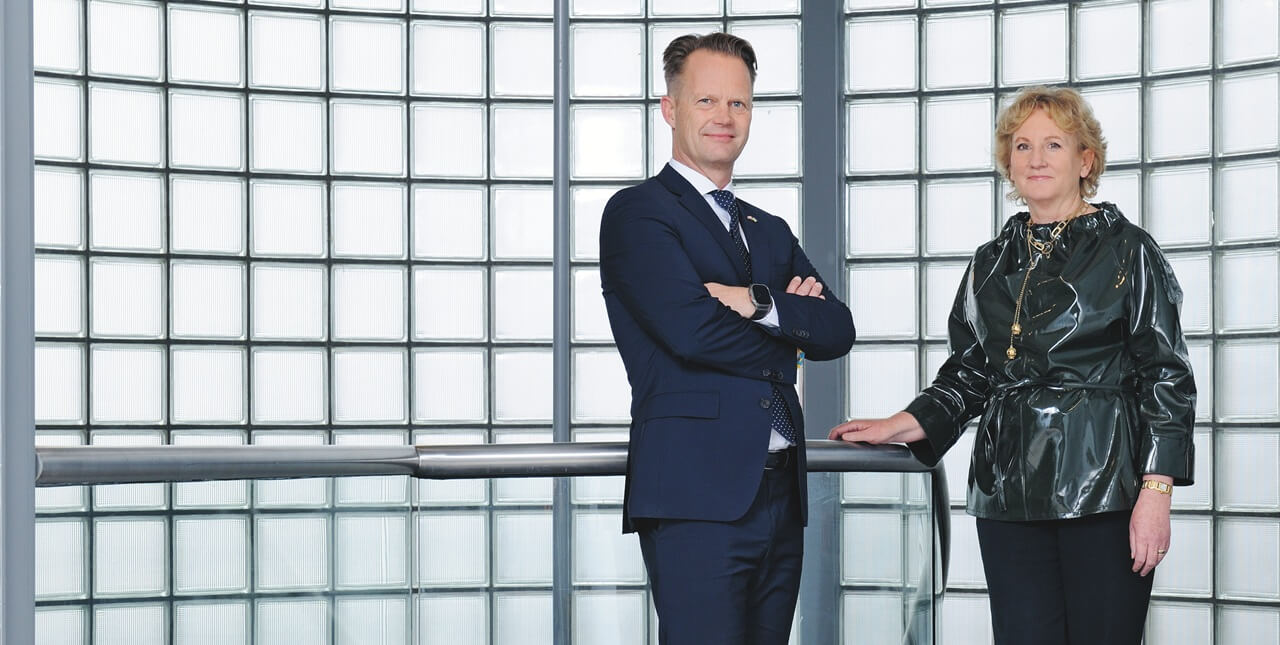
What should European boards do to help their companies become more competitive, resilient and sustainable at a time when the green-, digital- and sovereignty transitions are converging? That was the focus of a forum organised in early October by the Dutch and Nordic branches of Chapter Zero. One of the keynote speakers was Jeppe Kofod, supervisory board chair of NPC Ukrenergo and former Danish Foreign Minister. His main motivation for taking part: ‘I wanted to bring a very concrete perspective to the discussion. At Ukrenergo, geopolitical risk, energy security and the green transition are not abstract concepts. They are part of our daily reality. I also wanted to challenge European boards to think more seriously about what could fundamentally disrupt their businesses – and whether they are truly prepared.’
Sarah Russell gave a financial and pensions sector view of risk, return and credible long term transformation. Russell serves as non-executive director on the boards of ABN AMRO, APG Group and APG Asset Management. ‘It is not just about an update on the topic itself,’ she says about joining the forum. ‘I look for examples of exemplary leadership from outside my current environment, which is the Dutch pensions and banking sectors. Jeppe’s account of managing drone attacks and power cuts as everyday reality, while still creating space to think and rise above the drama of the situation… is a lesson in leadership.’
Tying in with the event, in this interview, Jolande Sap, chair at Chapter Zero, wants to explore in greater depth what is needed to accelerate the triple transition and how to navigate these changes in challenging times.
Jeppe, your position as chair of the supervisory board of Ukrenergo must be one of the most demanding board roles in Europe today. How does your board navigate the ongoing disruption affecting the organisation? And how do you maintain a long-term perspective while responding to constant short-term pressures?
Kofod: “At Ukrenergo, we operate in circumstances that few European companies have ever experienced. Our critical infrastructure is a constant target of Russian attacks. The safety of our people, the stability of the electricity grid and the need to repair damaged infrastructure are daily priorities.
The first lesson is that a crisis cannot become an excuse to abandon strategy or good governance. On the contrary, both become even more important. Our supervisory board must provide clear oversight, support management and maintain the distinction between governance and executive responsibility. I agree strongly with Sarah on that point.
We therefore work with two horizons simultaneously: immediate operational resilience and the long-term transformation of Ukraine’s energy system. We must be able to restore electricity today while building a more decentralised, modern and integrated energy system for tomorrow.
Above all, I have enormous respect for Ukrenergo’s employees. Their courage and professionalism remind us that resilience is ultimately about people, not just infrastructure.”
Sarah, the threats in the financial world may be less existential than in a country at war, but you too have to contend with digital disruption, cyber threats and geopolitical issues. How does the supervisory board deal with such challenges in general?
Russell: ‘The first rule in a crisis is: Do not step into the executive role. Do not blur the lines. Share education sessions that facilitate dialogue on emerging issues. Encouraging management to discuss and debate with us through a process, don’t simply “take us on the journey". That is too reactive. It is important that we can have your back during difficult times, and that relies on the right engagement through a crisis.
There is also value in allowing space for outside-in perspectives. Today, we put a lot of emphasis on the collective capabilities of boards that reflect the risk and business profile of our companies. The advantage of such expertise is obvious but the risk is that experts validate experts. In a crisis situation a board should keep an eye out for the alternate view. Our aim is to make decision processes stronger and more robust.’
A central theme of the Chapter Zero-forum was the triple transition. One of Europe's key challenges is that governments, institutional investors, banks and the wider public tend to be risk-averse, making it difficult to mobilise the capital needed to drive the transformation. How can we mobilise sufficient capital to enable companies to transform their businesses? And what role can supervisory boards play in this?
Russell: ‘There is available capital, and investors are not risk averse. I am reminded of my supervisory board role in 2014 with the NLII, a joint initiative of the large Dutch insurance companies and pension funds, working together to support transition initiatives after the earlier financial crisis. It closed in 2018 having been unable to achieve its primary ambitions. My reflection: the transition cannot be viewed in isolation. A single party, no matter its resources, is not enough. It requires a collective effort including predictable policy frameworks and reliable markets, such as a genuine European savings and investment union. And additionality - public capital to make early-stage transactions less risky and to attract private capital.
In that context, we must ensure our institutions remain true to their expertise and role, in line with the expectation of their stakeholders. We have a fiduciary responsibility to uphold well-developed, diversified investment strategies, risk appetite frameworks and capital allocation policies. We already demonstrate that there is capacity within these frameworks to offer material support for the transition. But we cannot stray from these frameworks because someone suggests putting all bets on green. At the end of the day, the money is not ours, we are entrusted with the pension and savings of people.’
Kofod: “I agree with Sarah that Europe does not fundamentally lack capital. We lack the ability to mobilise it at the necessary scale and speed. As a former policymaker, I would add that governments have a responsibility to create predictable frameworks and reduce the risks that private investors cannot reasonably carry alone.
Ukraine demonstrates that even under extraordinary circumstances, substantial investment is possible when public institutions, international financial partners and private capital work together. Our recent debt restructuring is one example of how innovative financing and international partnerships can strengthen an essential company’s financial resilience and create better conditions for long-term recovery and investment.
But capital must serve a clear strategic purpose. Europe’s energy transition, digital transformation and security needs should not be treated as competing priorities. Modern grids, clean energy, digital technologies and strategic infrastructure can deliver competitiveness, resilience and sustainability together.
For supervisory boards, the challenge is to ensure that companies develop credible long-term investment plans, manage risks responsibly and engage constructively with governments and financial institutions.”
In his closing statement at the forum Jaap Winter said that executives are often very busy with all the short-term challenges, whereas supervisory board members have more time to think about long-term value creation. Should non-executives be more outspoken about what they see as necessary, so that the voice of business in the big societal discussions addresses not only the short term, but also the long-term needs.
Russell: ‘Jaap’s challenge is a reminder that we need to preserve the balance between short term challenges and long term value creation, particularly when we are faced with threats to business continuity next to business execution. Keeping the organisation’s purpose central to those discussions should also ensure a sustainable approach to the role each of us plays in supporting the needs of society. The supervisory board’s voice however should strengthen, not compensate or assume responsibility for management’s voice.
Kofod: “I agree with Jaap that supervisory boards have a particular responsibility to defend the long-term perspective. Management is rightly focused on immediate operational challenges. Our role is to ensure that urgent decisions do not undermine the company’s future. I also agree with Sarah that boards must respect the executive role. Being more outspoken should not mean becoming more operational. It means asking better questions, being clear about long-term priorities and contributing responsibly to the wider debate.
For a state-owned company like Ukrenergo, this requires balancing our public-service mission with financial sustainability, professional governance and long-term investment needs. We must maintain a constructive relationship with the shareholder while preserving the integrity and independence of supervisory oversight.
More broadly, Europe needs its business leaders and boards to contribute their experience to discussions about competitiveness, energy security and strategic autonomy. These are not simply political questions. They shape the future of every major European company.”
At the conference, I raised concerns about polarization, social inequality and the need to put the social transition on corporate agendas. Is that a topic on your boards?
Russell: ‘Indeed. Reliability, expertise, and social responsibility are core elements of the service APG delivers to its clients on behalf of their participants who, as part of our social foundation, rely on their pensions being carefully built, well managed, and clearly explained. At ABN AMRO, potential discrimination and equity challenges in banking products are addressed through specific institutional frameworks, including duty of care, human rights policies, and inclusion initiatives. ABN AMRO’s approach to inclusive finance focuses on removing barriers for underrepresented groups—particularly women entrepreneurs, clients with physical or digital accessibility needs, and diverse or historically underserved communities.
Underpinning all these initiatives is the essential element of trust, which is strengthened in our ambition to deliver reliable, accessible and safe payments and services infrastructure.
Kofod: ‘I consider this absolutely fundamental. We often discuss the green and digital transitions in terms of technology, investment and regulation. But we risk overlooking the people who are expected to live with the consequences.
If the transformation increases inequality, undermines trust or leaves communities feeling excluded, the political and social support necessary to sustain it will weaken. Having spent many years in democratic politics, I know how quickly this can happen.
At Ukrenergo, the social dimension is immediate and tangible. Electricity is not simply a commodity. It underpins hospitals, businesses, schools and everyday life. Protecting the energy system means protecting society itself. Equally, the wellbeing and safety of our employees are indispensable to our ability to fulfil that mission.
Boards should therefore consider not only financial returns and environmental indicators, but also how strategic decisions affect employees, customers and communities. Social legitimacy is not separate from long-term value creation. It is one of its foundations.”
It is clear that a great deal is being asked of supervisory board members in these uncertain times. How does this affect your work as a board-member?
Russell: ‘More challenges come to the board table, for some topics with greater urgency. At these times the strength of processes and governance structures supports the control we need to maintain. Our challenges are not the same for the executive. Our role is to give them the space, the support and the resources to be the best leaders they can be in uncertain times, because they have to do the heavy lifting. The glory is not for us.’
Kofod: “It is impossible not to feel personally affected. When you work with colleagues who face attacks on critical infrastructure and worry about the safety of their families, these are not just items on a board agenda.
I have enormous admiration for the dedication of Ukrenergo’s management and employees. They continue to carry out an essential public mission under conditions most of us can scarcely imagine. That creates a strong sense of responsibility.
At the same time, emotional engagement must not replace sound judgement. As chair, I need to remain calm, listen carefully, support management and help the board make difficult decisions with a clear head. The board must be a source of stability, not another source of pressure.
One lesson I have taken from this experience is that leadership is not about pretending to have all the answers. It is about remaining focused on your purpose, making decisions under uncertainty and maintaining trust when circumstances are at their most difficult.”
This interview was published in Management Scope 10 2026.
This article was last changed on 17-11-2026