
‘Supervision is all about looking ahead’
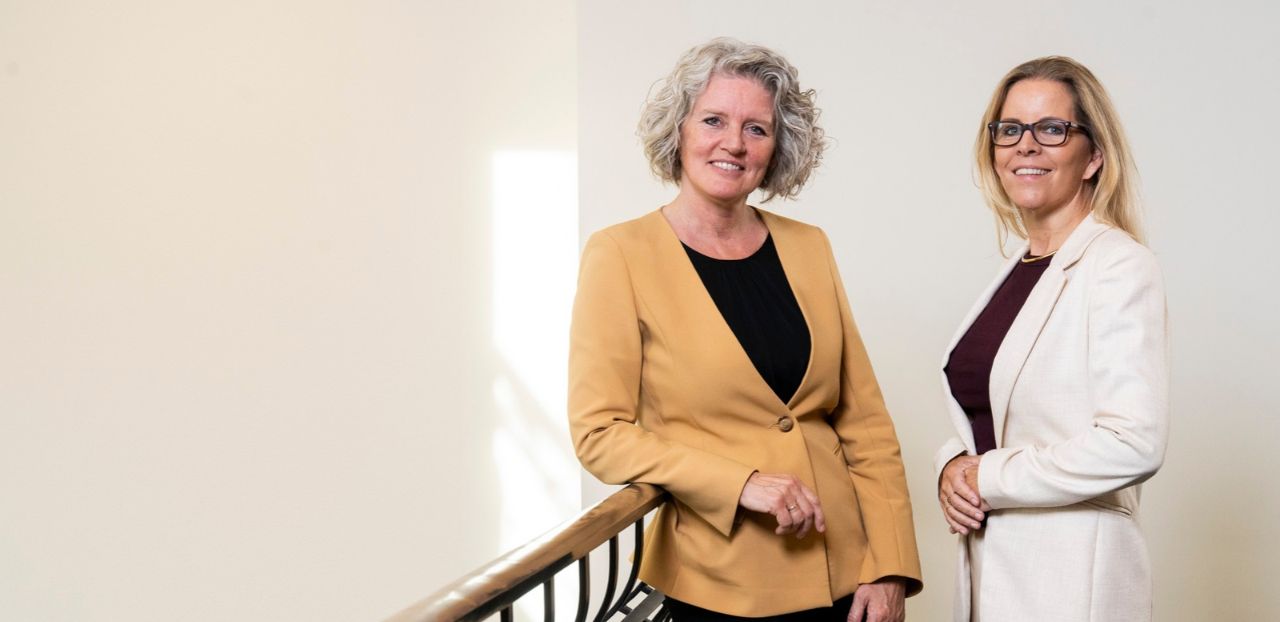
Hilde van der Baan and Gijs Linse of A&O Shearman are welcoming their guests ‘at home’ this time, at A&O Shearman’s office in Amsterdam-Zuid, as part of the series Doing Business in the Digital Age. Isabel Moll-Kranenburg is a non-executive director at health insurer Coöperatie Menzis and, until recently, sat on the supervisory board of the telecommunications company Odido, a role she stepped down from after being appointed as the new CEO of ICT service provider SLTN Group.
Medy van der Laan is a non-executive director at Royal Schiphol Group and chair of the Dutch Banking Association. Their message: non-executive directors do not need to be tech experts, but they can no longer afford to remain ignorant. Van der Laan: ‘You do not have to be a specialist in everything, but you do need to understand what is going on.’ Moll-Kranenburg: ‘Of course, executives have different responsibilities than supervisory board members. They are in the kitchen; they have to do the cooking. But supervisory board members can provide direction by asking questions and contributing their knowledge.’
We have recently seen further examples of cyber incidents, from Albert Heijn to attacks on supermarkets in France. How does that affect your perspective as a supervisory board member?
Moll-Kranenburg: ‘Incidents like these make it clear once again that the threat is ever-present. The question is not whether an organization will face it, but when. Cybercrime has now become a fully-fledged business model. Ransomware-as-a-service is a reality. Moreover, thanks to AI, it is becoming increasingly easy for malicious actors to breach systems. People are, and always will be, the weakest link in this chain. We also saw this in the incident at Odido, which came about partly through social engineering: hackers posing as helpdesk staff. The lesson is that everyone is a potential target: employees, suppliers, and customers.’
You mention the incident at Odido, an organization where, until recently, you served on the supervisory board. What does such an event mean for the role of the supervisory board?
Moll-Kranenburg: ‘At such a time, you naturally work alongside the management to assess what is happening and how the damage can be minimized as quickly as possible. When the incident occurred, a direct line of communication with the supervisory board was established immediately. What we did, above all, was to provide support and ask questions. Have you thought of everything? What scenarios are on the table? What considerations are you weighing up? We did not dictate how we thought things should be done; we helped the board answer the right questions.
It was a hectic period, with a lot of emotion. I witnessed a great deal of sadness. But you roll up your sleeves and get on with it together. Odido also brought in external consultants; when you are under immense pressure, it is wise to bring in outside expertise to provide advice and to assess and objectify all the choices. Another issue was whether to pay a ransom. That is always a huge decision. Ultimately, we decided not to pay. After all, you never know whether payment will actually offer a solution. What is more, by paying, you are funding organizations that go on to create new victims.’
Do incidents like these prompt you to immediately contact the organizations you supervise?
Medy van der Laan: ‘Not really. That might sound surprising, but at the organizations I am involved with, cybersecurity is already high on the agenda. At Schiphol or within the banking sector, cyberattacks are a daily reality. Banks are under constant attack. Nobody there needs convincing of the importance of cybersecurity. In fact, they keep me on my toes. I take part in exercises and, for example, regularly receive test emails to check whether I am staying alert. At Schiphol, too, we devote a great deal of attention to training. Only recently we held a cybersecurity session with the supervisory board. Does that mean we will never fall victim? Of course not. That risk remains. But everything is geared towards minimizing that risk as much as possible.’
Moll-Kranenburg: ‘It does surprise me, though, how often basic knowledge – and, above all, security measures – are still lacking, across all levels. People still click on suspicious links. Passwords are sometimes astonishingly simple. Passwords like Welkom123 is still so common, or 123456 – as was recently revealed in the hack of the Danish population register. Employees still tend to trust anyone who sounds friendly and authoritative on the phone. The greatest vulnerability is not in the technology, but in the person sitting between the chair and the screen. That is why we need to keep training staff, including members of the executive board or the supervisory board.’
Cyber threats are one side of the story. At the same time, technology and AI are developing at breakneck speed. How do you, as a supervisory board member, stay sufficiently informed?
Moll-Kranenburg: ‘I try to keep learning all the time. I read a lot, follow experts, listen to podcasts, and also pay attention to developments in the capital markets. It is there you can often see where confidence in the future is being built. Which companies are valued by investors? Those are important signals for me. You have to keep developing yourself and updating your knowledge.’
Van der Laan: ‘When AI really took off, I decided to attend almost every symposium and meeting on the subject. I wanted to understand what the technology is capable of, but also what the social consequences might be. Because that societal aspect is what I find particularly important and interesting in my role. AI is not just about efficiency; it is about the future of work, knowledge, decision-making, and power. AI raises fundamental questions. What does it mean for jobs? For markets? For organizations? For the way people work? Ultimately, these are also supervisory issues.’
What does this require of supervisory board members?
Van der Laan: ‘Above all, supervisory board members must understand the long-term impact. In my view, a supervisor should not just look at the operational application of AI, but also at how an entire sector might change. What will happen to your product? To your customers? To your competitive position? You need to anticipate these things. I like to use the term pivoting in time for this. You do not want to move too soon, but neither do you want to move too late. The challenge is to recognize that tipping point.’
Moll-Kranenburg: ‘For supervisory board members, this means you have to ask different questions than you used to. How are we dealing with this development, and are we doing so responsibly? Are we sufficiently prepared? Have we taken the right measures? Do we know what to do if things go wrong? How quickly can we recover?’
Van der Laan: ‘When you work with executives who are convinced of the need for change, oversight is relatively straightforward. It becomes more difficult when leaders on the executive board have doubts or underestimate the developments. In such cases, as a supervisory director, you must first have a sufficient understanding of what is happening yourself. And discuss that within the supervisory board. Without a shared perspective, providing direction becomes virtually impossible.’
Moll-Kranenburg: ‘The most important thing is that, as a board, you first get on the same page. Often, the knowledge needed to discuss these kinds of topics is lacking. That takes time.’
Do supervisory board members actually have that time?
Van der Laan: ‘Often more than we think. The competition is usually grappling with the same questions. Moreover, it varies greatly by sector. An industrial company faces different challenges than a service provider. Not every company needs to frantically chase after every AI application. The relevant question is: what does this development mean for our company? Where are the opportunities? Where are the vulnerabilities? That requires a bespoke approach.’
Moll-Kranenburg: ‘Supervision is not just about looking back. Looking ahead is essential. Where do we want to be in three to five years’ time? Do we have the right people on board? Do the board and senior management have the necessary capabilities? AI affects everything. Your business model, your operations, your customer contact, your HR policy. So, you need to ensure that it is not just the CIO or CTO who understands it. It is something that concerns all leaders within an organization.’
What concrete steps can supervisory boards take to collectively build more knowledge?
Van der Laan: ‘Working visits are incredibly valuable. Preferably international ones, too. People often return with new insights and different perspectives. Beyond that, you simply have to invest in your own development. You do not need to be a specialist in everything, but you do need to understand what is going on. Personally, I regularly seek updates from specialists within organizations. Not only from the technical experts, but also – and importantly - from people who look at technology from a strategic perspective.’
Do supervisory boards themselves need technology experts?
Moll-Kranenburg: ‘We do indeed need to have a solid foundation ourselves. That is not always in place yet. To build our own knowledge and arrive at a shared understanding, it is important to bring the supervisory board and the executive board into intentional dialogue. For example, have a CEO work out a specific strategic theme with a CFO or CIO and present this to the supervisory board for discussion. That way, you can see whether, and how quickly, people learn from one another, and where knowledge gaps lie. So, work together. As the executive board and the supervisory board, go off together for a retreat. The best conversations often tend to happen away from the daily hustle and bustle.
Of course, executive directors have different responsibilities to supervisory board members. They are in the kitchen; they have to do the cooking. But supervisory directors can provide direction by asking the right questions and contributing their knowledge. I am also a strong advocate for working visits. Many executives and supervisory board members do not fully realize what is already possible today. The moment you visit universities, innovation hubs, or tech companies such as Google, Microsoft, or Anthropic, you suddenly encounter a world that is far more advanced than you had imagined.’
Van der Laan: ‘Beyond developing a shared vision, I think it is crucial for organizations to attract strong talent. Visionaries. People who understand, from a technological perspective, what is possible and what strategic choices follow from that. Then you are no longer talking about technology per se, but about entrepreneurship.’
And who should take the initiative here: the executive board or the supervisory board?
Van der Laan: ‘Ideally, the executive board takes the lead here. But sometimes that does not happen. Then it is up to the supervisory board to kick-start the conversation. That can sometimes become uncomfortable. Especially when you are discussing the strategic impact of AI. Then it is no longer just about technology, but about whether the company needs to reinvent itself.’
That touches on a more fundamental question: do organizations really need to reinvent themselves?
Moll-Kranenburg: ‘That is precisely the question you must regularly dare to ask. Why do we actually exist? What value do we add for our customers? Which processes are essential? Suppose you could start afresh today: how would you structure the organization? Which parts would you automate? What would AI take over? And what role would remain for people? When you compare the current situation with that ideal one, it often sparks a very interesting discussion. That is precisely where the strategic value lies.’
Van der Laan: ‘A more challenging follow-up question is: how close are you, in reality, to becoming obsolete? Some organizations will be less affected than others. A plumber will still need to drive to a house with his pipe wrench. But many other sectors are facing fundamental shifts. AI, for example, could change the relationship between consumer and brand. If AI eventually determines which product best suits a customer’s preferences, what does that mean for the strength of your brand? As a supervisory board member, you need to try to get to the bottom of developments like that.’
Are there lessons to be learned from previous digital revolutions?
Moll-Kranenburg: ‘Absolutely. Take the COVID-19 period, for example. Suddenly, we were able to work from anywhere, and we gained access to fantastic digital tools. Yet, in the end, the culture changed far less than expected. That taught me that technology is never the most important part of change. The biggest challenge always lies with the people, getting the organization on board, and integrating this change into your processes. If you underestimate the human aspect, a large part of the transformation will fail.’
Van der Laan: ‘I clearly remember the arrival of the internet within the civil service. When I was working at the Ministry of the Interior in the 1990s, there was a great deal of debate about whether civil servants should even be allowed access to the internet. Then came the discussion around email, at a time when paper letters were the norm. What was the formal status of an email sent to external parties? How do you establish accountability? These are, in essence, governance issues. Exactly the same questions are now resurfacing with AI. What is the status of the output from an AI agent? Where does responsibility lie? Who is liable? New technology not only changes processes, but also governance.’
So, what is the most important lesson for supervisory board members?
Van der Laan: ‘Take it very seriously. Do not underestimate it. But do not be afraid of it either. You have to get to grips with it. Ambition combined with healthy concern seems to me to be the right attitude. What you must avoid above all is a polarized debate where people are either for or against AI. That does not help anyone.’
Moll-Kranenburg: ‘Exactly. We often see the same pattern. A new development emerges, then camps of proponents and opponents form, and only then do organizations start to think seriously about its application. AI is too important for that. It touches upon strategy, processes, the nature of work, and business models. Organizations need to gain experience step by step. Start small, learn, evaluate and adapt your governance accordingly. Designing governance for applications you are not using yet makes little sense.’
Van der Laan: ‘You have to dare to get started.’
Moll-Kranenburg: ‘And you must be prepared to share mistakes with one another. Ultimately, that is how you learn the fastest.’
Van der Laan: ‘Do not use concern as a brake, but as a tool to do things better.’
This interview was published in Management Scope 10 2026.
This article was last changed on 17-11-2026