
Why AI is also a governance issue
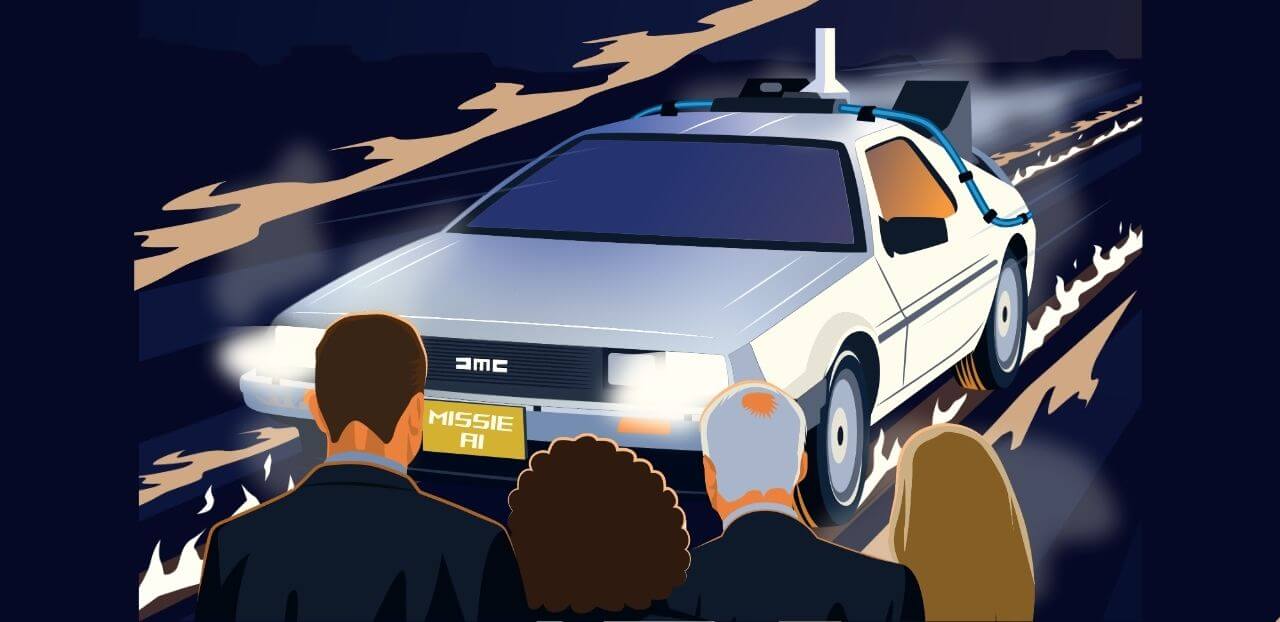
Anyone who speaks with directors and supervisory board members about AI – as we did in recent months for the series ‘Entrepreneurship in the Digital Age’ for Management Scope – recognizes the same pattern almost everywhere. On the one hand, there is an urge to act: so much is already happening that sitting still seems impossible. On the other hand, there is deeply felt uncertainty: no one knows what the world will look like in a year, let alone in five. There is no roadmap that works for all companies, nor for all times. The only certainty is that change will continue. That tension – the rise of AI is as urgent as it is uncertain – presents executives and supervisors with a dilemma: how best to respond to the rise of AI?
Risky responses
Broadly speaking, we see three ways in which companies are responding to the rise of AI. The first is to wait and see: to observe the situation, to wait for what others develop to then apply it themselves, and to wait for clarity from regulators. Unwise. AI is developing at a pace that no legislator or regulator can keep up with. The European AI Act is an important signal: AI has become a geopolitical issue, and Europe wants to maintain control over its technological independence. But the rules being written today will already be outdated by the time they are published. Legislation on deepfakes was still a topic of debate when new applications had already emerged that raised entirely different questions.
Executives who wait for the regulator to prescribe exactly what they must do are waiting too long. Waiting is a choice for irrelevance.
The second response is to fully commit to automation: anything that can be done faster, cheaper, or more efficiently is delegated to algorithms. This yields returns in the short term. But those who let AI handle junior tasks – analysis, reporting, research – entirely, is no longer training people for the senior roles of tomorrow. Yet it is precisely the 'soft skills' acquired in in the process of becoming a senior – critical thinking, strategic insight, creativity, and recognizing the value of making 'mistakes' – that, due to the rise of AI, will be so valuable in the future. And there is a deeper danger lurking. Philosopher, ethicist, organizational consultant, and university lecturer Roos Slegers describes it as the ‘smoothed-out world’: an environment that runs so smoothly that all friction has been eliminated. It is precisely that friction – the debate, the dissent, the bold experiment – that is the breeding ground for innovation. A frictionless organization may be efficient in the short term, but it lacks the moral discernment needed as soon as technology begins to raise ethical concerns.
Focusing on agility
The third response, which we believe has the best chance of success, is to focus on agility. That is also the lesson from previous technological shifts. When platforms such as Uber disrupted the taxi industry, the reaction of established players was typically to seek regulations that would keep the newcomer out. Sometimes that works, temporarily. But the fundamental development did not stop there. Those who did not prepare their organization for the new reality but tried to preserve the old one through legal or political means, ultimately lost. The same danger exists with AI. The speed at which AI is developing is enormous; so is the destructive force for those who do not adapt.
The lesson is not that you have to know exactly what is coming. The lesson is that you must be ready to change course when necessary. Roos Slegers demonstrates what is possible in education when you do not try to stop AI but engage with it creatively. While some institutions focus on detecting AI use in assignments, she opts for oral assessments and substantive discussions – and this yields richer learning experiences. The principle applies to businesses as well: do not focus your energy on halting the development, but on finding new possibilities.
Preparing for what you do not yet know
How can organizations best prepare for the future, however uncertain it may be? By continuously monitoring developments in the field of AI. Through scenario planning. By choosing, instead of a search for one perfect strategy, a continuous exercise in thinking through possible futures, with the freedom to pivot quickly if reality turns out differently. By structuring the organization so that it can react quickly to what it does not yet know – and by ensuring that the organization has employees with the knowledge and skills needed in the coming years. Jeroen Tiel, CEO of Randstad Netherlands, advocates for a ‘labor budget’ to provide insight into which skills are needed throughout the entire Netherlands. But individual organizations can also draw up such a labor budget for themselves by identifying which people with which skills will be needed in the coming years. What counts here is not only diplomas, but also, and above all, what people can do: problem-solving ability, judgment, and the ability to engage in meaningful conversations.
At Rabobank, CHRO Janine Vos translates this into strategic workforce planning (see ‘We need to recalibrate and reorganize everything’ on page XX) to prepare employees for multiple future scenarios, not just a single prediction. In doing so, she makes a clear distinction between AI readiness and human readiness. Rightly so: an organization that has the technology in-house and is ‘AI-ready’ does not necessarily have the people with the qualities needed to operate in a digitalized world, such as empathy, creativity, and the ability to take responsibility in complex situations. Organizations that will be most successful in the future will distinguish themselves by striking the right balance between what they let AI do and what they leave to people.
It also takes courage when fundamental choices need to be made. DHL chose – quite late in the process, when plans were already well advanced and money had already been invested – for a fundamental change in its Dutch distribution model. Not because it was easy, but because a different model would have locked the organization in a network that could not handle the explosive growth of parcel delivery. And with success. The parallel with AI is direct: today's infrastructure choices determine tomorrow's room for maneuver. Even if the plans are already in place, a leader must be willing to revise them.
A governance issue
The ultimate responsibility for the proper handling of AI lies with directors and supervisors. This means that anyone who leads a company or oversees it must understand AI well enough to ask the right questions and critically evaluate the answers provided by specialists. This does not require every director or board member to be a tech expert. But it does require that there is someone on every board of directors and every supervisory board – and in some organizations, preferably the full board – who keeps up with technological developments and considers the implications for the business model. And who ensures that the board or the supervisory board at least 'knows what it does not know' and which questions need to be asked.
How this is implemented in practice varies by organization. At Rabobank, the CHRO and the CTO work together, not as an exception, but as a deliberate choice, precisely because AI is both a technical and a human issue. That interplay is where the future of work truly takes shape.
Technology is making more and more possible. But not everything that is possible is legally permitted or socially desirable. And not everything that seems desirable fits the organization’s identity or is appreciated by customers and other stakeholders. Asking those three questions – is it possible, is it allowed, do we want it? – is what good governance and supervision essentially comes down to, even in the AI era.
This essay was published in Management Scope 06 2026.