
Urgently wanted: a European Trump whisperer
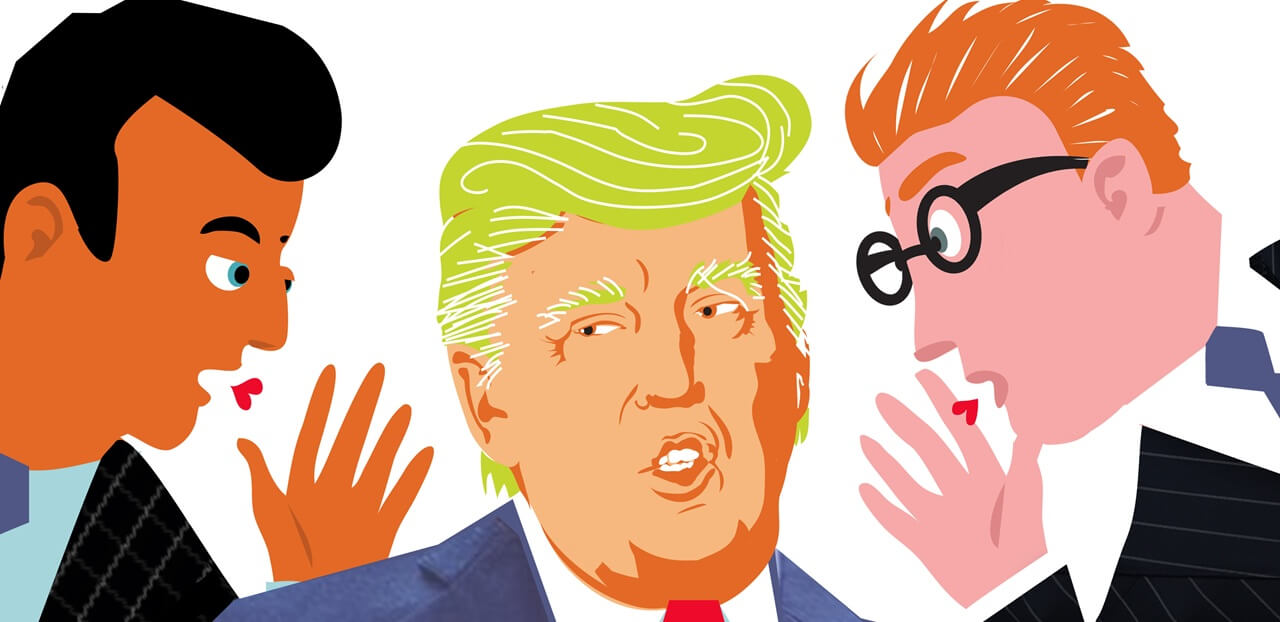
The recent NATO summit proved that diplomacy, when used wisely, can achieve unexpected successes. There was great concern beforehand about President Trump's attitude toward NATO and his European allies.
However, Secretary-General Mark Rutte and his team opted for a well-considered and professional approach. Some critics labeled Rutte's conduct ‘smarmy’ but that is not justified. The constant flattery was at odds with traditional Dutch directness but proved to be precisely the right tactic. It was probably the only way to keep Trump on board and even make him enthusiastic about NATO's objectives. A diplomatic masterpiece by Mark Rutte!
The alternative would have been far less appealing. A head-on confrontation could have led to a huge fall-out, resulting in a weakened NATO and a defenseless Ukraine. Instead, we saw a President Trump who felt he had been heard, which made it easier to do business with him.
Concrete results
The most striking concrete result is the agreement on five percent defense spending by NATO member states. This is a significant increase on the two percent previously agreed and shows that Europe is prepared to significantly increase investment in its own security. In addition, new arms deliveries to Ukraine have been announced, specifically defensive weapons systems. This is relevant because earlier there were reports of a temporary halt to US arms deliveries due to depleted stockpiles. But Trump has apparently reconsidered. In any case, Ukraine can for now count on new Patriot missile systems from the US.
Also noteworthy is the noticeable shift in Trump's attitude toward world leaders who, in his opinion, are not listening to him. His growing irritation with Putin is a direct response to Russia’s failure to make concessions. This frustration is not limited to Russia, as evidenced by his demonstrative snubbing of Israel during his recent Middle East trip.
American companies: direct export opportunities
For American companies, increased defense spending and continued support for Ukraine mean direct export opportunities. Much of the financial aid provided by NATO goes to American defense companies that develop the necessary weapons systems and technologies. In the case of the Patriot missile systems that the US pledged to Ukraine in July, the EU will foot the bill.
This rising expenditure on defense equipment for Ukraine is, of course, not an isolated phenomenon, but part of a broader trend in which defense investment are seen as investment in technological, geopolitical, and economic advantage. Whether supplying Patriot missiles, offering cybersecurity products and services, or focusing on advanced sensor technology, these companies are all benefiting from increased defense spending.
European defense industry: a golden age?
Not only American, but also European defense companies, are experiencing an upswing. Germany company Rheinmetall has seen its share price skyrocket. The Dutch defense industry, consisting of around 1,000 companies, is experiencing unprecedented growth. Nevertheless, the Dutch defense industry faces specific challenges. The European market is strongly driven by national interests, which leads to fragmentation and raises the question of whether Dutch companies can really benefit from the increased demand from other European countries. Although the EU is aiming for a 35 to 40 percent common defense spending, it is unclear whether smaller countries such as the Netherlands will benefit proportionally. However, countries that pool demand, knowledge, and specialization can create better conditions for all parties involved.
A good example of this is the recent deal between the Netherlands and Belgium. The Netherlands will purchase ammunition from Belgian companies from the Liège region, while Belgium will purchase Dutch drone technology. Bilateral or even multilateral deals of this kind are, of course, also possible with other countries. This requires a coordinating role from the government, something the current defense apparatus is clearly working on.
The financing challenge
Unfortunately, the are some obstacles to the further growth of the Dutch defense industry. The first obstacle is financing. Many Dutch defense companies, especially SMEs that represent more than three-quarters of the sector's revenue, struggle to attract the necessary financing for innovation and upscaling. Banks and investors are often reluctant, partly due to the sector's still troubled image.
This presents a significant opportunity for Dutch pension funds. These institutional investors could, after overcoming ethical concerns, play a crucial role in financing this growing sector. From an investment perspective, this is attractive because of the expected growth.
The Netherlands has specific strengths: innovative technologies such as radar systems, drones, software, and cybersecurity. These areas are crucial for modern defense and capitalize on Dutch expertise in high-tech sectors.
The trade deal: more complex than it seems
Another problem is that exports to the US for European companies – including defense companies – appear to be hampered by the new 30 percent tariffs. This percentage is so high that it could have far-reaching consequences for the entire European economy. Importing from Europe will simply become too expensive for many American buyers. This is certainly true if interest rates in the US continue to rise, as is currently threatening due to the growing national debt.
Of course, it is uncertain whether these 30 percent tariffs will be implemented. Trump is unpredictable, and in recent months, it has become all too clear that he often does not follow through on his threats: he starts off strong but then backs down. It has even been dubbed ‘Trump Always Chickens Out’ (TACO).
But even if the announced tariffs are averted, there are still the so-called ‘non-tariff trade barriers.’ The Americans have drawn up a 40-page list of approximately 80 points they consider to be trade barriers. These include key European legislation such as the Digital Markets Act, the Digital Services Act, the General Data Protection Regulation, and various sustainability guidelines. Even if the 30 percent tariffs are postponed or scrapped altogether, these non-tariff barriers could have a huge impact, and even if the EU concludes a trade agreement or a framework agreement, as the United Kingdom has done, non-tariff barriers will continue to hang like a dark cloud over trade between the US and Europe.
Trump whisperer wanted
Minimizing all barriers to trade between the US and Europe will not be easy. In any case, the EU must quickly develop a strategy that aligns with Trump's negotiating style, because without the right diplomatic approach, Europe risks a costly trade war that will severely impact businesses and consumers on both sides of the Atlantic.
The question is who can negotiate with Trump on behalf of Europe. The current European negotiators, Commission President von der Leyen and her team, seem less successful in dealing with the American president. One would wish Europe had someone like Mark Rutte, who – judging by his performance at the NATO summit – understands Trump's personality and can negotiate effectively with him. Hopefully, the EU will succeed in putting forward an equally effective Trump whisperer.
Essay by Marc ter Haar, executive director of the American Chamber of Commerce in the Netherlands. Published in Management Scope 07 2025.